Johnian magazine issue 55, spring 2026
Judith Slater: Navigating hurricanes, soft power and historic moments
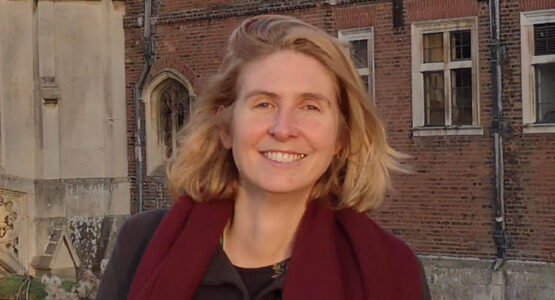
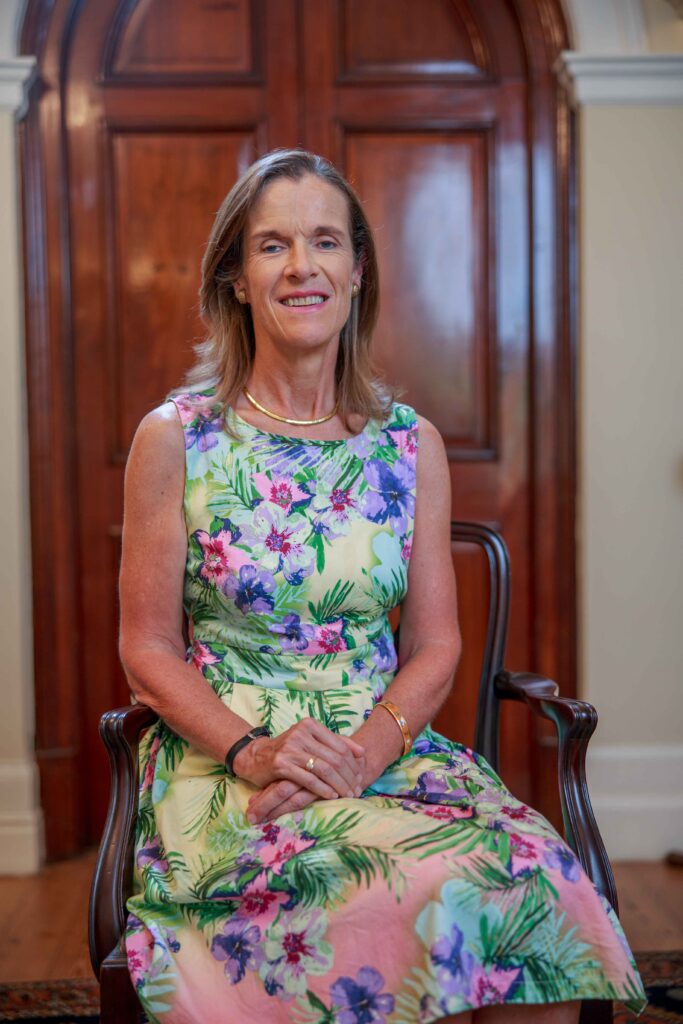
Judith Slater (1983), who studied Law at St John’s, was the first woman to be British High Commissioner to Jamaica and completed her posting last year, just weeks before the country was hit by Hurricane Melissa. Although she handed over to the new High Commissioner Alicia Herbert last autumn, following the hurricane she worked with the crisis team at the Foreign Office (FO) in London to help deal with the situation.
From being present at historic moments and meeting her favourite sports stars, to responding to natural disasters and hiding under a restaurant table to escape a group of gunmen, the diplomatic life has never been dull for Judith Slater.
Here, Judith looks back on her career in the Diplomatic Service and discusses her experiences travelling the world in the service of her country.
“I was in Jamaica for the last four years and I’d just come back to the UK when Hurricane Melissa hit,” she says.
“My first thoughts were for my friends, colleagues and all the staff out there. Luckily the hurricane didn’t hit Kingston very badly, but it’s been really terrible in the west of the island. I was slightly obsessively looking at Facebook and Twitter for news from friends in that part of Jamaica because a lot of it has been flattened.”
When a hurricane hits, the first duty of a British Embassy or High Commission is to help British people and British interests in the area. This included helping around 8,000 tourists return to the UK as the storm hit during a popular October half-term week and many people were in Jamaica on holiday.
“We had to make sure that all the British businesses, British visitors and British residents in Jamaica were okay and get them out if necessary,” says Judith. “Then we had to fly humanitarian aid into Jamaica, and also provided some in-person support by diverting a Royal Navy vessel that was nearby.”
This wasn’t Judith’s first experience of a hurricane as she was also posted to Houston, covering Louisiana, when the floods hit New Orleans following Hurricane Katrina in August 2005.
“When that storm hit it looked at first as though it wasn’t that dramatic,” she says. “And then the levees broke in New Orleans and the place flooded. It ended up that the poorest parts of New Orleans were the worst impacted, as those areas were on the low-lying ground. The effects were different from those in Jamaica, which was mostly impacted by the wind. When a category five hurricane goes through anywhere that’s pretty difficult to withstand.
“Jamaica is a wonderful country, but I’m worried about it, because tourism is its life blood – it’s a third of the economy. Getting that back on its feet is going to be a pretty tall order.”
Promoting businesses and trade is a major part of the High Commissioner’s role. In Jamaica, Judith has helped British firms win work on various projects, including bridge construction and solar energy, as well as lobbying on behalf of the British bank note printers De La Rue to win the contract to print Jamaica’s currency. There was also work with UK Export Finance to help Jamaica with large infrastructure projects including renovating the iconic national athletics stadium. Meanwhile in Turkey “we had a much bigger commercial team,” she explains, “because our two-way trade with Turkey is about £20 billion a year. The US tariffs have not hit Jamaica particularly hard,” she says, “as the country is not a major exporter.”
Previously, Judith was Consul-General in Istanbul and simultaneously HM Trade Commissioner for Eastern Europe and Central Asia. Before this, Judith had been Deputy High Commissioner and South-East Asia Regional Director of Trade and Investment in Singapore, as well as Deputy High Commissioner in Pretoria, South Africa from 2007 to 2011 and British Consul-General in Houston, Texas, from 2004 to 2007. In London, Judith’s posts have included Private Secretary to the Minister of State responsible for relations with Asia and Head of Nuclear Policy Section in Non-Proliferation Department. She has also had overseas postings in New Delhi and Canberra.
“Not everyone realises that a High Commissioner’s role is identical to that of an Ambassador’s,” explains Judith. “But Commonwealth countries have High Commissions instead of embassies within other Commonwealth countries. The job is that you’re responsible for every aspect of your home country’s relations with the other country, whether it be foreign policy, helping British companies to win contracts, or supporting British nationals when a family member dies on holiday, for example, or a Brit is arrested.” The UK is also quite a big aid donor to Jamaica and some other Caribbean countries, and Judith’s role involved ensuring that our aid programmes ran smoothly and that UK taxpayers’ money was being well-spent.
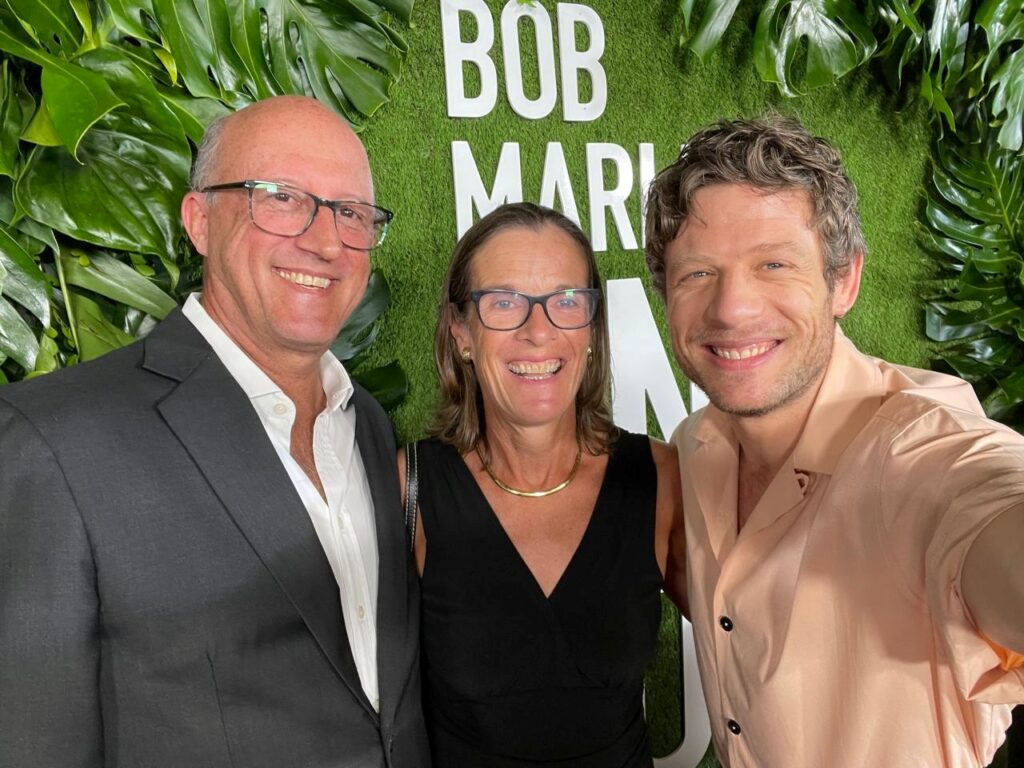
Another aspect of a High Commissioner’s role is what Judith refers to as “soft power”, in other words positive influencing This can include cultural events and festivals to foster closer relationships between the two countries. “There’s an absolute wealth of British-Jamaican cultural connections,” says Judith. “That’s one of the really fun sides of the job. We do film screenings, receptions, poetry readings and there’s a literary festival held every two years. In fact, coincidentally it’s held quite close to where the eye of the hurricane hit, at a place called Treasure Beach. Last summer, Ian McEwan and Zadie Smith came out, as well as lots of younger British Jamaican talent. I think that’s the thing I will look back on as the biggest privilege of all this, just the variety of people from different fields that you get to meet. I was involved in the lead up to the handover of Hong Kong, which was an historic moment; I was in India for the 50th anniversary of Indian independence, which was very special, and then I was in Southwark Cathedral for the 75th anniversary of the docking in London of the HMT Empire Windrush.”
Being a sports fan, she was also delighted to meet Jamaican Olympic gold medallist sprinters Shelly-Ann Fraser-Pryce and Usain Bolt. “That was a real highlight for me and they were both so friendly. I’m really into my sports so meeting them and other sports stars over the years has been a huge bonus. In fact, my first posting was in Australia and I looked after our relations with Tasmania and the Northen Territories. They weren’t the most interesting politically. But the World Rowing championships was held in Tasmania when I was there, which was brilliant, because I love rowing after being a rowing Blue when I was at John’s.”
Her favourite memories of the job include “living in a palace” in Istanbul “The Consulate was stunning,” she says. “It had chandeliers that Queen Victoria had sent to the Czar, but which never made it because of the Crimean War. They are in an absolutely breathtaking ballroom where Florence Nightingale once came to dances. There is history everywhere. When COVID-19 arrived, we were living in this beautiful building with a huge garden in the middle of Istanbul, so it wasn’t quite as bad for us as it could have been!”
In Houston, Judith met and partied with British astronauts based at NASA. “I watched the Space Shuttle taking off with a friend of mine on board, Nick Patrick, who was a Cambridge graduate from Trinity. To be an astronaut, you have to be off the scale, physically and intellectually, but I also think it probably helps to have a slightly mad streak! Some of the best parties I’ve ever been to were the ones the astronauts used to have.”
Being good at parties is definitely a skill Ambassadors need. “You have to be gregarious and outgoing,” says Judith, “not someone who wants to spend all their time sat behind a desk. You have to like meeting people, forming relationships and helping to find solutions.” Another advantage is a talent for languages. “Even though I studied languages at Cambridge before I changed to Law, the only language I’ve learned on the job was Turkish, and that was really hard, because I didn’t start it until I was 50, which is not like learning a language at 20. I did also learn some Hindi before going to Delhi, but I’ve forgotten it now. Also, you obviously need to be quite resilient and keen to travel around the world. My husband was a South African diplomat whom I met in India, and he’s embraced the jumping-around-the-world lifestyle.”
Given the international nature of the job, there must have been some dangerous moments where that resilience was needed? “When I arrived in Istanbul there had been a lot of terrorist incidents,” says Judith. “One of my predecessors was murdered by Al Qaeda. So, I had an armoured vehicle and a bodyguard and there was some nervousness about terrorism. But the only time I’ve really felt in danger was in Ukraine,” she explains. “There was a raid on a restaurant that I was dining in, and men with machine guns and balaclavas came running into the restaurant shouting, and we all had to dive under the table. That was pretty scary. It turned out that it was the Special Forces raiding the restaurant because there was a corrupt deal going down in a booth there, but we didn’t know that at the time, so it was like time just froze. My colleagues were shouting, ‘Get under the table’. It took me forever to do so because it was wrought iron and I was against the wall and couldn’t move it. That’s the only time I’ve literally thought, ‘This is it’.”
Judith has always stayed in close touch with St John’s while overseas, for example connecting the College Development Officer with local alumni while she was in Singapore. The Choir also visited the US, Singapore and even Australia when she was posted to those countries, which she enjoyed enormously. Judith and then Master Richard Parham sat on interview panels together in the US, selecting Marshall Scholars, and he subsequently, in 2007, invited her to speak at the celebratory event for 25 years of female students at St John’s.

Although she has spent the majority of her career in far-flung countries, Judith remains part of a very close and supportive circle of friends who matriculated in 1983 and still meet up several times a year for convivial dinners in London, which she has always tried to attend when visiting the UK. “Growing and thriving at John’s gave me the confidence to apply for the Foreign Office in the first place. I owe a huge amount to the College and will always be grateful to my tutor Dyfrig Morgan, who always encouraged me to get involved in all aspects of college life, not just academics.”