Johnian magazine issue 55, spring 2026
Johnian playlist: From St John’s Choral Scholar to international conductor
From his beginnings as a chorister in Ealing to leading renowned ensembles around the world, James Burton’s journey has been shaped by pivotal moments at St John’s and beyond. Now returning to the UK after a distinguished tenure with the Boston Symphony Orchestra, he shares the tracks and experiences that have defined his musical path.
After eight and a half years as the Boston Symphony Orchestra (BSO) Choral Director, James Burton (1992) has moved back to the UK for a new post. He will be taking over as Artistic Director for Ex Cathedra, the Birmingham-based group that as well as supporting a world-class vocal ensemble also provides choral music education and outreach.
James says: “Ex Cathedra represents lots of things I’m passionate about as a musician and as a person. I’m really excited to have been appointed and I look forward to having a new musical home.”
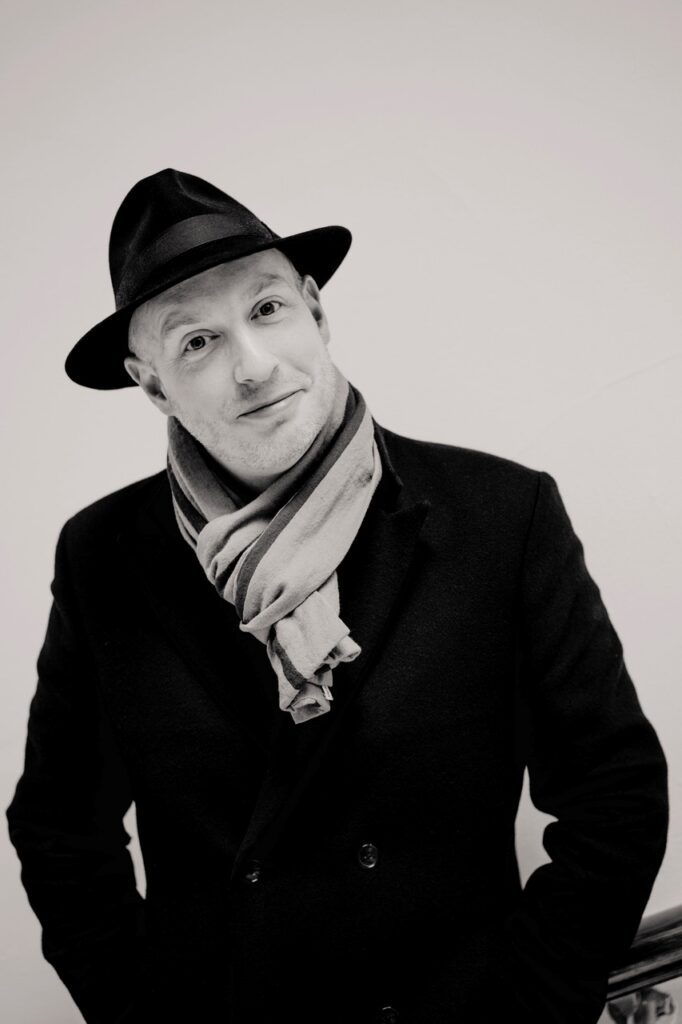
Ex Cathedra is made up of professional singers and extremely talented amateurs, as well as choral scholars, and in addition to giving concerts in top classical venues like Birmingham Symphony Hall, the group masterminds outreach projects such as their Singing Medicine programme, which takes a small group of singers into the wards of Birmingham’s Children’s Hospital. James says: “It’s quiet and impactful work.”
Born in Ealing, James started out his musical life as a chorister in his local parish church choir before auditioning for and gaining a place in the Choir at Westminster Abbey at the suggestion of his church’s organist.
He spoke with us about his career and the most significant tracks he has enjoyed along the way. And he revealed how one moment during his time as a Choral Scholar at St John’s set the direction for the rest of his life in music. “I was accepted into the Choir at Westminster Abbey under Simon Preston when I was eight. It was an incredible experience, and we were permanently on call for huge national events,” says James.
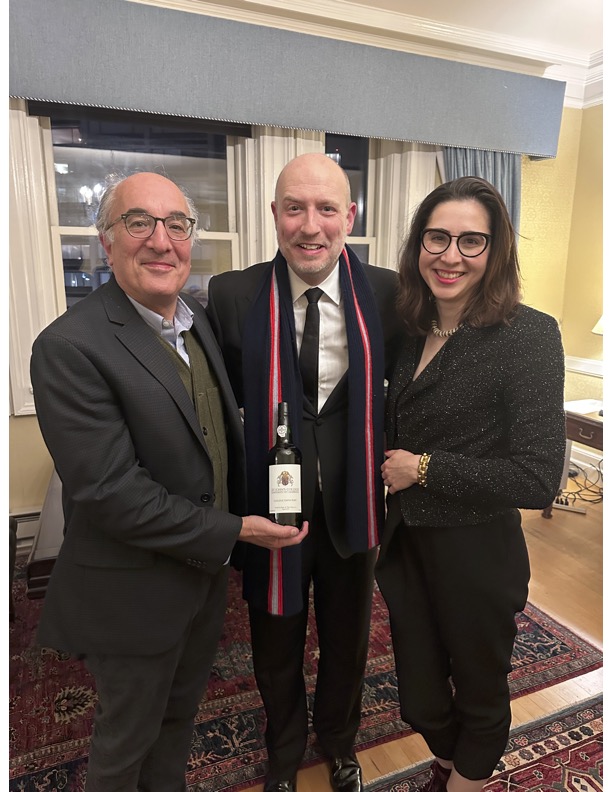
From Westminster Abbey his next step was to become a Choral Scholar at St John’s. “In fact, St John’s gave me my first platform as a conductor in 1993 with a concert of Beethoven’s Mass in C.” says James. In the audience was Christopher Robinson, the College’s Director of Music, who took him aside at Evensong practice the next day and asked him to report to him on Monday with his score. “I thought I was in trouble, but he told me that he thought I’d done a not half-bad job. At the end, he said, ‘I really think you should do this’. He gave me the self-confidence to pursue my dream of being a conductor and he gave me opportunities to conduct over the next couple of years at College. St John’s gave me a huge kickstart.”
While at St John’s, James was also the musical director of the Gents, whose first CD he directed, and was the conductor of the Music Society, as well as the keyboard player in jazz groups. After leaving College, he gained a Master’s degree in orchestral conducting from the Peabody Conservatory where he studied with Frederik Prausnitz and Gustav Meier. James says: “I was very green, but Frederik took me under his wing. Very few conductors there could also work with singers, and so after only a very short space of time, I was asked by the head of the choral department to be his assistant. I then went to work with big choirs, doing big pieces. So in addition to conducting choirs and orchestras separately, performing the big choral/orchestral works has been a specialty since those early days.”
James has conducted the Royal Liverpool Philharmonic, the Hallé, the Orchestra of the Age of Enlightenment and the BBC Singers. He has also led the Ulster Orchestra, the Aalborg Symphony in Denmark, and Boston’s Handel and Haydn Society. He has also conducted at English National Opera, English Touring Opera, and Garsington Opera, and earlier in his career he served as Assistant Conductor at the Metropolitan Opera and Opera national de Paris.
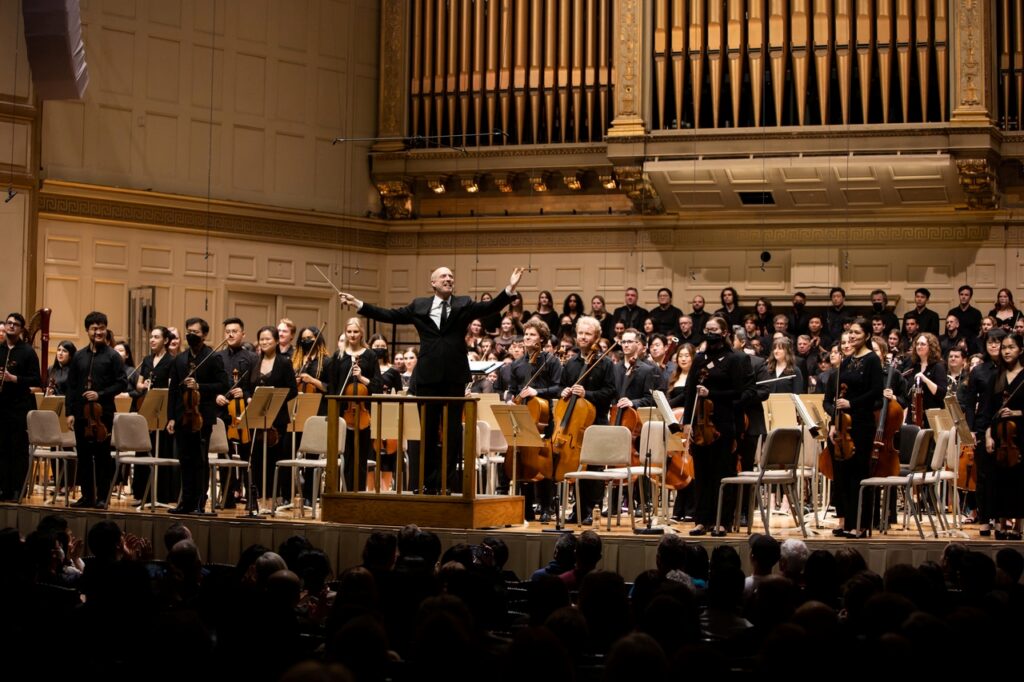
“I became the first Choral Director at Boston. They were looking for someone who could train their choir but also spoke the language of the orchestra,” he says. Most recently, James has conducted performances at Symphony Hall in Boston and Tanglewood with the BSO and the Tanglewood Festival Chorus, and he has been a frequent guest conductor with the Boston Pops. “The acoustic in Boston Symphony Hall is one of the greatest in the world for music,” he says. “It’s been an amazing period of my life, but it was time to move back to the UK with my family and to look forward to some new challenges.”
He likens being a conductor to running a sound mixing desk: “In a concert, I’m doing the equivalent of tweaking the controls,” he says. “I may decide we need a little bit less second oboe, because we need to hear more of the first clarinet. Or I’ll direct the bass singers that they are too strong here, because they’re high in the voice, and the sopranos are low in their voice and therefore less audible.
“Also, I constantly consider the emotional temperature gauge of the music so that the performers all arrive at the right temperature at the right time. That can mean paying attention to all sorts of practical elements, like how many players are playing, or how fast is the tempo. The other question is, what do you want the audience to hear? That’s like being a film director or author. You can help an audience understand music by rebalancing and calibrating that all the time.”
TRACK LIST
Tomorrow shall be my Dancing Day, James Burton; Advent Live – The Choir of St John’s Cambridge, Joseph Wicks organ, conducted by Andrew Nethsingha
Throughout my conducting career I have also been active as a composer, and about 10 years ago I was asked by Director of Music Andrew Nethsingha to compose a piece to be sung at the St John’s Advent Carol Service. As a former Choral Scholar, I knew what a big gig that was, and I was very excited to be asked. We settled on an ancient English traditional text, “Tomorrow Shall Be My Dancing Day”, of which there are various well-known settings. There is a very popular setting by John Gardner but it only includes four stanzas of the original text of the carol which tracks Christ’s life all the way from Advent through the church year to the Ascension. I wanted to set the whole thing. Andrew asked me to hear the Choir rehearse the new piece and then asked if I would like to conduct the rehearsal. For me it was a strange out-of-body experience conducting my own music in the Chapel with the Choir because, as I was composing it, I had had all of this in mind already: the acoustic and the sound of the organ, the sound of the Choir. I’ve always composed music when I can imagine the performers and the space where it’s going to be performed. Sadly, I couldn’t be there for the actual service because I was conducting a concert in Mexico City. But the time zones lined up perfectly and I listened to the broadcast on the radio, like so many millions of people do. I sat on the edge of my hotel bed, just hoping it was going to be all right. And of course, it just sounded glorious. The Choir later released that live performance of the piece.
Organ Concerto, Francis Poulenc; Boston Symphony Orchestra, Simon Preston organ, conducted by Seiji Ozawa
I wanted to include the sound of the Boston Symphony on the playlist, and I’ve chosen a performance of Poulenc’s “Organ Concerto” with Simon Preston on the organ conducted by the legendary music director Seiji Ozawa. Poulenc had strong links with the BSO, and composed his wonderful “Gloria” for the orchestra back in the 1950s. This recording was made in 1991 with my old choir master from Westminster Abbey playing the Symphony Hall organ. I’ve loved conducting Poulenc’s music throughout my career and the organ concerto is a cracking piece. I’m excited to hear the new organ in St John’s chapel when I next have a chance to visit.
Convidando esta la Noce, Juan García de Zéspedes; New World Symphonies: Baroque Music from Latin America; Ex Cathedra, conducted by Jeffrey Skidmore
I am looking forward to leading Ex Cathedra as its next Artistic Director, and I’ve known this Ex Cathedra recording for years. It’s a Christmas piece, and I remember in the early days of Classic FM this track was played over and over because it’s so stunningly playful and joyful. The conductor Jeffrey Skidmore has researched a lot of early music from Central America and Mexico, and this track is wonderfully representative of Jeffrey’s knack for rediscovering gems from the further reaches of the choral repertoire.
The Dream of Gerontius, Edward Elgar; Hallé Orchestra, Hallé Choir, Hallé Youth Choir, conducted by Sir Mark Elder
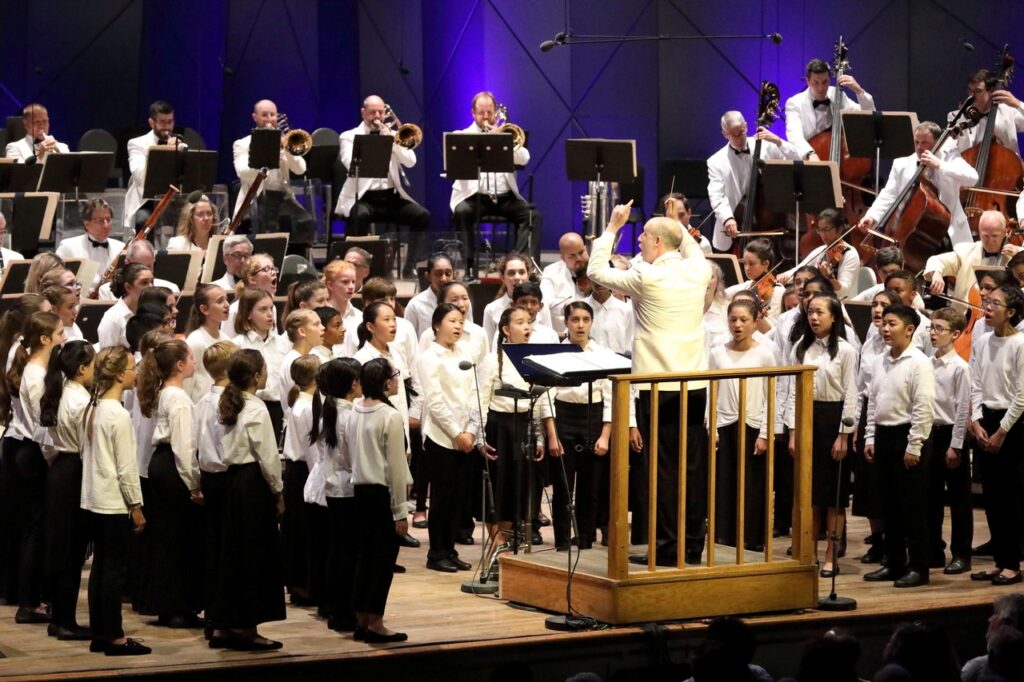
Early in my career I served as the Choral Director for the Hallé, Manchester’s famous orchestra. Elgar’s oratorio “The Dream of Gerontius” was almost part of the furniture there, and my singers in the Hallé Choir knew it very well. Shortly after starting work at the Hallé, I founded a youth choir for teenagers who were interested and talented at classical music. I persuaded the then Music Director Mark Elder to trust the teenagers to sing the delicate semi-chorus role in “The Dream of Gerontius”, and when we tried out the idea at the Proms in 2005, it was a roaring success. A few years later my Hallé work culminated with this recording project. Mark’s conducting is beautifully paced and we were all so proud that the record won the Gramophone Choral Award the following year.
Sugar Rum Cherry (Dance of the Sugar-Plum Fairy) Tchaikovsky arr. Duke Ellington/Billy Strayhorn; Duke Ellington and his orchestra
This album is a recording of classical pieces arranged for big band by Duke Ellington and Billy Strayhorn, and it includes Tchaikovsky’s Nutcracker Suite. The whole album is brought off with such a twinkle in the eye, and obvious love for the original classical versions. A couple of Christmases ago, I conducted two of the movements with the Boston Pops. One of them is called “Sugar Rum Cherry”, a word play on the “Sugar-Plum Fairy”. I joked with our audience that maybe this was the name of Duke Ellington’s favourite cocktail, but that I’d been sad to find out the drink didn’t exist. Little did I know that one of our singers was a very accomplished mixologist: at the next concert he appeared backstage after the performance, and he brought me two little phials, like a chemistry set, containing two versions of a new cocktail he’d made especially for me. I have to say Sugar Rum Cherry number two was the better one, and I hope it catches on.