Tales from the Munro baggers of St John’s
In 1891 the mountaineer Sir Hugh Munro compiled a list of the 283 Scottish peaks standing at over 3,000 feet, and 10 years later a Scottish minister, the Rev Alexander Robertson, became the first person to climb the whole series. Munro bagging is the term for anyone trying to “compleat” all of them. Below, we hear from two Johnian hikers who have achieved this feat and who hope to discover more alumni belonging to this exclusive club.
Paul Gamble (1980)
Any Johnian who ever lived in one of New Court’s top-floor sets will remember the twisting staircase ascent to the building’s summit plateau. Back in 1981, C8, with its sweeping view over the Backs, was my second-year room allocation. I enjoyed the ups and downs that came with living on the third floor – it was my norm to run up without pause and dance my way down the descent. Four decades and more later, I still treat stairways the same way.
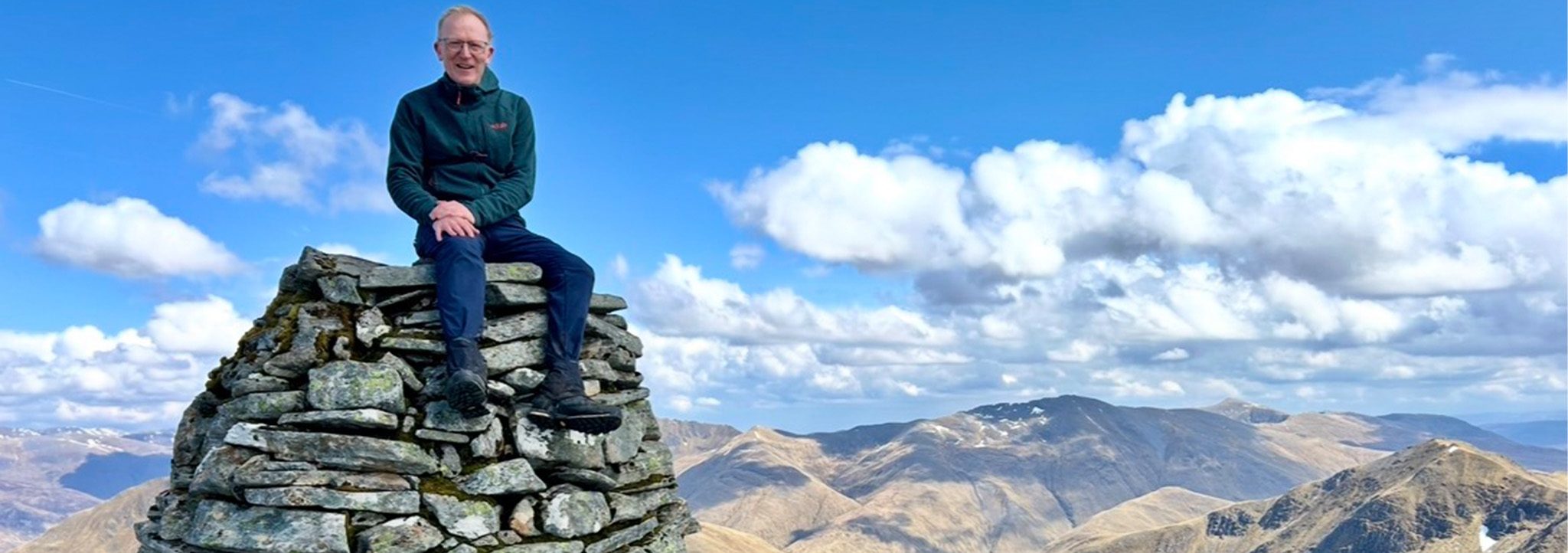
A chance conversation with Dr John Leake in June 2026 was the spark that had me linking Scotland’s Munros with St John’s. This was at the funeral of Dr Dick McConnel, long-time Engineering Fellow and, with me, founder of Cambridge’s rugby league club. John and I landed on a shared enthusiasm for hillwalking, and he mentioned that Professor Deborah Howard had, like me, completed the round of summits that break the 3,000 feet barrier. When I contacted Deborah, we agreed that it would be great to know how many other Johnians lurked on the register kept by the Scottish Mountaineering Club.
In my Cambridge days I barely knew the hills of Scotland beyond owning a couple of maps that showed as much water as land and chaotic contour lines which gave an indication of the excitement to be found in Torridon and on Skye. The Lake District Wainwrights were the height of my walking interest at the time, an apprenticeship of sorts for the loftier and more numerous Munros.
After my years at John’s, I did a very silly thing, given my keenness to explore the British hills. I lived and worked for the next 36 years in London and Oxford. No wonder it took me until my 62nd year to get my name on the list of Munroists.
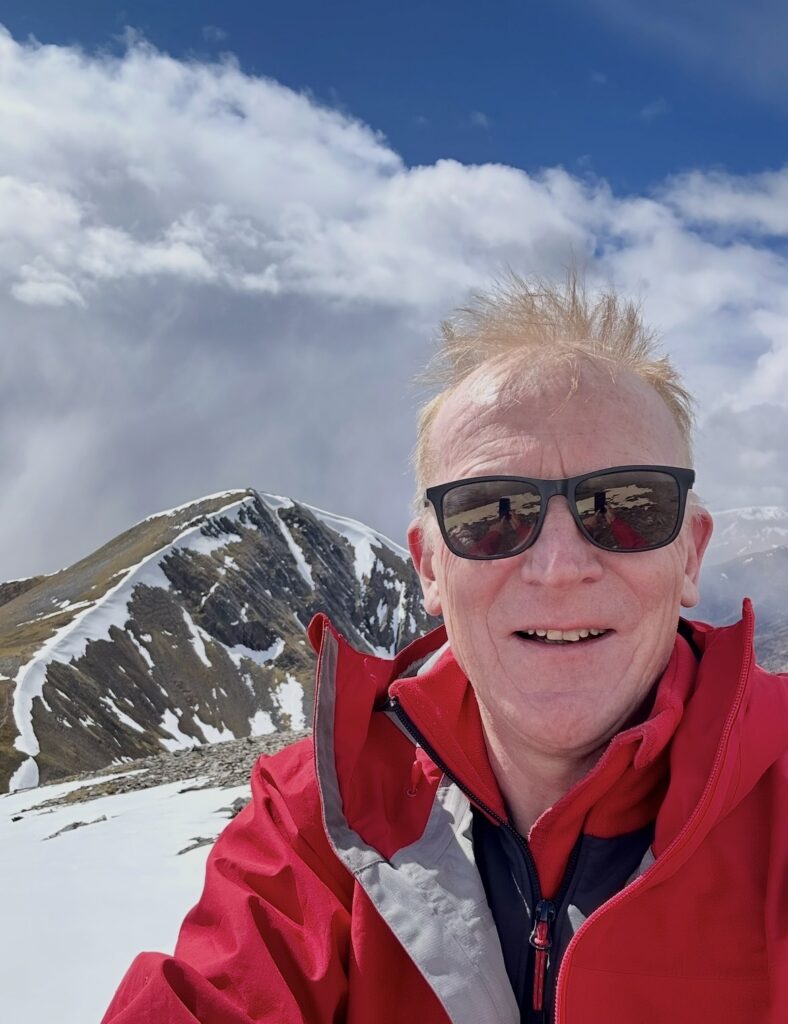
Stuck on just one Munro – Cairngorm – since 1969, in 2003 I returned to the same hill to get things rolling again. A sabbatical in 2006 gave me the chance to climb 20 more, including the one that many dread, the ‘In Pinn’ on Skye. Progress was sporadic for the next few years, but I was hooked on the project. Obsessed, truth be told.
When I drove north in July 2010 for a blast of Munros bagging, I didn’t know that a month earlier a Johnian had walked up one of that week’s hills, Beinn na Lap. It’s a hill that many choose as the final summit of the round, including Peter Nienow (1984). He proudly reported in The Eagle of 2011 that he had climbed it “accompanied by 101 friends”. I remember reading Peter’s news at the time with a little envy, thinking that I’d never manage the whole round. But I kept trying…
Every walk into the hills gives memories but some trips have added significance: the small slip on Ben Cruachan when I ripped open part of my hand and still made it to the top after first aiding myself; the “comeback” Munro after rupturing my left Achilles and a year of rehab; the bothy craic with a trio of Central Belt hard men when we discussed Plato’s Theory of Forms by firelight. Maddest of all may have been the time I bagged seven Munros during a three-day working trip to Scotland – walking at all hours to use the light of long June days.
The Munros round brought many coincidences, but only one (to my knowledge) with a Johnian flavour. Approaching Meall Chuaich’s top in June 2017, I watched two golden eagles circling the dome-like summit. They drifted off as I neared the cairn, which I took to be as free of people as the rest of the hill. But, no, reaching the goal, I saw a gaggle of teenagers sheltering with a trio of adults. They could only be a Duke of Edinburgh practice group.
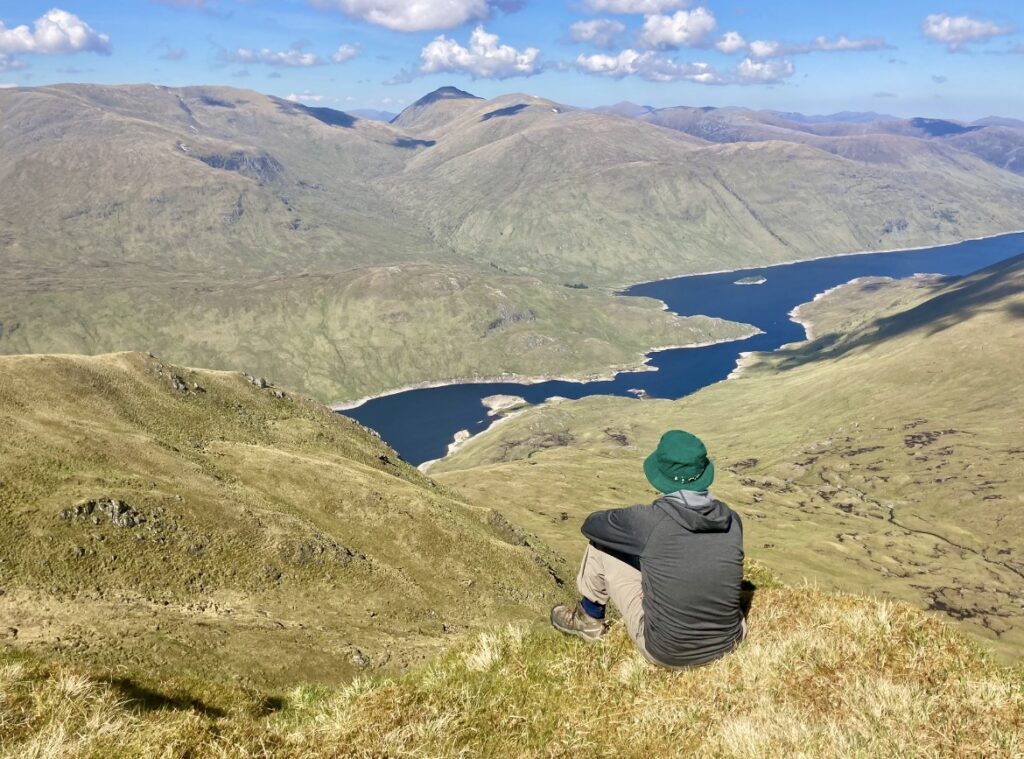
I walked most of the Munros solo but rarely declined the opportunity to chat with those I met. Within a couple of minutes, it transpired that I was talking with Graham Sorbie (1980). We’d last been together on the day we graduated.
Managing the long drives and logistical challenges was always worth it. Being in the Scottish hills was the closest to a sense of liberty that I could reach. As the volume of work increased and the gaps between what I now know to be AuDHD-related burnouts became shorter, I needed time on my own and in nature to recharge my batteries. When I ran the final few hundred yards to the summit of Glencoe’s Stob Coire Sgreamhach in June 2024, the tears in my eyes were tears of joy. I had my son for company – 100 fewer than Peter on his march up Beinn na Lap.
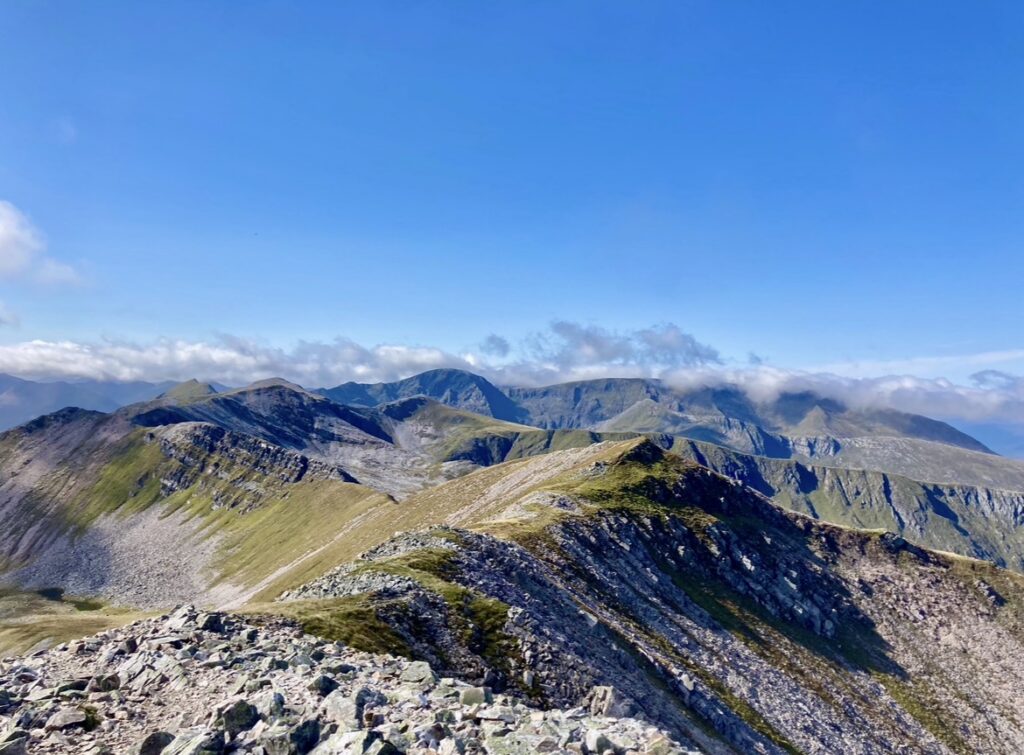
Everyone’s experience of a Munros round is a unique path. Mine included a late-in-life diagnosis of autism and ADHD, something I now realise was evident (but completely undetected) in the way I treated that staircase in New Court, all those years ago.
Professor Deborah Howard (Fellow and Professor Emerita of Architectural History)
In 1984, when we climbed our first Munro – the beautiful conical peak named Schiehallion in Perthshire – we never imagined that we would ever try to “compleat” the challenge of climbing all 283. (Munroists prefer the traditional spelling.) At the time we were living with our two small children in Edinburgh, where the local outdoor shop kindly swapped the kids’ mountain boots as their feet grew. Although climbing hills became a regular holiday pastime, at first the children had to be coaxed uphill by stories about monsters called Nessie and Rannochy and the promise of a KitKat on the summit.
In 1991 we returned to Cambridge, but our Scottish holidays continued long after the children had grown up and left home. Each year my husband, Malcolm Longair, and I explored different regions and climbed the Munros in each area, until we suddenly realised our total had reached 100. At that point, the addictive nature of the sport began to take hold. It is hard to account for the Munro-bagger’s obsession when there are such obvious discomforts – atrocious weather, blisters, sore muscles, sunburn and midges among them. Imagine trying to cross a precarious rope bridge with your face and hands black with aggressive swarms of midges! Yet the thrill of traversing a narrow ridge with the ground swooping down on each side is unforgettable, and the sense of achievement on reaching the summit is enhanced by the fact that every packed lunch tastes better on a hill.
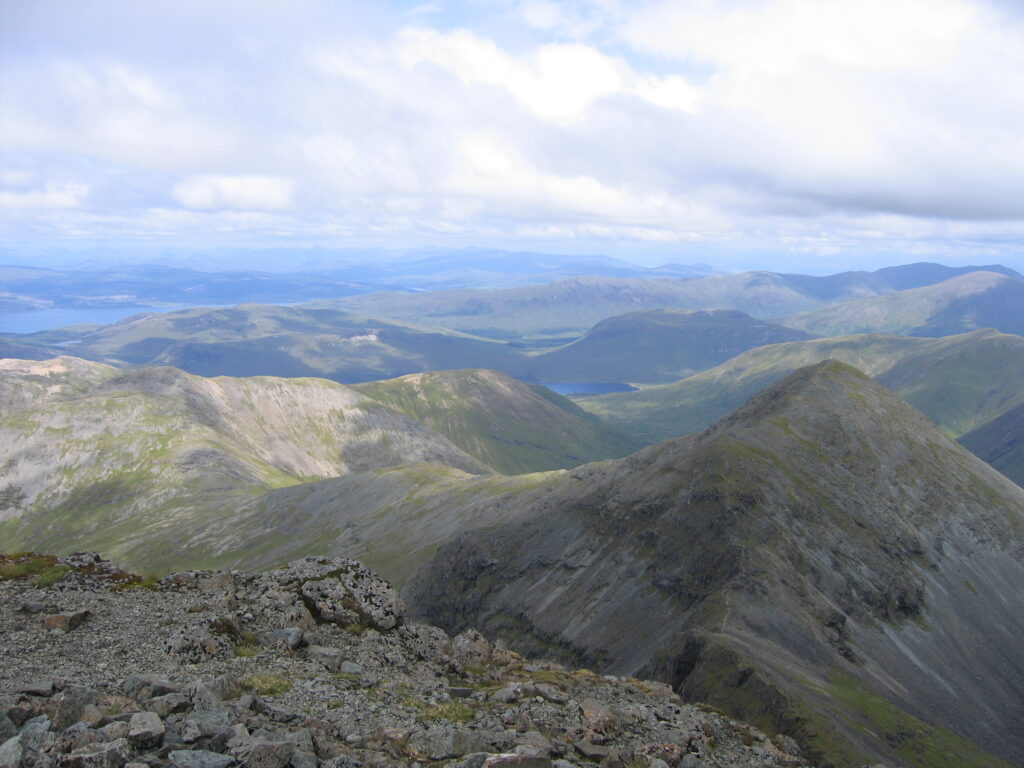
When Malcolm reached the age of 60 he asked for a birthday present of a week with a mountain guide in Skye to knock off all the peaks on the Cuillin ridge. Although we had already climbed some of them, others were still missing, not least the so-called “Inaccessible Pinnacle”, known as the In-Pin, which needs rock-climbing skills. After that amazingly successful week, there seemed to be no obstacle to finishing the challenge, and we became dedicated Munro-baggers.
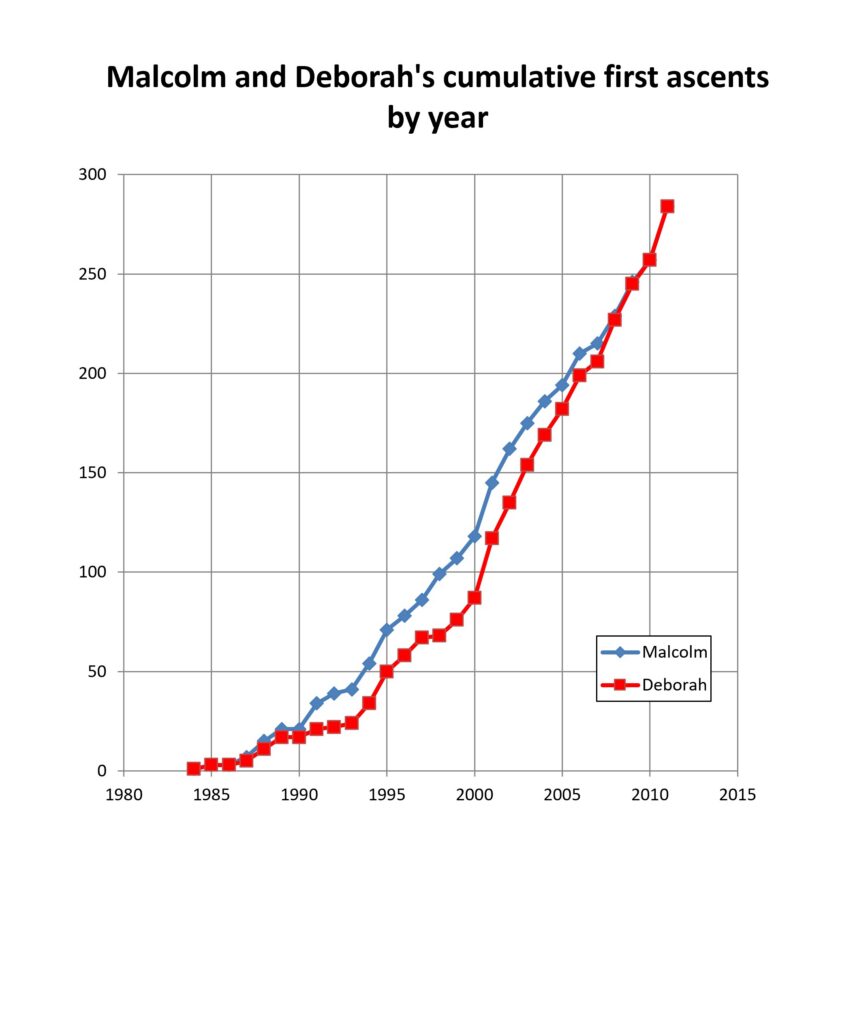
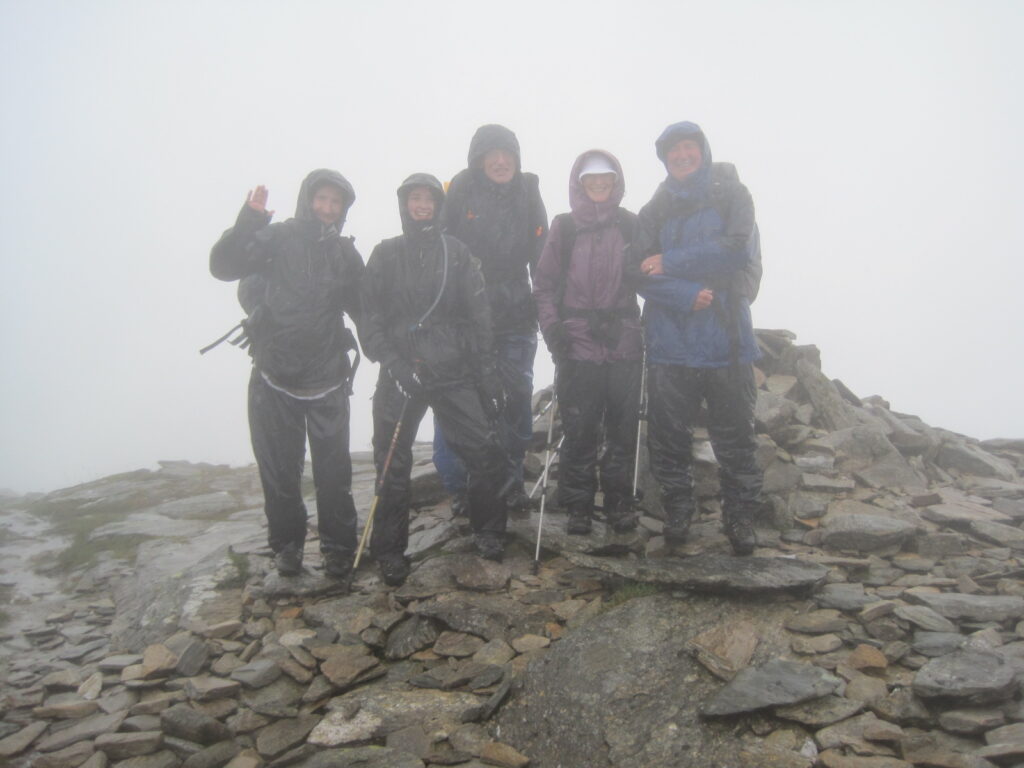
As we approached the end of the series 10 years later, we still had 21 Munros left on our list. These were scattered all over Scotland and most were not only extremely remote but also tricky. We decided to spend a month climbing all the outliers, a process that really made us recognise the adrenaline flow associated with endurance sports. We became fitter and fitter – luckily we had no sore feet or muscle pains despite the huge length of most of the hikes. Our last Munro was Ben Oss, where we were joined by various relatives despite the bitterly cold wind and torrential rain. Our son put a bottle of whisky and six glasses in his rucksack, but we were all too cold to contemplate the celebratory dram on the final summit. We eventually toasted the feat that evening in our cottage, surrounded by six people’s soaking-wet gear.
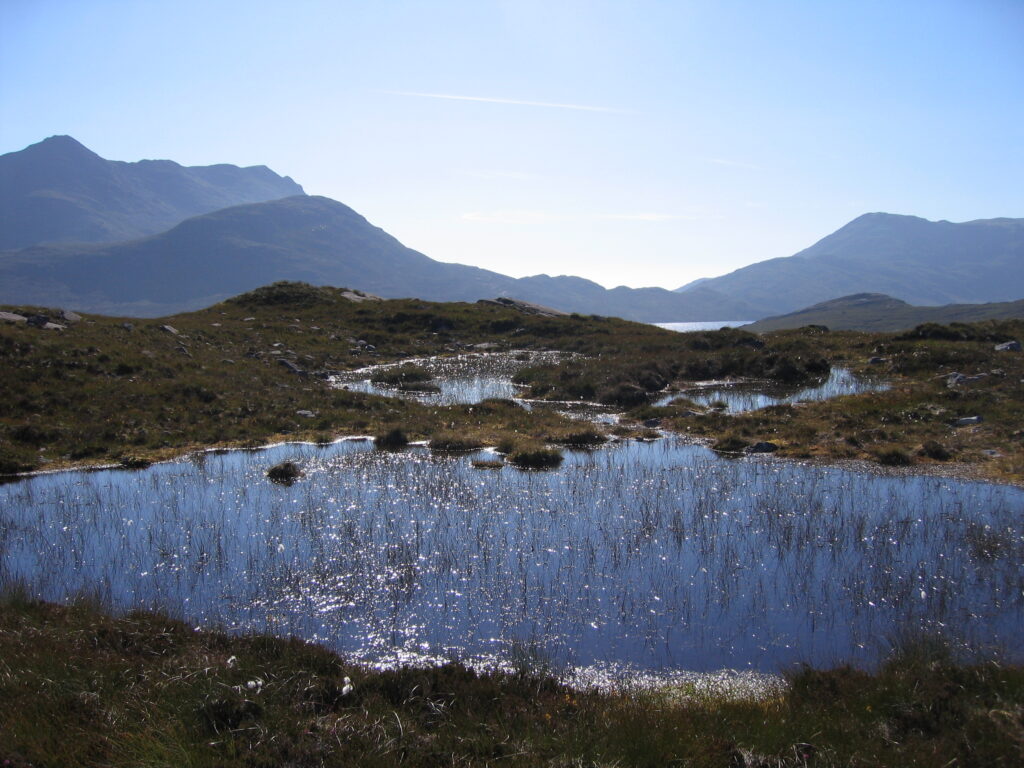
I still think that “compleating the Munros” is my single greatest achievement (apart from our two children, of course). In the end it took us 27 years to finish the whole series – an average of around 10 a year. For two academics based in the flat landscape of Cambridge, maintaining mountain fitness is not so easy. During our campaign one of the most testing peaks was demoted after we had already climbed it, leaving only 282. We had many adventures, even finding ourselves cut off from our tents by a flash-flood in the Fisherfield mountains. There are always risks, especially in snow and ice, while some of the scrambling is seriously tricky. I am not very heavy, even with my rucksack, and in high winds I find myself in danger of being blown off the mountain. I still hate crossing burns in spate. All the same, the magic of the mountains – the wildlife, the glorious skies and the stunning views – makes it all worthwhile. One recognises that nature is greater and more wonderful that anything mankind can create.
Let us know if you are also a Munro bagger. Get in touch at development@joh.cam.ac.uk