Mark Wells: The secret life of St John’s College
People often ask me what it’s like to live and work in a Cambridge college. The answer is that it’s rather like living inside a history book. Except history books don’t usually contain ghosts, secret societies, legendary fellows, improbable traditions and enough student pranks to keep the Porters employed for centuries…
Most of us only get a fleeting glimpse of college life from our three, four or perhaps six years as students. As Domestic Bursar (DB), I was fortunate enough – as Heather Hancock and Chris Ewbank have been – to come back years later and see the College from a very different perspective: discovering places I had never seen, people I had rarely encountered, and traditions that would be thought fictional in any other context.

One of the most mysterious places I was responsible for was the infamous Fellows’ wine cellar. In my first week, my predecessor, Commodore John Harris, a former nuclear submarine commander, took me through the tortuous procedure for opening its three locks. First, the Fellows’ Butler puts his key in one lock, then the DB puts his in the other; both turn them together, and, after swiping the DB’s college card over the digital lock, the cellar door opens. As Commodore Harris observed, removing a bottle of port from the Fellows’ wine cellar has more protocols than launching a ballistic missile at His Majesty’s enemies.
Another hidden domain I had to visit as Bursar were the College rooftops. Leaky roofs and blocked gutters are a perennial problem for the College maintenance teams – not helped by our resident peregrine falcon whose victims make for particularly obstructive bungs in drainpipes. When navigating these lofty perches, I had recourse to the invaluable 1921 publication, The Roof-Climber’s Guide to St John’s, by “A. Climber”.
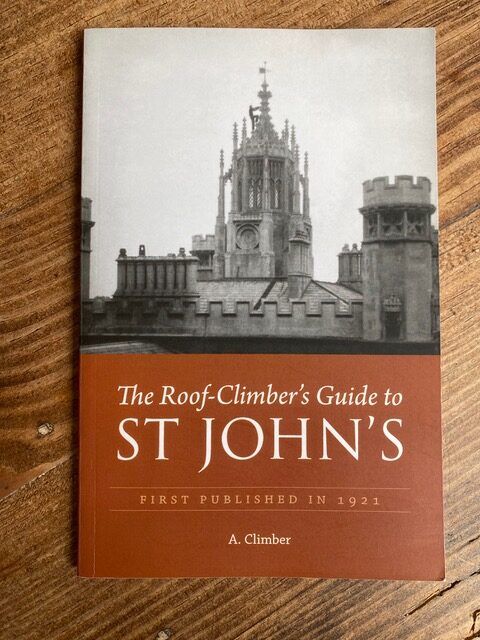
This describes seven routes over the College rooftops, complete with diagrams and recommended hand and footholds for members of the Alpine Club, the somewhat misleading name adopted by the College’s night climbing community.
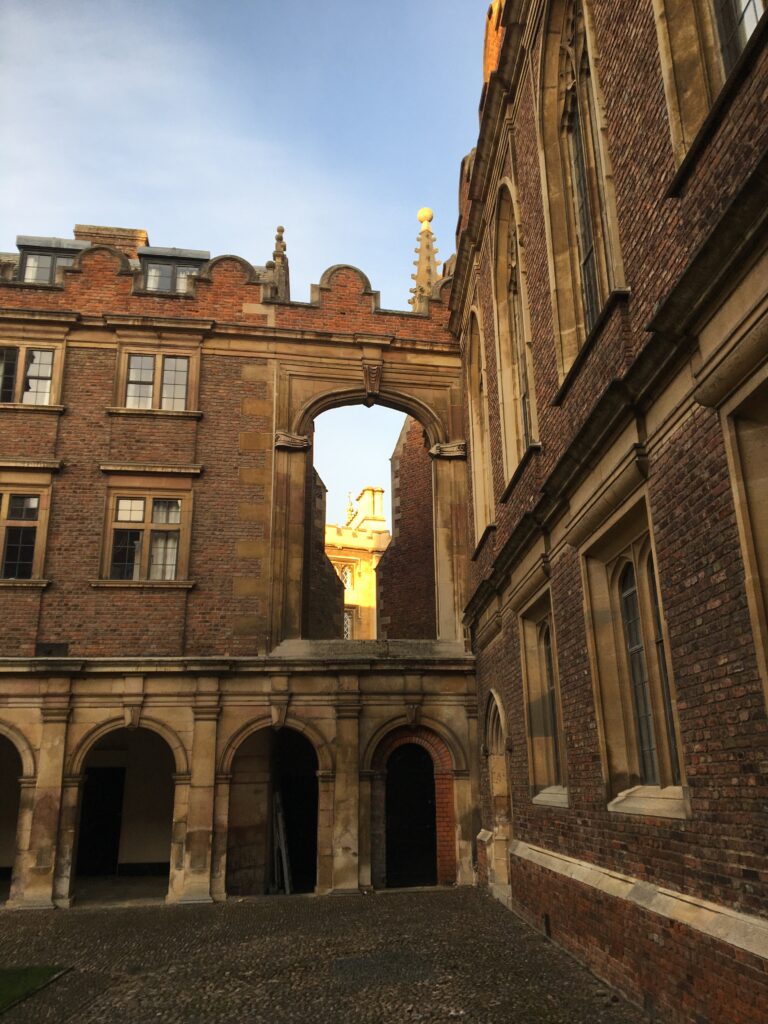
There’s also a reference to an inscription I found in the lead roof lining above A Staircase, Second Court, commemorating one of the earliest known night climbers, Peter Gunning of Ely, dated the 19 February 1734.
It is not just the buildings that have secrets. The same is true of the people who live and work here. Few Johnians know that “Big Bob” Fuller, said to be the inspiration for Scullion, the head porter in Tom Sharpe’s Porterhouse Blue, began life as a college gardener.
Though his demeanour, tall, stern, with a barrel chest, might suggest a regimental sergeant major’s unforgiving nature, there are countless stories of Bob’s thoughtful advice for students in his charge.
I experienced this on my first morning as a fresher. I woke to find a glass bottle outside my Cripps room with a note ostensibly from the College nurse asking me to deposit a urine sample at the Great Gate Lodge. On arriving at the lodge, I found I was not the only first year to be taken in by this ruse. With the counter groaning under a crate of cooling samples, Bob took one look at me and suggested I apply a bit of critical thinking in future: “Use your loaf, Mr Wells, for goodness sake”, advice I took to heart, and it served me well over my time here.

Of course, not everyone was fortunate enough to get such a timely warning, so a firmer hand was sometimes needed in the form of the Dean of Discipline. My former tutor, the late Dr Peter Linehan, took an unconventional approach to the role, using his long experience of student antics to determine whether an offence was malicious or merely high jinks. For the latter, he would make offenders Second Court scarecrows for a day – this involved standing on the lawn in their gowns and flapping their arms at regular intervals to scare the birds away. Peter’s room overlooked the court, and if the scarecrow’s enthusiasm began to flag, he’d lean out the window and yell, “More flapping!”
Let me finish with college traditions that are rarely experienced by Johnians, one of which is crashing the St John’s College May Ball! As DB, I was ultimately responsible for site security, and during the 2017 event, yours truly, accompanied by a posse of porters, succeeded in tracking down and cornering two gatecrashers on the roof of Third Court by the “furnace hole”: the gap between the west range facing the river and the end of the Old Library. The crashers had led us a merry dance across the rooftops but, on finding themselves faced with this precipitous 20-foot drop, wisely gave themselves up and were escorted from the premises.
But perhaps the most spectacular tradition is the burning of a boat on achieving headship of the May Bumps. When Maggie went head in 2016 for the first time in over 20 years, no one could remember how to set the boat on fire. While the crews celebrated in Hall, I headed off to Sainsbury’s and cleared out their entire barbecue section. By the time dinner was finished, the boat was filled with enough firelighters, charcoal and methylated spirits to rival Bonfire Night.
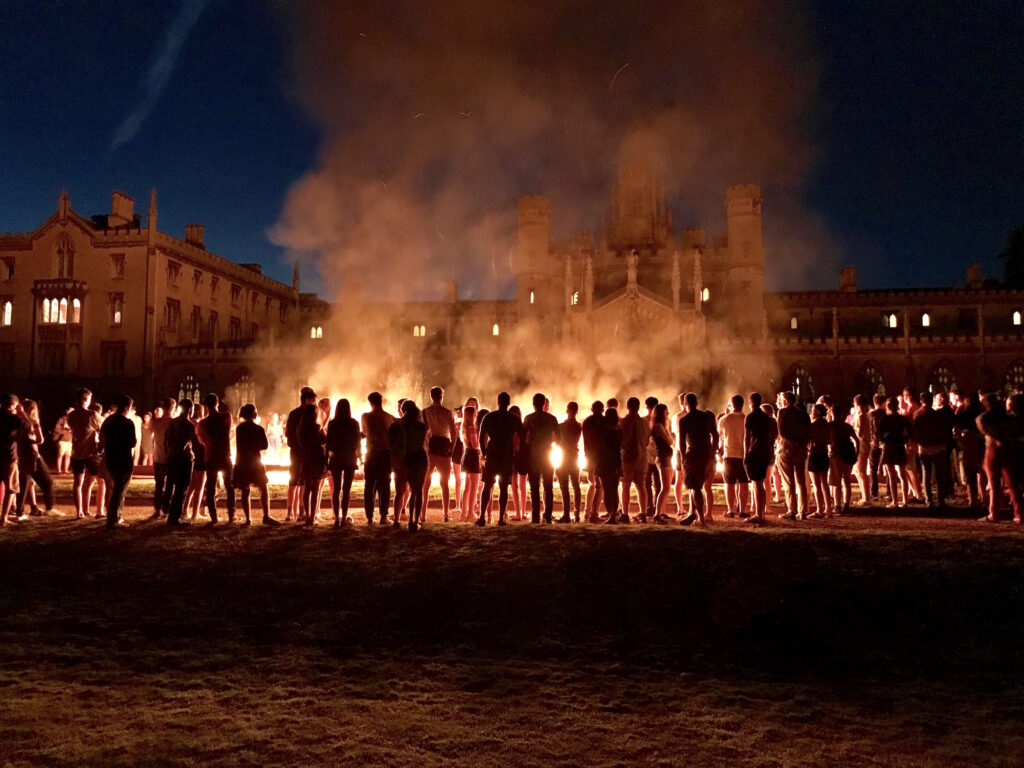
It did the job, the boat going up with a satisfying whoosh, though we later learned that two crews jumping the flames from opposite sides of the boat at the same time was not the brightest idea: we have since adopted a queueing system to stop the Blazers living up to their name!
Let me leave you with this thought.
Colleges preserve more than buildings. They preserve stories. Every generation inherits them, adds a few of its own and passes them on to the next. Some are true. Some are embroidered. Some are complete nonsense. The difficulty, after 500 years, is deciding which is which.
And perhaps that’s exactly as it should be.