John Sparks (1994): Ukraine documentary wins TV news award
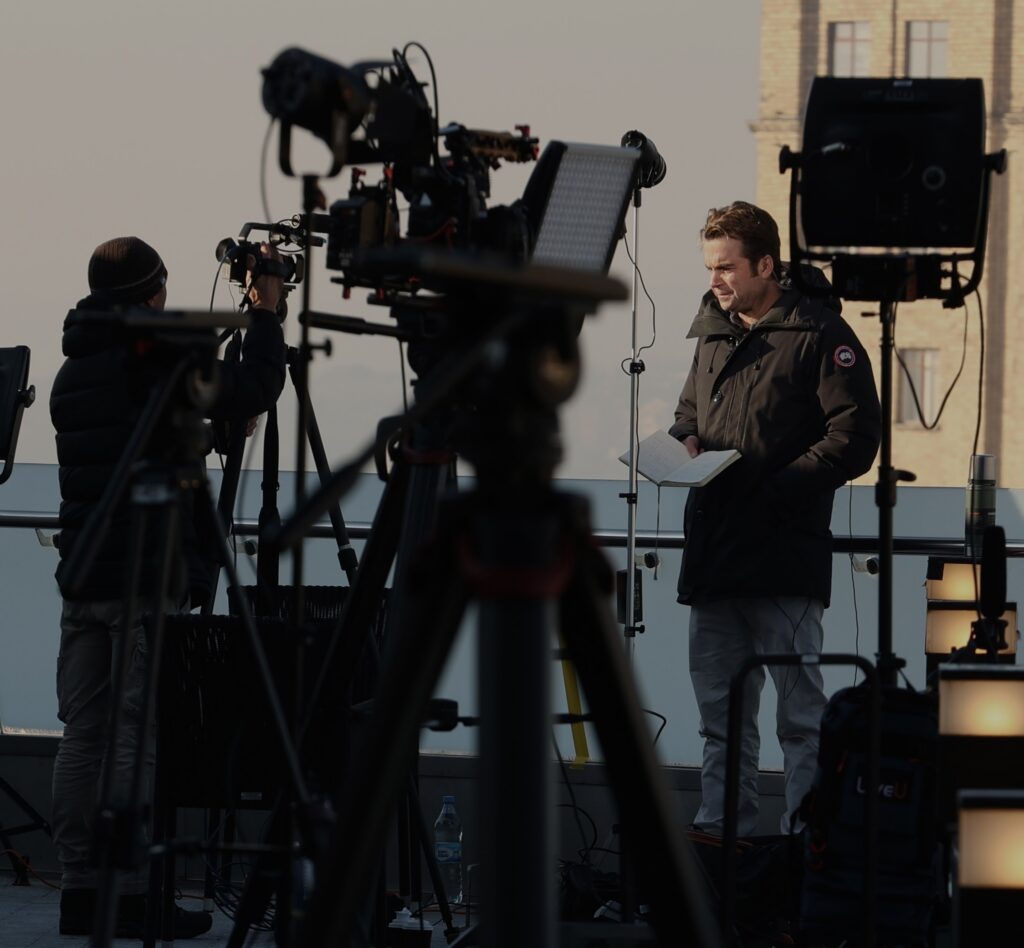
24 Hours in the Kill Zone won the digital news category at the 2026 Royal Television Society Awards. The full-length film by journalist John Sparks (1994) premiered on YouTube where it has racked up more than 1.7 million views. It was broadcast on the news channel and repackaged for social media channels like Instagram and TikTok, where millions of additional users have viewed it.
What does it mean to you to win this award?
You know pretty quickly when you have managed to capture something special and that feeling started to build shortly after our arrival at the front.
We were ushered down into a coal cellar used by a little-known unit in the Ukrainian National Guard called ‘Freedom Force’ as their control centre.
The deputy commander said he was about to launch an attack with a tank on Russian positions in ruined factory. “Would you like to watch?” he asked.
A nerve-shredding 24 hours followed as the unit tried to repel and uproot Russian soldiers and save their own soldiers in the field, and it was clear that the judges both saw – and felt – what we were experiencing.
” ‘The judges were blown away by this piece… the pace got our hearts racing,’ said the RTS committee. It is an indication I think of the sort of visceral impact that 24 Hours tends to have on people.”
What was your film about?
On one level, the film is about a small group of hard-pressed Ukrainian soldiers trying to hold the line in a battle for a town called Dobropillya.
The air was thick with the smell of energy drinks and e-cigarettes in the control room – and we noticed how their hands trembled and their legs shook as they tried to run their operations.
On another level, I think the story is about the future of warfare. What we typically recognise as a battlefield, marked with trench lines, has been transformed into a ‘grey’ or ‘kill zone’. Soldiers are forced to hide to survive – in holes, craters and the remains of shattered buildings. In the sky, aerial drones hunt for signs of life – before attempting to destroy those below.
For members of ‘Freedom Force’, there was no ‘handbook’ to follow – no established set of protocols. Instead, they are forced to analyse and adapt as they go along.
Why was it so important to you to tell this story?
We knew that the battlefield was undergoing rapid technological change. Hours of discussions with military analysts, diplomats and former soldiers had made that clear.
But nobody had documented these developments – outside of user-generated clips on social media which often feature graphic violence.
Our idea however posed significant practical problems.
This has become an increasingly dangerous story to cover. The kill zone is expanding as the range and sophistication of drones increase. Ukrainian units have become increasingly reluctant to take journalists with them.
As a result, few really understand what is going on.
How did you gain this access to be able to film these events?
It took months of negotiation, led by our producer in Ukraine, Azad Safarov.
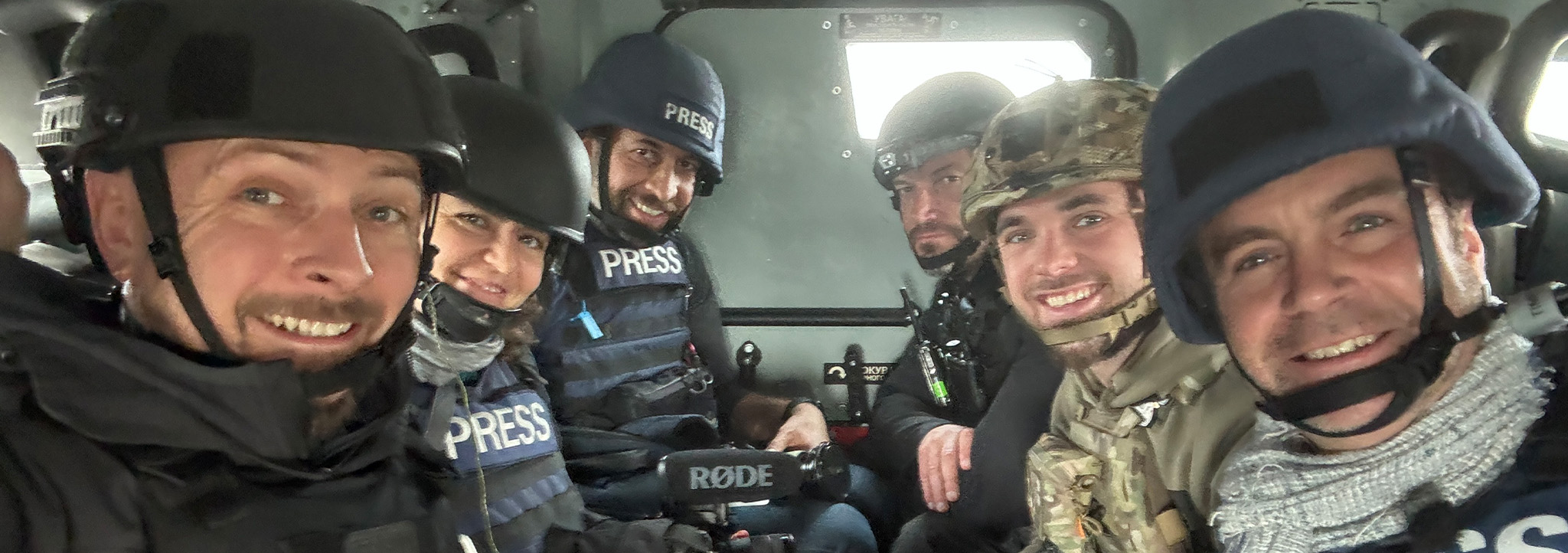
We had to convince the Ukrainian National Guard that we were professional, organised and well trained. We simultaneously had to convince our bosses at Sky News that the risks were manageable – and worth taking in order to tell this story.
What shocked or surprised you the most during filming?
I remember that some of the Ukrainian soldiers we met appeared to be frightened. On previous trips to Ukraine, that sense of fear was generally masked or tucked away – but less so in Dobropillya.
I was also impacted by the genuine bond that unit members felt for each other. The men in the control room may have been physically separated from soldiers in the field, but they were never remote.
Life in the kill zone is extremely hazardous, but it is also precious. This may be the most important thing that Ukrainians share.
Were you in any danger?
Yes, we were. We travelled to Ukraine with an in-house security advisor who helped us to mitigate the risk.
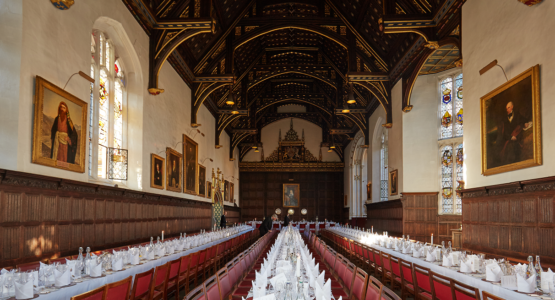
How has your career progressed from St John’s to the present day and what was the influence of the College on your path?
Although I read Law, my legal career was a short one as I veered towards less predictable working environments.
I loved my time at St John’s and knew how privileged I was when I was studying there.
I think my time at College helped provide me with the confidence and fortitude I needed to make it in a what is a very competitive profession.