Hymn to her: reflections on a College reunion
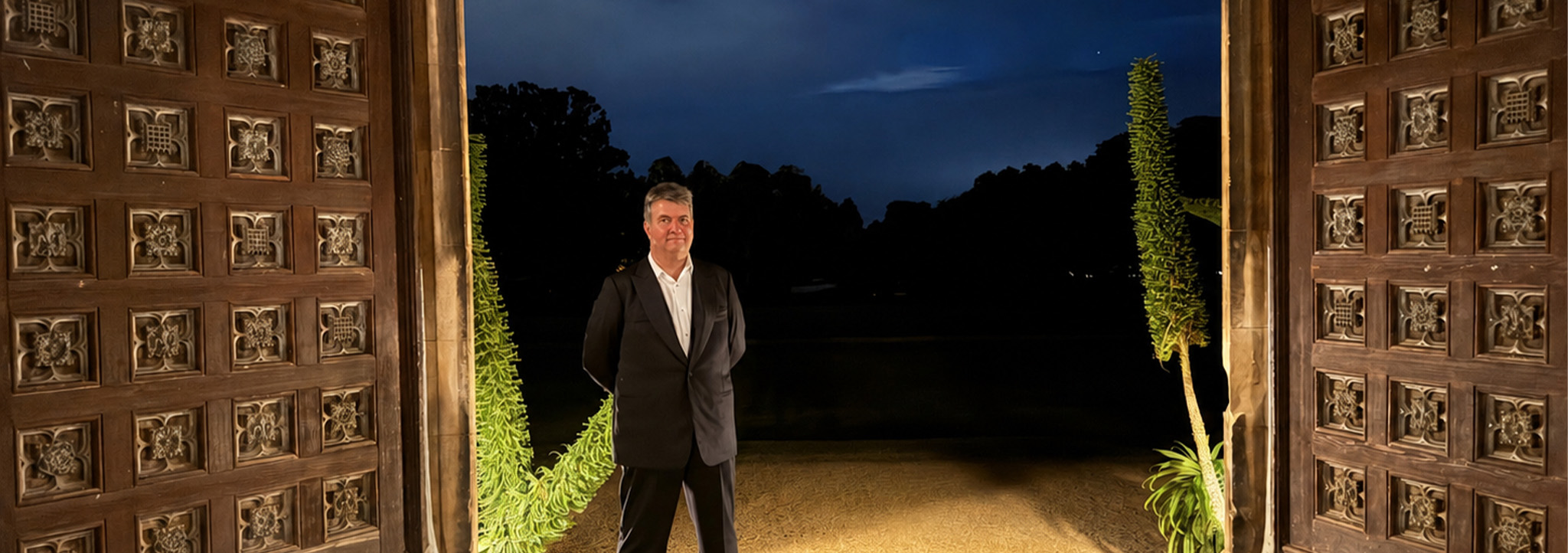
What’s it like to return to College after four decades and meet up with the people who shared your student years? Dr Stefan Fafinski (1986), a senior public lawyer and Parole Board Chair, who was appointed a Deputy Lieutenant of the Royal County of Berkshire in 2023, reveals his thoughts on his recent 40th anniversary reunion dinner at St John’s.
Last weekend, I returned to St John’s College, Cambridge, for a dinner to mark 40 years since matriculation. On the drive up, I got Spotify to create a 1986 playlist – it just felt right – and somewhere between “Rock Me Amadeus” by Falco and “Caravan of Love” by the Housemartins was “Hymn to Her” by The Pretenders. It was a favourite of mine back then although I’d not heard it for years. And it was definitely on the ‘Best of’ singles album I bought in Our Price in Cambridge not long after arriving, so it instantly evoked memories of 18-year-old me, driving up to Cambridge in a borrowed Saab 900, listening to a compilation tape probably recorded off the radio, around the M25 – which, back then, didn’t go all the way around.
Reunions are funny things. You find yourself back in a place you knew intimately – it was your home for three years after all. Your mental map is still there and you can find your way around the place without thinking, and certainly without the need for the actual map they give you when picking up your room key for the night. The gates, courts and staircases are all familiar. But you’re not the same person who first arrived there.
At our matriculation dinner in 1986, the then Master, the formidable and ever-so-slightly daunting Professor Sir Harry Hinsley intoned “you are now members of St John’s for the rest of your mortal lives”. He said it with absolute confidence and certainty. It’s impossible to understand the significance of that when you’re 18, particularly while wondering what fork to use next, why port is being passed around, what port is, what port might taste like, and how port might leave you feeling the next day. But, 40 years later, it turns out that a lot of us remembered those exact words, and, finally, began to understand what Sir Harry actually meant. The College does not take you in, do its best with you for a few years, and vanish. It becomes an inextricable part of who you were, are and will be.
She will always carry on
So we had all left, but the College had carried on. Of course it had. It didn’t stop doing its thing in 1989 when most of us left. It wasn’t a Blue Peter time capsule. Since then, generations of new students had arrived, unpacked, worried, worked, made friends, lost friends, struggled, flourished, failed, recovered, graduated and left.
And that’s what great institutions do. They carry on by welcoming new lives into old structures. We had returned to a place that once felt exclusively “our place”, only to realise that it had always belonged just as much to the generations before us and to those that had come since.
Something is lost
Returning 40 years on also forces you to confront what has gone. Youth, obviously. The unrepeatable closeness of undergraduate life. The futures we imagined before life had taken its course, and the sense that the future was still mostly unopened.
More poignantly, there were some in our cohort who are no longer with us. The statistics I once learned told me that time would not treat us equally, and the bell curve had already begun to take its toll. We talked of those who had left us too soon and, no matter how long they had lived, remain frozen for us as they were in 1986-89.
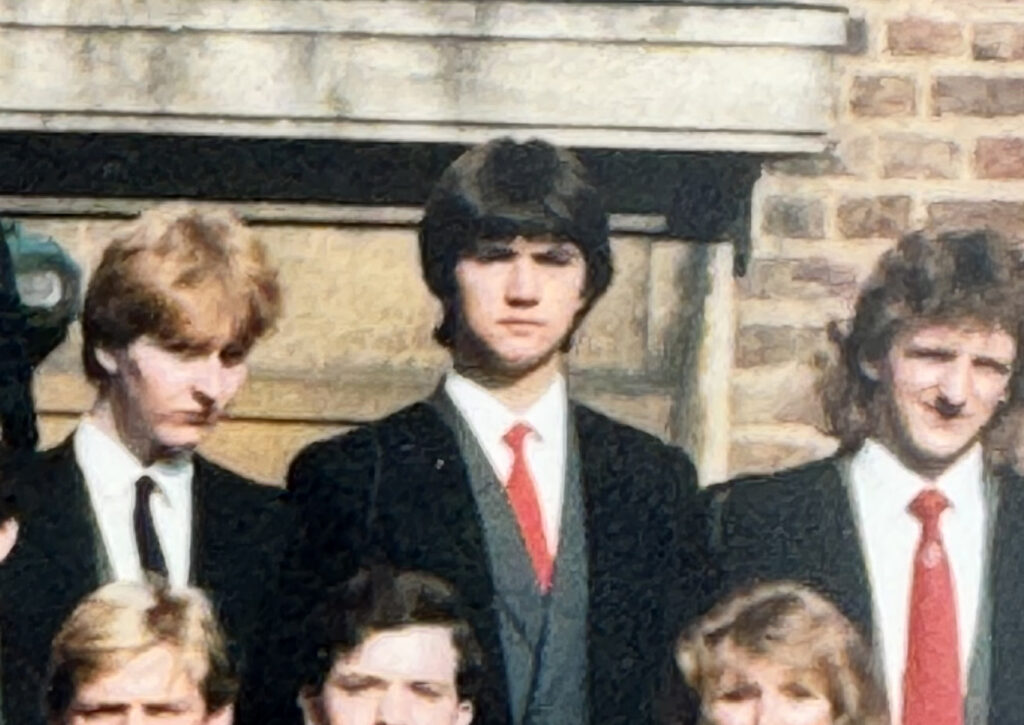
I also found myself thinking about 18-year-old me pulling up to St John’s in that borrowed Saab: excited, trepidatious and knowing nothing about port. I’d not lived away from home before, or experienced anything remotely resembling adult life, so there were times that I really struggled. I loved St John’s, and always will, but can’t escape the reality that there were moments there that were hard and painful.
I didn’t have the language for that sort of thing back then. And, to be honest, I’m not sure that many of us did.
I freely admit that I find being kind to myself very difficult. That was true of me then, and it’s been pretty much true ever since. There is some irony there, given that the motto on my Coat of Arms, granted decades later, is Erga Omnia Beneficentia, which broadly translates as ‘kindness in all things’. Perhaps I’ve always found it easier to direct kindness outwards, rather than remembering, or indeed being able, to extend it inwards.
One other thing that is lost is the ability to go back and fix everything for our younger selves. I can’t give younger me the words I didn’t have, the resilience that wasn’t always there, or the steadiness that was often lacking. But at least I understand him a bit better now.
But something is found
Reunions can turn up unexpected but welcome surprises. During dinner, one of my contemporaries said, in effect, that my close circle of friends had known that things were not always right and had been worried at times, but simply did not know what to do. And that made me think about something I had not properly looked at for a very long time.
We were very young and living in a time when the culture around student mental health was very different from how it is today. “It’s ok not to be ok” wasn’t a thing. “Pull yourself together and get on with it” was. Extenuating circumstances, special adjustments and student wellbeing hubs didn’t really exist: indeed, I skipped my grandfather’s funeral to sit my Maths A Level, something that would probably be unthinkable these days.
But I have now found two things. First, the comfort of knowing that others cared, even if they didn’t know how to help. And second, a retrospective gratitude towards them. They may not have had the answer and couldn’t really have fixed anything. But they were there then, and they are still there now.
They will keep on speaking her name
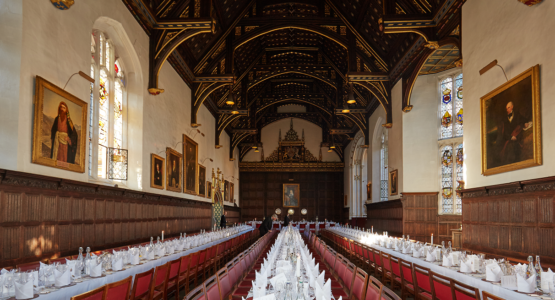
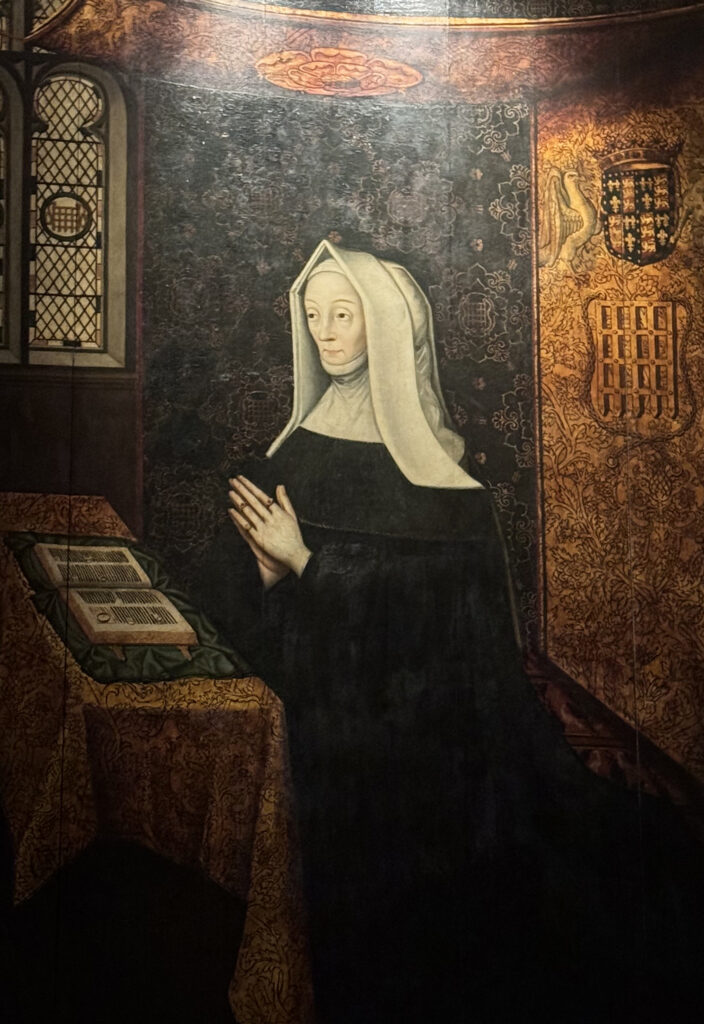
St John’s wouldn’t exist but for Lady Margaret Beaufort, mother of Henry VII, whose estate enabled the College to be founded in 1511, at the suggestion of Saint John Fisher, on the site of the Hospital of St John the Evangelist, which had been there since around 1200. Her name is still spoken over 500 years later. Not just because it is attached to a portrait in the Hall or the College Boat Club, but because the institution is still doing its thing, and remaining useful, generous and alive. Every generation that comes through the College, learns within it, and carries something of it away, renews that founding act.
Some things change
Some changes were pretty obvious. Omar’s Kebab and Pizza in Green Street is now a much fancier Spanish restaurant. Our Price has become a fine art gallery. The College phone boxes where we used to queue to use the payphones are still there, but defunct and locked: relics of a bygone age before mobile phones and WhatsApp, when dropping someone a message meant traipsing across College and writing on the sheet of paper we all had Blu-Tacked to our doors, usually along with a pen or pencil on a piece of hairy string, just in case of forgetful visitors, or, if greater message security was ever needed, pushing a note under the door.
Speaking of technology, if we wanted to use a computer, we had the option of walking half a mile to the Mond Room on the New Museums Site (and hoping there was a computer free when we got there) or signing up for a slot in the new College computer room, home to half a dozen brand new Apple Macintosh Pluses. I’ve been a Mac user ever since.
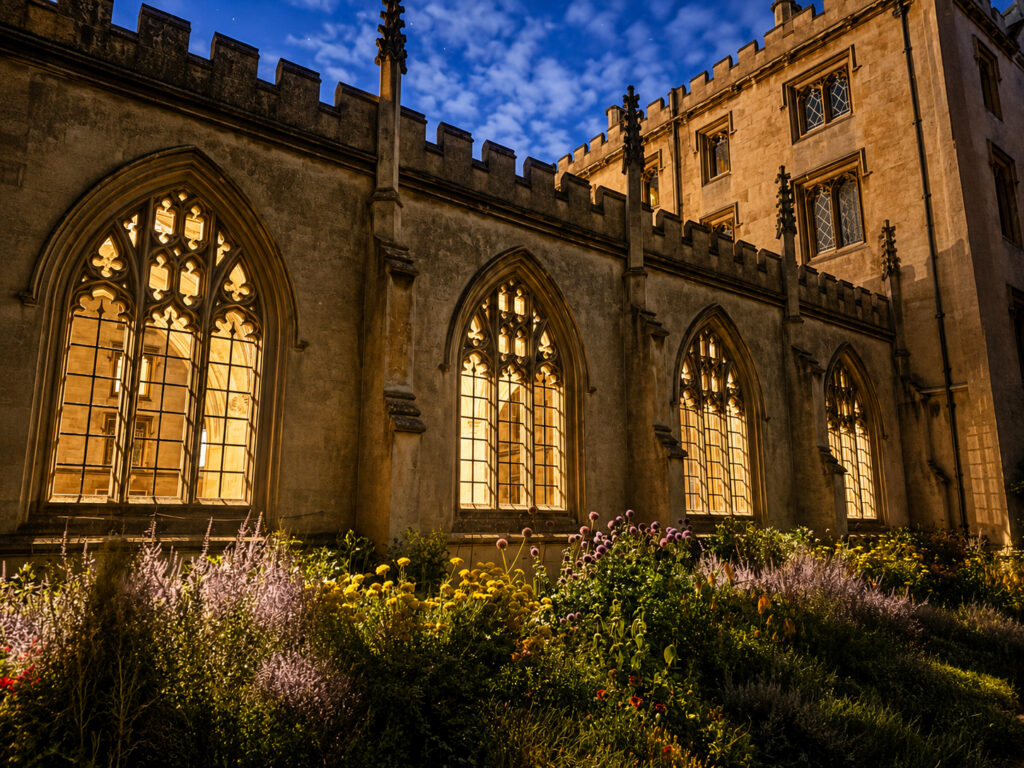
The expanse of nothing much outside the Cripps Building has been landscaped, which does a lot to soften the 1960s brutalist concrete surroundings. And there is a brand new Porter’s Lodge at the back of College, in a building that used to be a restaurant so fancy that I never went in there, and can’t even begin to recall its name.
It was on the way to the Rose and Crown, as it then was, run by Pat and Eileen, who had the occasional infamous lock-in. The fruit machine was 10p a spin, and the pie and a pint lunch deal was great value, provided you took care to look out for occasional mould under the crust.
And not only has the College Bar moved round the corner to the site of the former JCR, but prices have gone up from the 60p a pint we enjoyed on arrival, and it is now no longer possible to be served a bottle of rough College port by simply writing someone else’s room number on a chit and signing your name with an X.
We had changed too. Forty years is more than enough time for careers to be made, remade and early retired from, families to grow, losses to be absorbed, illnesses to be survived, ambitions, hopes and plans to be revised more than once, and lives to take the unexpected sorts of turn that none of us could have imagined at 18. And the reunion dinner brought all that into Hall. You’re meeting old friends, the people they became, the people they once were and younger versions of yourselves, all at once.
Some stay the same
But for a few tweaks, the College itself is largely as we left it. Indeed, it is pretty much as generations before us left it. One of the unexpected treats of the evening was hearing the College Choir sing in the middle of both Graces: Rusca’s Adoramus te Christe and Palestrina’s Sicut cervus. In fact, it was not only unexpected but rare. I don’t recall music like that at a College dinner before. For a few minutes, the hubbub of reunion, recognition and recollection gave way to something much older. Both pieces belong to the early centuries of the College’s life, and both predate the foundation of the Choir in the 1670s.
So there we were, 40 years on for us, listening to music reaching back towards the College’s early memory. And if that’s not continuity, I’m not sure what is. St John’s is ancient, but still alive and thriving, renewed and energised each year by the students, Fellows, staff and choristers who pass through it. And College port is still rough.
On reflection
So, on reflection, Sir Harry was right. Membership of the College isn’t just an administrative exercise, reducing each of us to an entry in an alumni database. And, if I might be so bold, I think he underplayed his hand by referring to membership rather than belonging. We belong to the College and the College belongs to us in an emotional and lifelong way. We may have left St John’s, but St John’s has not left us.
Music played its part too. Listening to The Pretenders on the way up took me back 40 years.* The music in Hall took us back 400 and reminded us that the story of St John’s predates us by centuries. So after a peculiar mix of nostalgia, reflection, fun and port, I left feeling grateful. Grateful for the whole St John’s experience, notwithstanding the difficult times. Grateful for the friendships and shared memories that endured. Grateful for those who were entirely ill-equipped to keep an eye out for me at the time, but did so anyway. Grateful for the changes that have made student life a little gentler and more humane. And perhaps most of all, grateful to have been, for a short time, part of a continuous story that began long before us and will continue long after the bell curve has done its worst. She will always carry on.
*Incidentally, if you’ve never listened to “Hymn to Her”, go and find it. Not only is it really rather good, but it will make the structure of this piece make a whole load more sense.