The Marguerite 2026
The Dr Manmohan Singh Scholarship: life, impact and legacy
The Dr Manmohan Singh Scholarship: life, impact and legacy
Dr Manmohan Singh grew up in a poor farming family in Punjab and moved to India during partition. He earned a scholarship to Cambridge from Punjab University, completed his economics degree with First Class Honours and obtained his doctorate at Oxford. When awarded an honorary Doctor of Law degree at Cambridge in 2006, he credited the University for shaping his intellectual rigour and openness: “In many important ways, the University of Cambridge made me.”
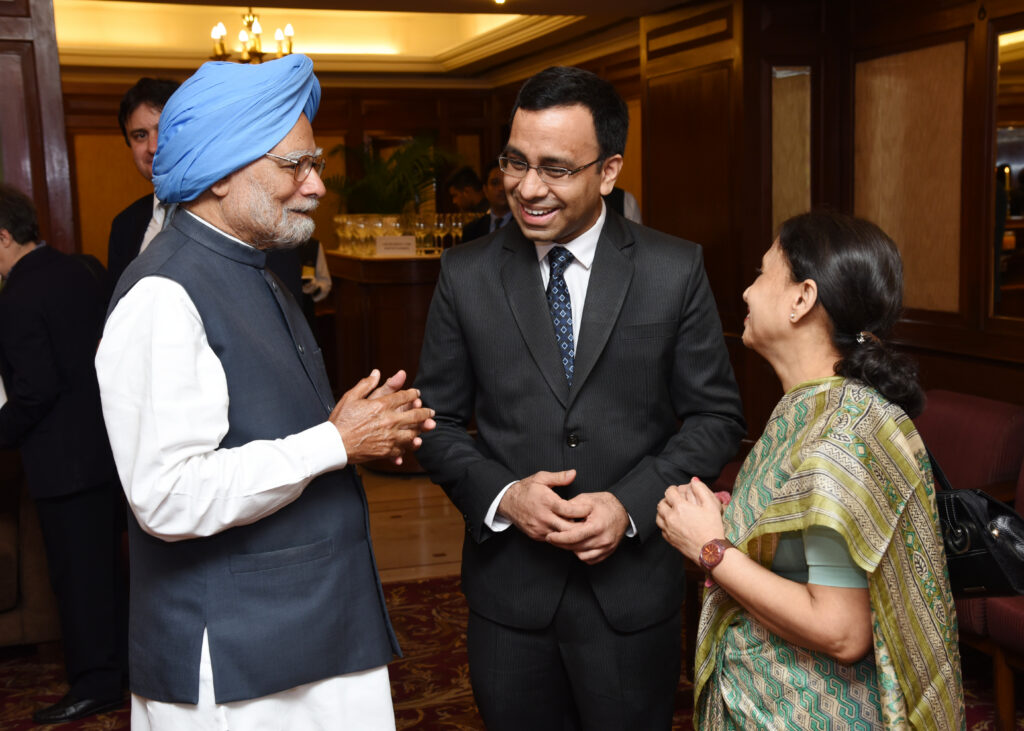
The Dr Manmohan Singh Scholarship was established to support future Indian leaders pursuing PhDs at St John’s. We spoke with a few of them to see how the scholarship has impacted their life after graduation.
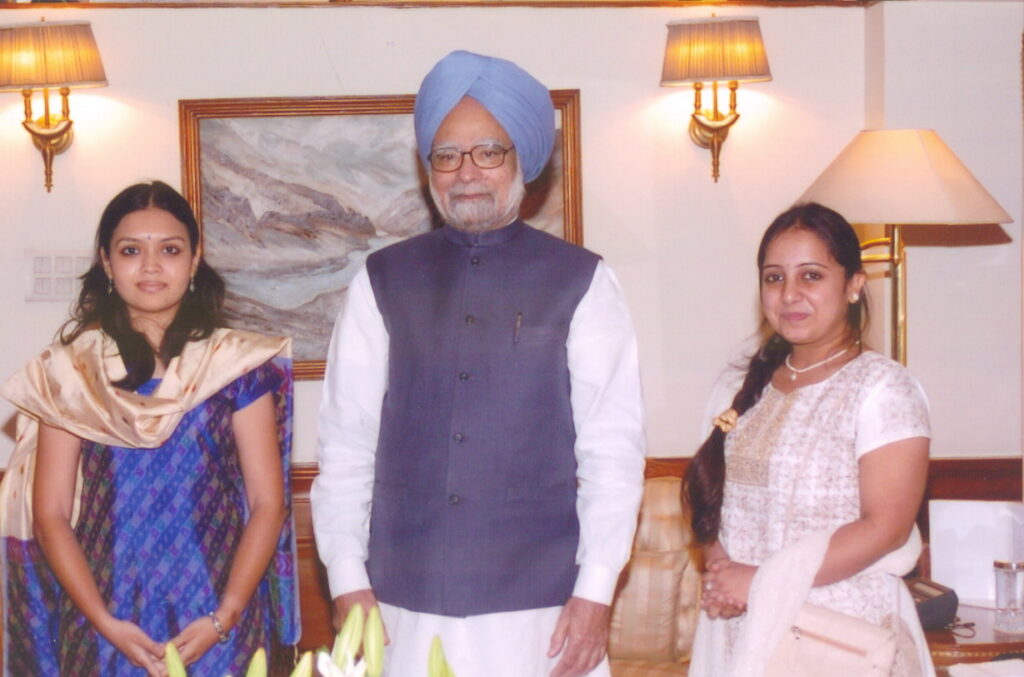
Shruti Badhwar
(2009) Physics PhD, recipient
The Dr Manmohan Singh Scholarship gave me freedom to take intellectual risks. During my interview I outlined three goals that still guide me: face my greatest challenge; become an entrepreneur; and work among brilliant minds. The scholarship made all three possible.
It funded my doctoral research in semiconductor physics at St John’s, where I researched graphene devices and quantum cascade lasers for the Terahertz spectrum at the Cavendish Laboratory. Cambridge taught me to balance ambitious ideas with practical execution – when to push forward and when to pivot. That discipline in iteration and problem-solving has been central to my work since. The collaborative environment across physics, engineering and materials science showed me that breakthroughs happen at disciplinary intersections.
After graduating in 2014, I joined IBM Research, improving facial recognition accuracy by 14% for underrepresented groups. At Google X I built machine learning systems processing RGB and hyperspectral data streams for early-stage moonshot projects, coordinating across hardware and software teams.
I’ve co-founded three technology companies serving enterprises, creators and scientists. At Commerce.AI I developed platforms that help e-commerce companies understand customer feedback at scale. At Embody, as VP of Data Science, I led R&D from concept to production release of ML-based spatial audio for gaming and entertainment, scaling to 20,000+ users while building the team and data infrastructure. Most recently, as CTO at Reincarnate, I’ve built AI systems using large language models that accelerate scientific workflows for Fortune 500 R&D teams, such as building structured databases from unstructured data – reducing 100 hours to 10 minutes, a 750× acceleration. Across these ventures I’ve hired and mentored scientists and engineers and contributed to more than 16 publications and patents.
The freedom the scholarship provided continues through the platforms I build and the people I support: tools that accelerate scientific workflows, improve fairness in AI systems, and enable creators – each multiplying what others can accomplish.
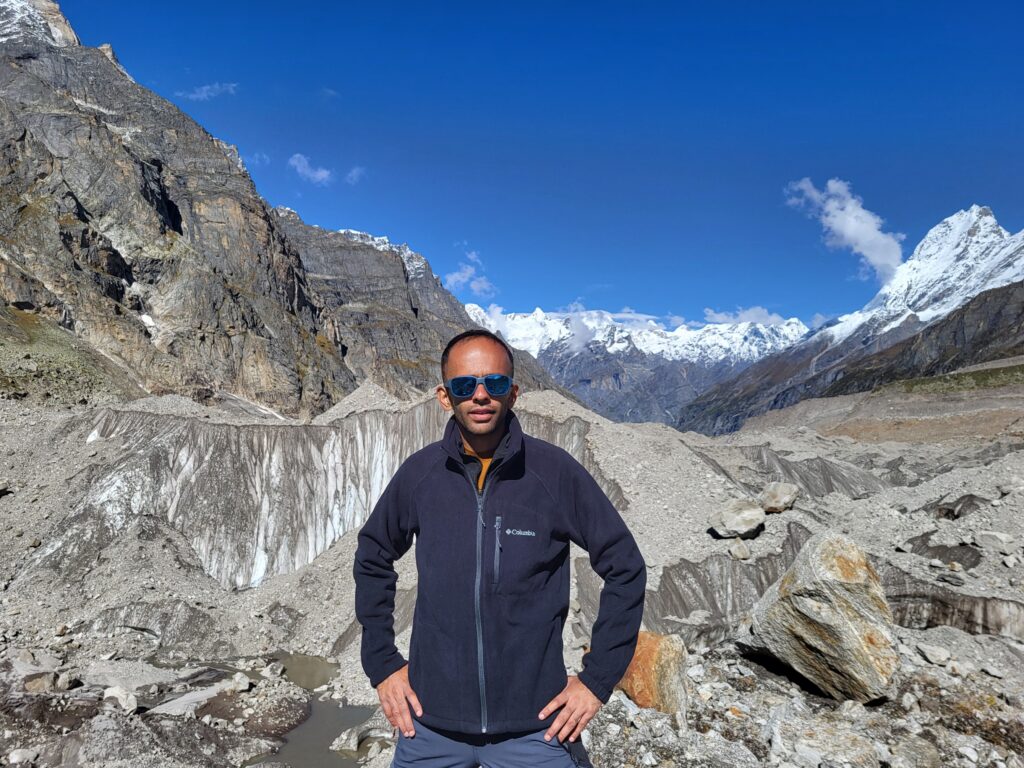
Arjun Datta
(2011) Earth Sciences PhD, recipient
I am a seismologist and a faculty member at the Indian Institute of Science Education and Research (IISER) in Pune, India. The best thing about my trajectory since leaving Cambridge is that I am doing the same exciting science I trained for during my PhD. Seismology is the science of earthquakes, and my research is on using seismic waves generated by earthquakes and other sources to study Earth’s structure. This means we can ‘peer into’ the Earth using recordings of waves on its surface, much like a CT scan in medical imaging. I usually work with seismic ‘surface waves’, so the depth inside the Earth that we probe is on the order of tens of kilometres.
In the last five years, since starting my faculty position, my research has taken me from the scenic Konkan coast in the Deccan Volcanic Province of western India to solitary, debris-covered glaciers in the mighty Himalayas. In the Deccan we are interested in possible remnants of magma chambers in the crust, while in the Himalayas our research is aimed at understanding the enigmatic dynamics of glaciers and, ultimately, their response to climate change.
My research group currently consists of three PhD students and one Master’s student, and we collaborate with other scientists both within India and abroad. I also teach undergraduate students in their first and second years, with the first-year class comprising 250–300 students.
Prior to joining IISER Pune in January 2021, I spent three years as a postdoctoral fellow at the Tata Institute of Fundamental Research in Mumbai. That is where I learnt to research independently and gained the confidence to supervise others.
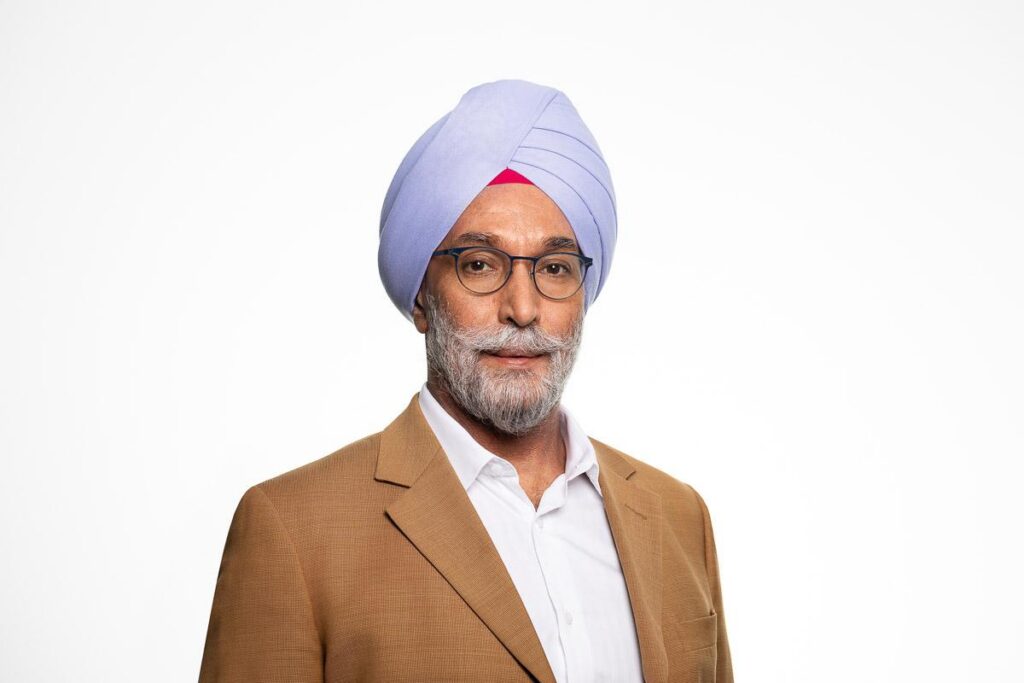
Hardip Rai
(1986) Engineering, donor to the Dr Manmohan Singh Scholarship
I was staying at the Imperial Hotel in New Delhi in early April 1999 when I first met the great man. A renowned journalist was hosting a book launch in the Imperial’s grand ballroom, and my wife and I joined the event to meet the author and have our newly purchased book signed.
Walking in, we were struck by the number of people clustered around the various personalities – the author signing his book, a chief minister surrounded by flunkies, a famous author and journalist sharing stories with whisky in hand, a minister here and a TV personality there. The great and good of Delhi society were all present.
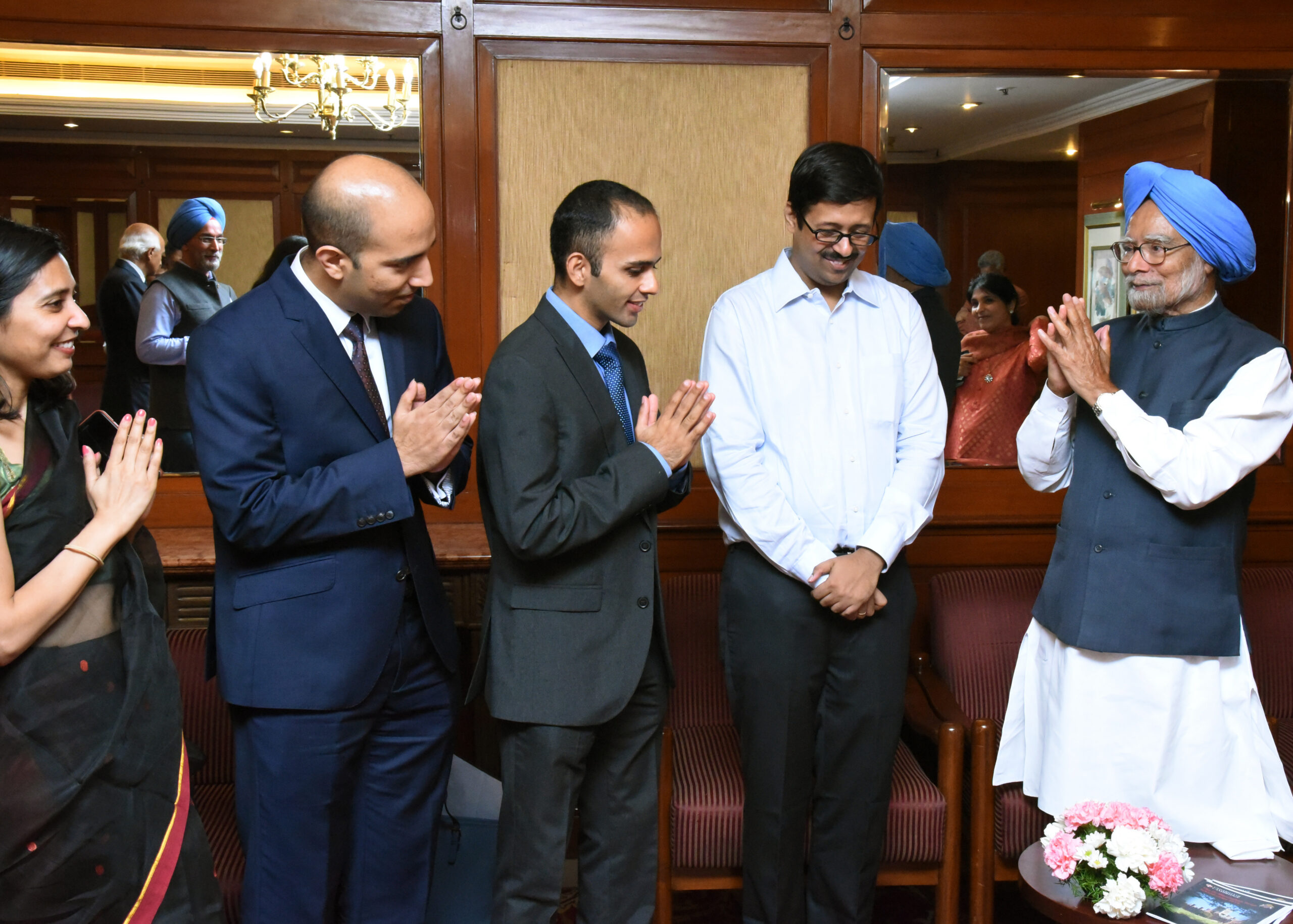
Among the gossip, laughter, clinking glasses and big personalities showing off, I noticed a slight man standing alone away from the crowd, with a white beard and blue turban wearing a relaxed white kurta outfit. I recognised him as Manmohan Singh, the former Finance Minister who had initiated India’s financial reforms in the early to mid 90s – he was now part of the opposition, following elections in 1996.
Had he been with other people, I probably would not have approached him. Since he stood alone, we introduced ourselves and I spoke with him for a good few minutes. Even in that short time we could see that he was a humble and kind man with a sharp mind. I had met a hero and not been disappointed.
Five years later, at the age of 71, Manmohan Singh was elected Prime Minister of India. In the news articles written about him at that time I came across references to his time at St John’s as an undergraduate. I was taken aback – and was disappointed in myself – that I had not known he and I had the St John’s connection, and I wondered how our earlier interaction in Delhi might have been different.
Shortly thereafter St John’s launched the Manmohan Singh Scholarship. Supporting the scholarship became an opportunity for me to recognise the man I had met in Delhi – a quiet and humble Johnian who went on to lead the world’s largest democracy for over 10 years. A good man and a role model.
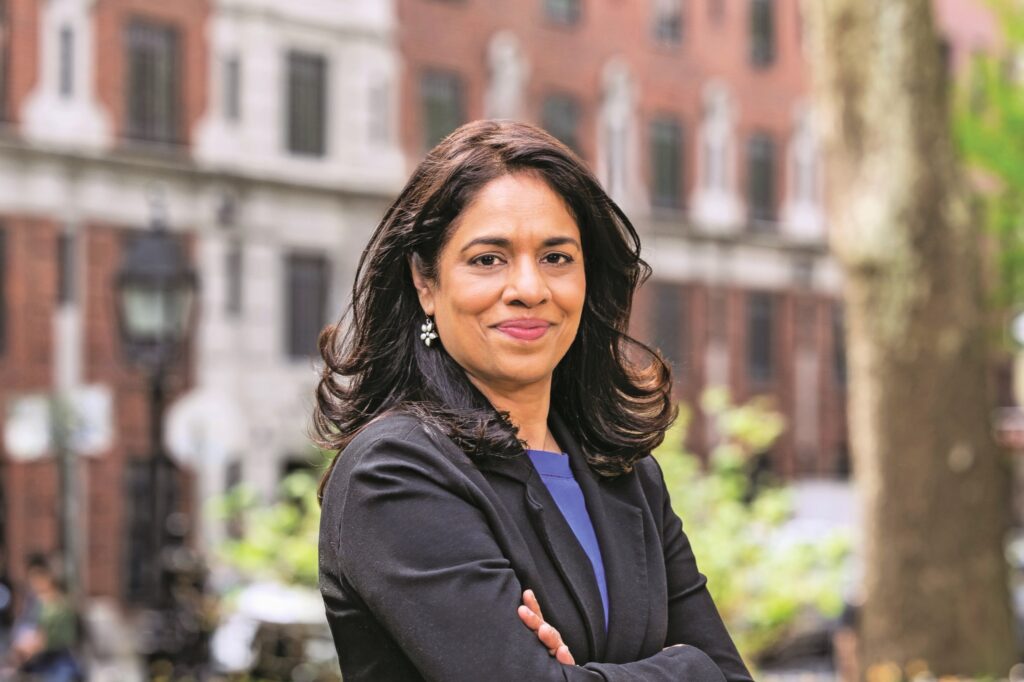
Amrit Singh
(1989) ECO, daughter of Dr Manmohan Singh
My father was born to a family of limited means in the village of Gah in undivided India. The village had no school, no electricity, no road and no drinking water supply. As a young boy he walked miles to go to school and studied at night in the dim light of a kerosene lamp. But he always knew that learning was his only chance to change his circumstances.
His quest for learning led him to study Economics at St John’s in the mid-1950s. From the very first day that he was handed the keys to his rooms in Third Court, he was excited to be there. Those were some of the most intellectually stimulating years of his life. It was at St John’s that he experienced the relentless desire to pursue intellectual inquiry, to be open to argument and to be fearless and lucid in the expression of his opinions. The College also gave him a sense of belonging to a community that values truth, humility, and service. He lived his life by those values.
When St John’s announced in 2007 that it would set up PhD Scholarships for Indian students in my father’s name, it was deeply meaningful to him. He said, “My life is a living example of what scholarships can do for those who come from less privileged sections of society … That a person like me, with my modest background and means, was able to study at all, not to mention at Cambridge, is testimony to the role scholarships can play in social and economic empowerment of individuals and society.” His first-hand experience of the transformative value of education made him want that experience for every Indian.
If you are interested in supporting the Dr Manmohan Singh Scholarship, please get in touch with the new Development Director, Glen Whitehead, at glen.whitehead@joh.cam.ac.uk or 01223 360900.