Johnian magazine issue 54, autumn 2025
Spotlight on: Sustainability and why investors now demand it
Lucy Carver is an award-winning sustainability leader with a proven record of leading transformative sustainability strategies that protect and create value across Media, Technology, Finance, Private Equity, FMCG and Government. Lucy began her corporate career at Unilever, L’Oreal and then Sky, where she was Chief Sustainability Officer. She designed and embedded a pioneering sustainability strategy at the core of business operations. Lucy later expanded into consulting, delivering major social-impact programmes for the UK Government during COVID-19 and, as Co-Founder of Ochre Partners, now advises global clients on sustainability, including leading financial services firms.
Sustainability has gone from being something companies do if they see themselves as philanthropic, to absolutely business critical if they still want to make money, employ the best staff, future-proof their supply chain and attract investment.
Lucy Carver (1994), co-founder of Ochre Partners, was in the first wave of sustainable business pioneers, from helping to launch Sky Arts, to protecting the Amazon rainforest, and encouraging more than a million people to get on their bikes.
Now she is a consultant advising companies on their sustainability strategies. She explains that the most successful companies are now placing sustainability at the centre of their business because the real-world impacts of climate change are already affecting their operations. But those who are really in the know are also recognising that credibility in terms of climate and social impact has become a vital asset if they want to attract investment. Businesses without good sustainability strategies are being counted out.
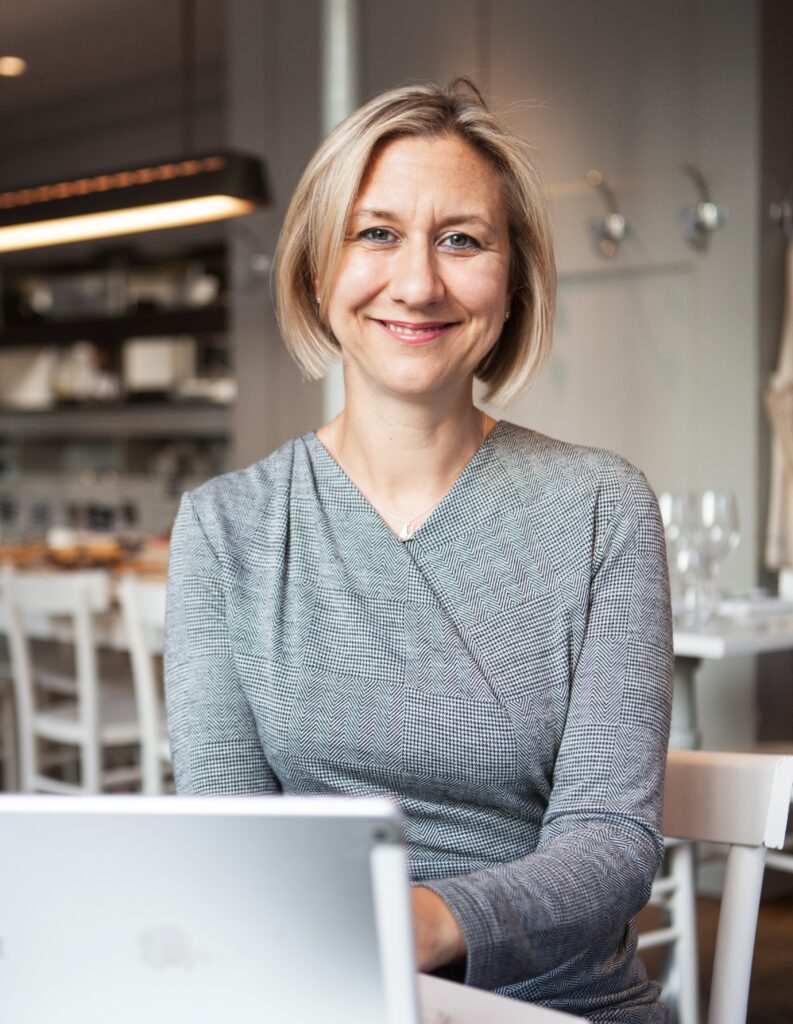
“Since I started out in sustainability more than 20 years ago, it’s moved to being part of core business strategy and decision making,” says Lucy.
“You have to really think about what the material impacts are for your business. Where are you most exposed on environmental and social impacts? Where do you have the most impact? What do you need to build business value? And I think there’s been a real tipping point about credibility, especially recently. It’s not enough to just talk about values or long-term targets that go into the future. You’ve got to show your plans, have evidence of delivery and get independent assurance.”
Lucy has launched Ochre Partners, a consultancy helping businesses integrate sustainability and Environmental, Social and Governance (ESG) into their organisations, and has found that demand is growing.
“The world is in a transformative era, driven by the need to tackle climate change, protect nature and drive positive social impact,” says Lucy.
“There is also increasing scrutiny to do so from stakeholders, including employees, clients, consumers, communities, investors, regulators and government.
“One of the things that’s really important for investors as well as consumers is transparency. A lot of investors will never go to a company to ask a question about their environmental impact or their social impact; they will expect you to be transparently communicating on your targets and your progress, and if you don’t do it publicly, then tough. You don’t know what capital you haven’t had access to, who hasn’t invested in you. You’ll never know. And the ratings that are given are given without your say. It means you’ve got to be walking the walk, not just talking the talk on sustainability.”
Businesses are now seeking help to change their operations when their credibility and reputation is at risk, leading to real impact on their investors’ attitudes. Failure to be transparent could see your company end up the target of activists.
“People often come to me asking how to make activists stop,” says Lucy. “But that’s not the right way to tackle this. The role of those agitating voices is very important within society and within sustainability. It is their job to agitate. It is up to you as a business person or as an organisation to decide how you respond. That has to be based on your values as a business, your business strategy, what is most material to you and how you can go forward. The best way to get ahead of a difficult decision is to anticipate it, and if you’re if you’re left floundering around reactively, that’s probably because you were thinking midterm, not long term.”
Lucy began her corporate career at Unilever, L’Oreal and then Sky, where she was Chief Sustainability Officer. There, her projects included creating and delivering Sky UK’s groundbreaking initiatives such as:
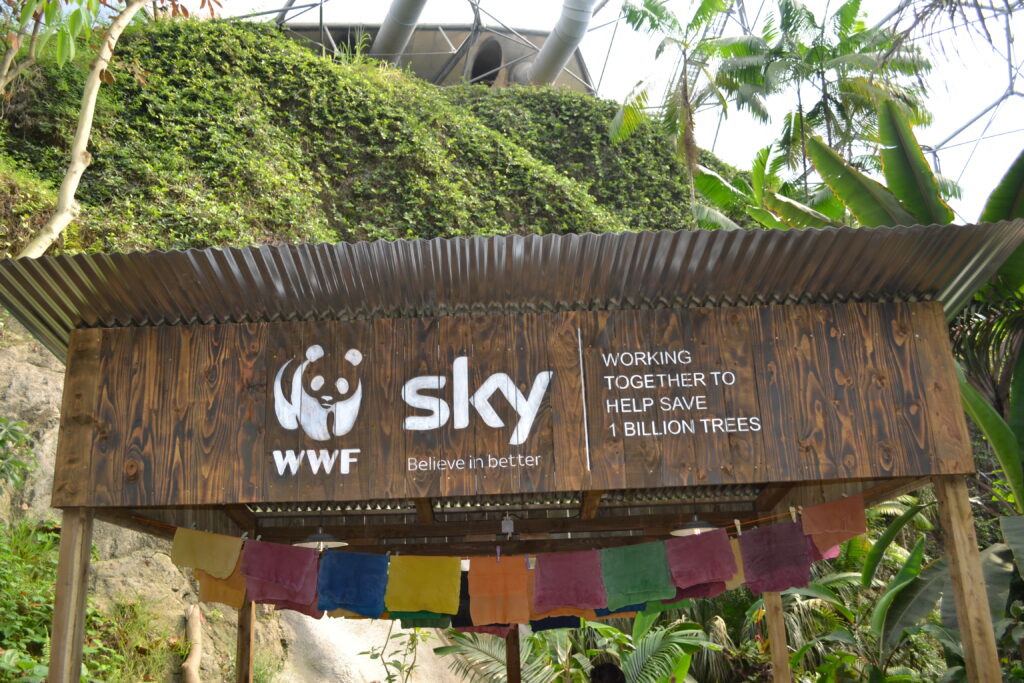
• Sky Rainforest Rescue with WWF to help save a billion trees in the Amazon
• the Sky Ride partnership with British Cycling which alongside Sky’s creation of Team Sky got a million more people cycling in the UK
• multiple award-winning innovative partnerships with arts organisations and the Sky Arts channels.
“When I started out, there wasn’t really a roadmap, which is a very freeing position to be in, and that was really attractive to me because you could be creative while also bringing business rigor to decisions,” she says.
“At the time, no one called it sustainability. There wasn’t even ESG. There was something called Corporate Social Responsibility, but that wasn’t quite what I was doing. And sustainability was also not something that was commonly done by big businesses. Generally, consideration of social impact, or environmental impact, was owned by government, academics, NGOs or quite niche businesses. So being in the first wave was really exciting. It allowed a lot of collaboration and creativity, as well as a strong sense of the art of the possible.
“The key difference from other organisations was our decision that we would bring a level of business rigor to sustainability. It was no longer a sort of philanthropy on the edge of operations, but rather a core part of business strategy. I remain very energised by this.”
During the UK government’s COVID-19 response, Lucy went on to lead national strategy and rapid delivery of testing solutions via pharmacies across England. Since then, she has co-founded Ochre Partners with Vanessa Neill. Their clients have included a global asset manager; leading global private equity firms and their portfolio companies; and other public and private companies. And, Lucy says, she advises that doing the bare minimum is no longer enough for investors.
“Those businesses who’ve already dealt with their low hanging fruit on sustainability now have to really think about their value chain, their core operations, their procurement,” she says.
“They need to look at how they source their power, how they make their goods, where they operate, how they treat their workers, what’s going on throughout the whole supply chain. These are quite thorny issues, and credibility becomes harder as the issues get harder.”
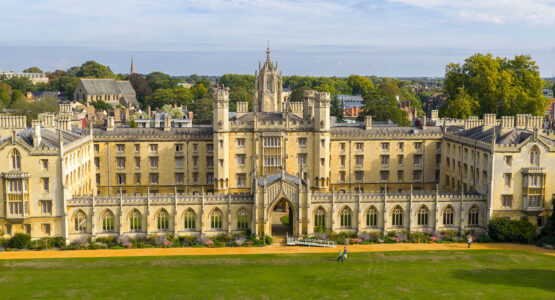
Lucy read English at St John’s and credits her time at the College with building her confidence and being the bedrock of her career. Her father Tony Milton (1990), previously the Commandant General of the Royal Marines, is a Johnian, as is her sister Rebecca Wooldridge (1997).
Lucy says: “I remember my first night at St John’s, the first dinner, and the Master at the time gave a speech telling us to use this community, this privilege, this opportunity, to do great things in the world. He said: ‘We expect that of you, and we will support that’. And I found that immensely empowering. I joined when women had only been in the College for around a decade and I felt I could do anything. This is a College interested in ideas and impact, and that continues to play out in the world. I’ve found a network of lifelong friends here who encourage each other and are creative and positive.”
Now she is giving back by mentoring young people starting out in sustainability careers as well as delivering executive education on sustainability at the Judge Business School. Lucy says: “I do this because we are in a climate crisis and it’s really important to keep the conversations and the collaboration going.”