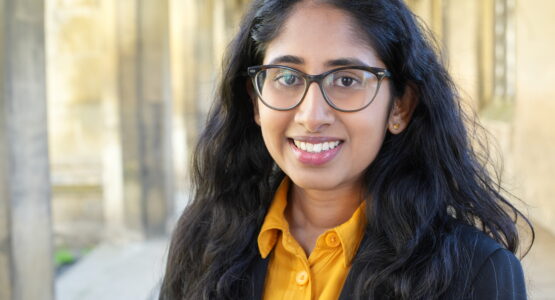
Ifeoma Chike
(2022) Geography
Cambridge Bursary Scheme
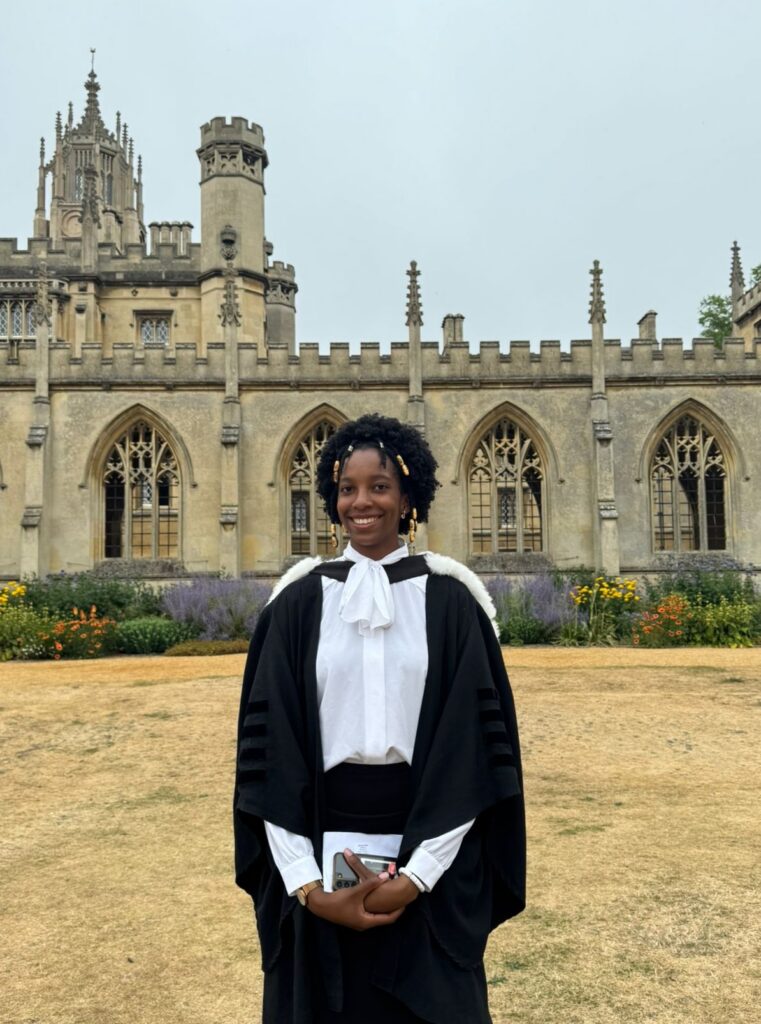
I joined St John’s from East London three years ago and have just graduated from the BA Geography course. The College is very different from my home neighbourhood, and yet I found friends that I enjoy spending time with. Twice I have been back to Cambridge since I graduated in July, I have been reminded of the environment of intellectual curiosity that stimulated my extra-curricular research. Where students at other universities may have had to take up part-time jobs to support themselves, my excess time was fortunately channelled into feeding my growing curiosity about the world’s constantly evolving technology and political dynamics.
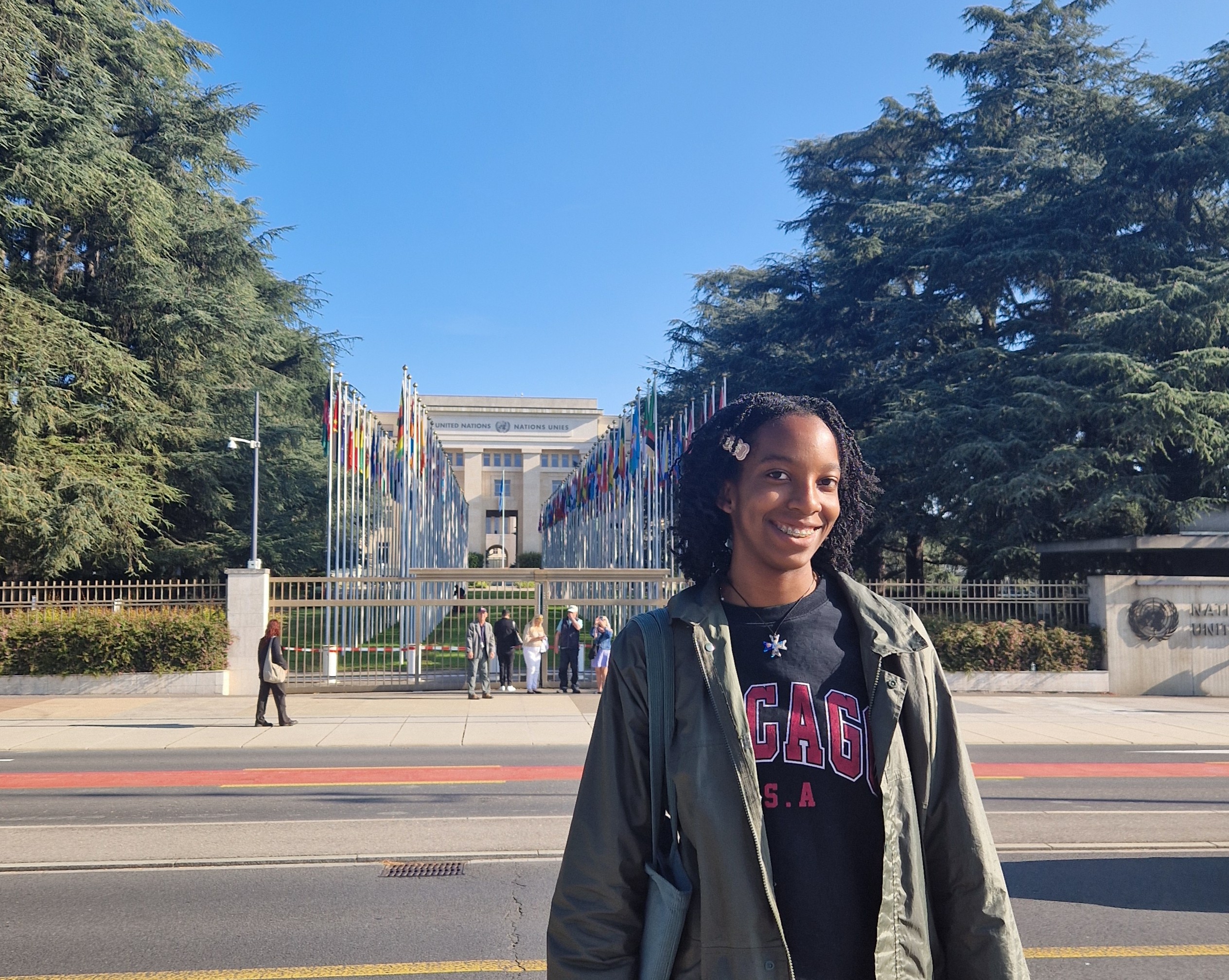
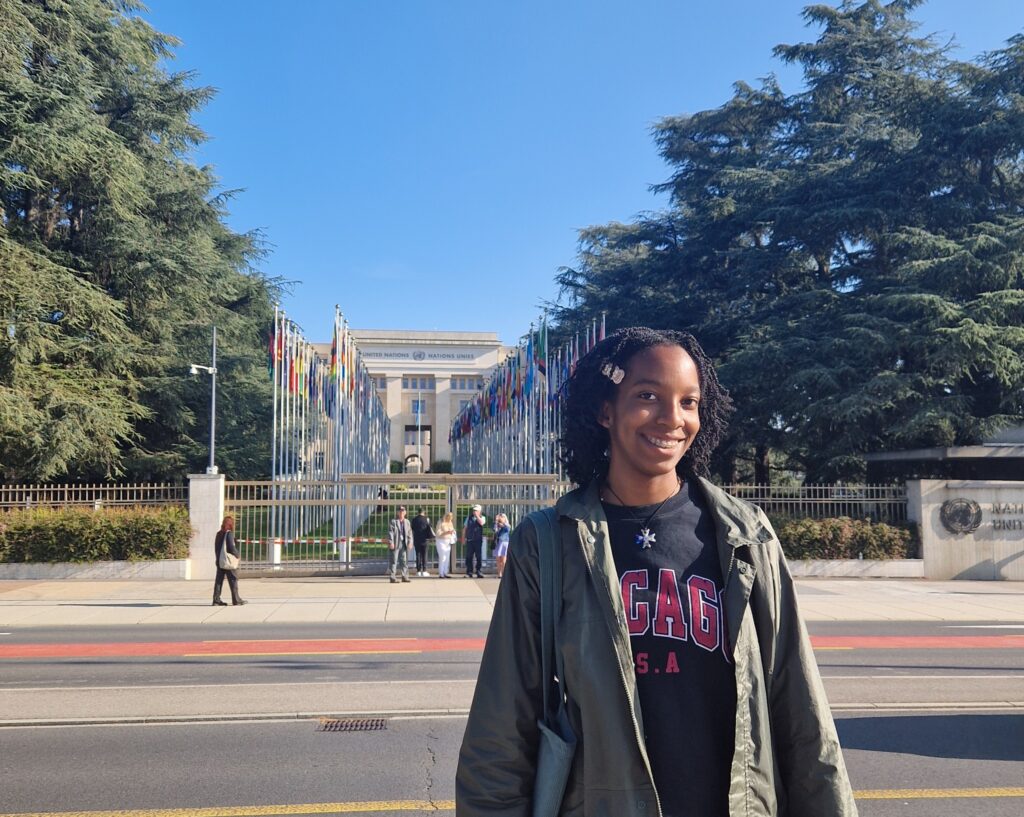
In my second year I got involved in the Student Group at the Cambridge Centre of Governance of Human Rights (CGHR), where I worked on a project in collaboration with Amnesty International. This is when my interest in the nexus between technology and surveillance arose. Our work investigated the increasingly difficult political environment journalists have faced around the world, including surveillance, violence and intimidation. I was trained to utilise the geo-spatial tools I had learnt in the Geographical Tripos for a more political application. Through collecting evidence that will be used in real research at Amnesty International, I felt for the first time that I had skills that could help implement justice where it was needed. The project culminated in a trip to Geneva, where students working with Amnesty from universities in the US, Mexico, the UK and Germany gathered to share methods, connect, and plan further projects for the year ahead.
I felt very privileged to take part in this experience thanks to the financial support of my bursary, and it motivated me to continue working with the CGHR in my third year – this time as the leader of a new research project. Taking inspiration from my work with Amnesty International, our project flipped the standard gaze in AI research. Instead of portraying online users as passive receptors of algorithms and AI, we investigated how users of online platforms enact their agency to resist the surveillance and governance of algorithms. We uncovered several methods used to avoid censorship or to take ownership of content. For example, ‘algo-speak’ – the alteration of banned or censored words to avoid detection by algorithms – or the creation of new platforms to wholly avoid the algorithms.
Interestingly, these methods turned out to be double-edged swords: users could spread hatred and bigotry by avoiding censorship, but they could also organise democratic protests, recognise identities and create spaces for the marginalised. I enjoyed the project immensely because we were able to consult professors from different departments who inspired us to take an interdisciplinary approach. Bridging rigorous academic thought with real-world and practical application gave me a comprehensive view of the evolving politics of AI and algorithms. I learnt that it is just as important to take action on what you have been taught as it is to be educated.
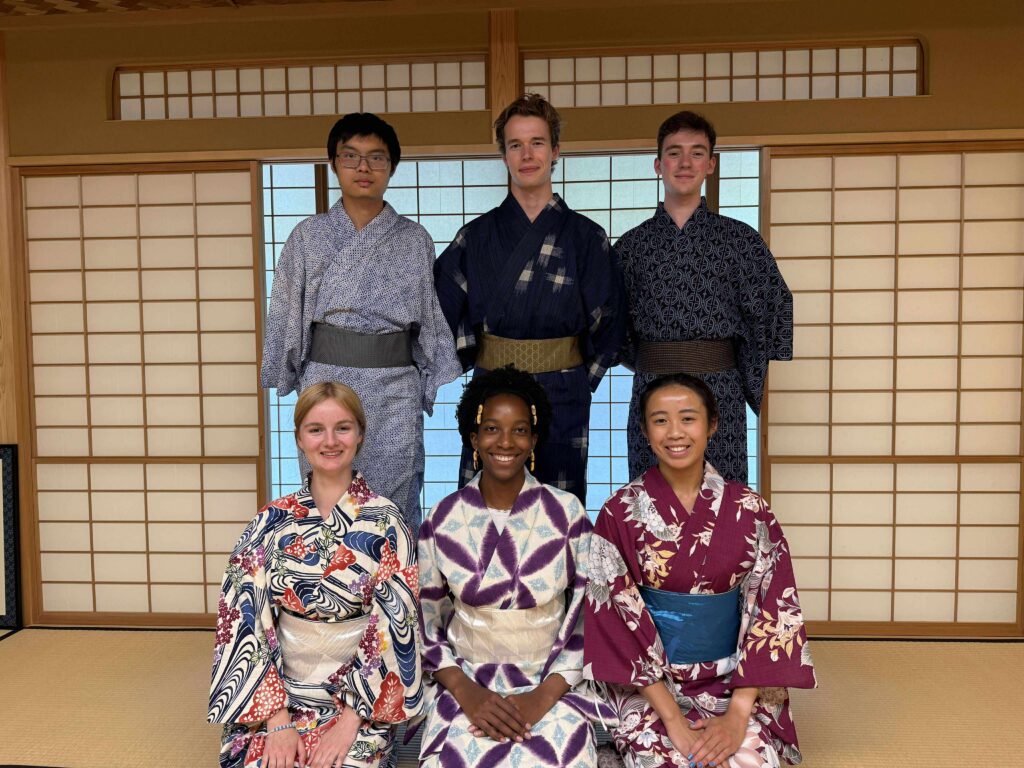
As my degree came to a close, I took part in the Nagoya Exchange programme, made possible due to donor support. The exchange was a cultural exploration, social exchange and academic investigation. While different generations have a different cultural relationship with Japan, it became clear to me that the geographic distance between the UK and Japan has been annihilated by their far-reaching cultural soft power. Beyond their culture, what I found especially interesting was an alternative discourse around surveillance compared to the discourse I had applied in my research with the CGHR. In Japan I saw how surveillance and safety could be seen as almost synonymous, especially in regards to the precise monitoring of multi-faceted natural hazards. Something I relished about the trip was that St John’s students from a range of academic backgrounds were selected, including medicine, engineering, linguistics and computer science. The varying ways each student interpreted the culture and history we encountered was fascinating.
I am now training as a residential surveyor at JLL, a global real estate company. Life in the corporate world is very different to the intellectual and creative landscape of university, and entering the world of work requires one to carve out a place for themselves in a labour force that seems to be constantly changing configuration. Everything I experienced at St John’s – from travelling in Asia to conducting research that had real world applications – created in me a mindset of self-belief. Thus I reflect on the difference that other people’s generosity made to my experience at Cambridge, and I am inspired to support the ambitious young people studying after me.