Johnian magazine issue 54, autumn 2025
Jay Hunt: ‘TV is at a tipping point but storytelling is still the key to success’
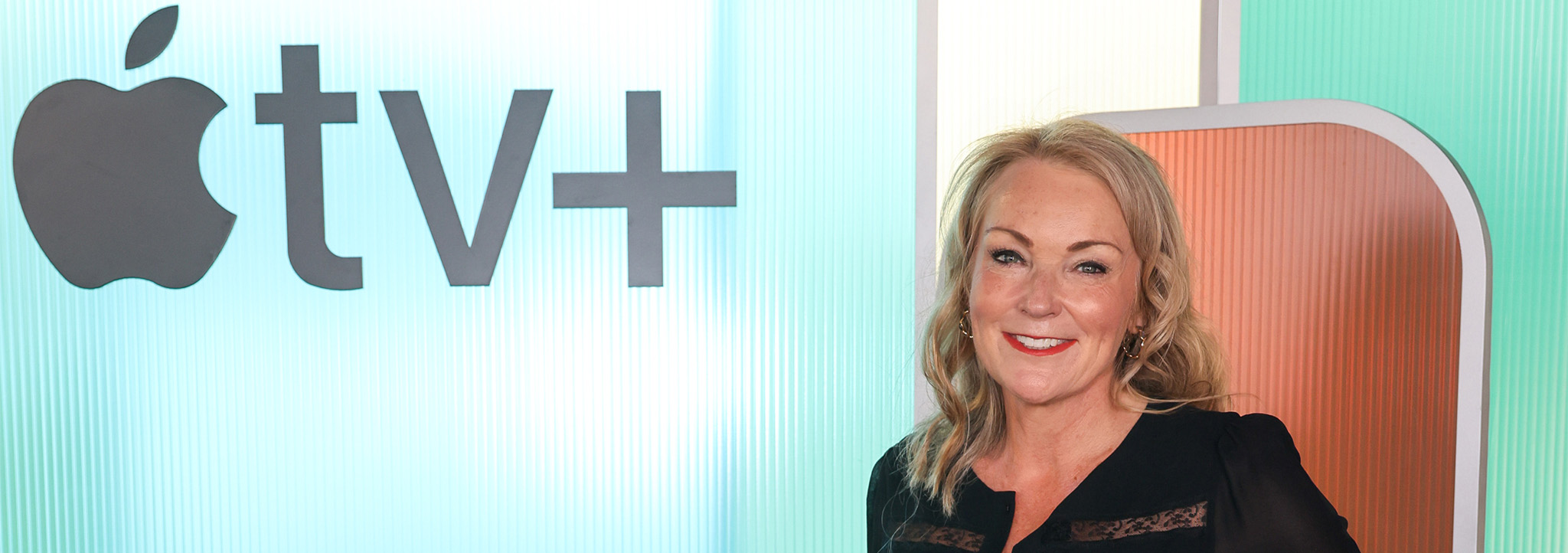
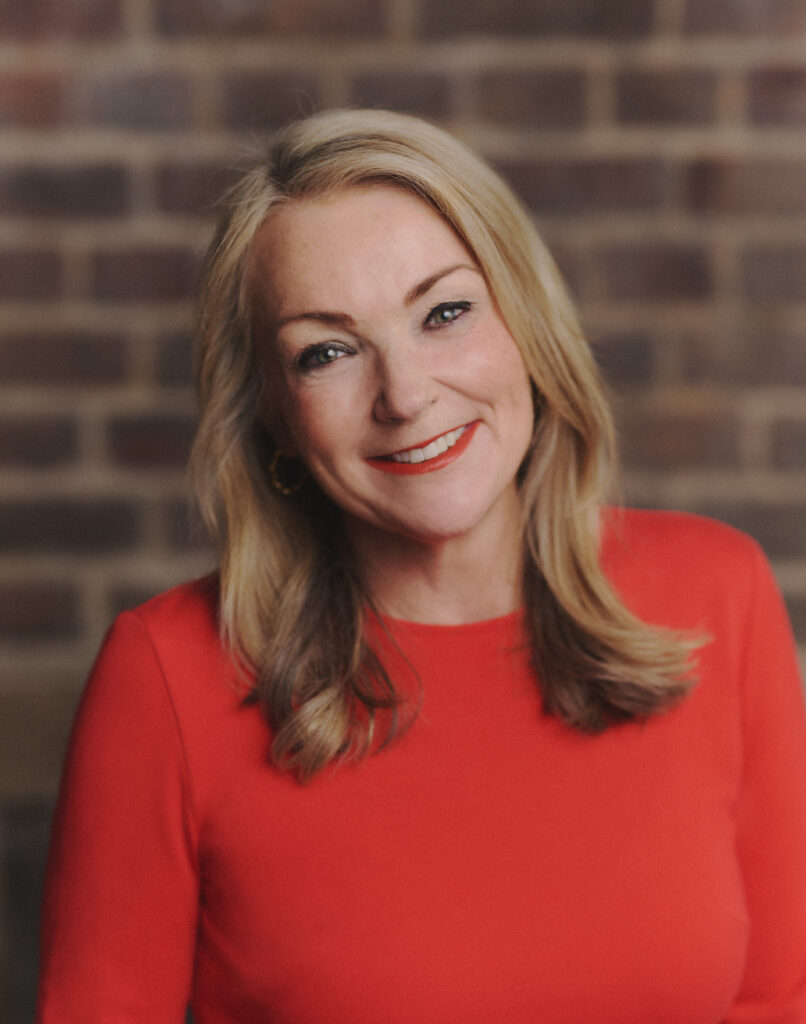
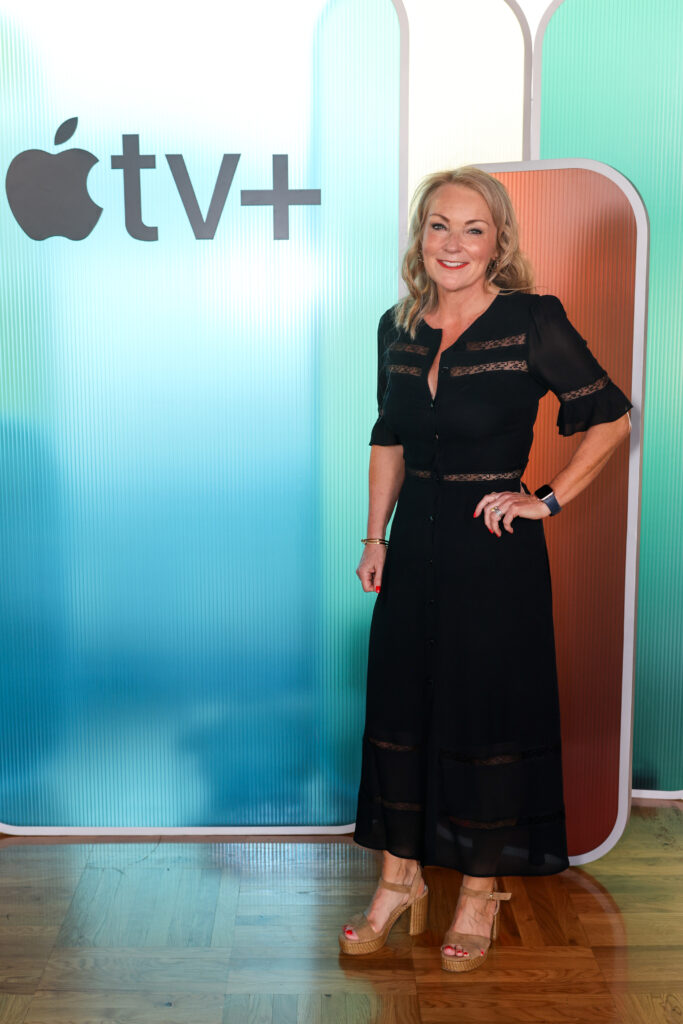
Jay Hunt OBE (1985) was named in 2023 as one of the Top 20 Most Powerful Women in Global Entertainment by The Hollywood Reporter. She is s a television executive and the only person to have run three UK terrestrial broadcast channels. Now Creative Director, Europe, at Apple TV+, she previously served as Chief Creative Officer at Channel 4, Controller of BBC One and Director of Programmes at Channel 5. Jay started her career at BBC News working on Newsnight and Panorama before becoming Editor of both the One O’Clock and Six O’Clock News.
Your favourite TV show was almost certainly brought to the screen by Jay Hunt OBE, Creative Director for Apple TV+ in Europe and now an Honorary Fellow of St John’s.
She is the commissioning power behind global hits Slow Horses, Bad Sisters, Luther, Sherlock, Black Mirror, Derry Girls, Catastrophe and Gogglebox, although she did also cancel Last of the Summer Wine.
One of the secrets behind her enduring ability to commission programmes that exactly capture the zeitgeist is something slightly unexpected. She suggests mining data, like the Census, for creative insights.
“My commissioners used to laugh at me,” says Jay.
“I’m probably the only person who has run channels and used to suggest that people read the Census. I think you make good choices about what people will watch when you understand how their world is changing around them. It’s not about your personal taste. It’s about thinking, look, we’re in a period of economic downturn, so people will be drawn to things that feel a bit nostalgic or a bit homely or just smaller in terms of their ambition. They don’t want to be reminded of what they don’t have, but they want to be told to enjoy and celebrate what they do have. Also, in times like these, natural history tends to do really well because audiences want to be reminded of the delights of the natural world.”
She points to the recent success of ‘cosy crime’ shows as an example of nostalgic and homely viewing tastes, including Richard Osman’s film, The Thursday Murder Club. “Cosy crime is precisely what you would expect people might want to view at a point when the world feels difficult to navigate,” says Jay.
She credits her early career in news with building her curiosity about people’s behaviour. “I’m very curious about people. I’m curious about the world,” says Jay.
“I think having a journalistic background is helpful in this respect. What you’re always looking for is to be slightly ahead of where people are. Black Mirror, for example, tapped into a neurosis around what was happening in the digital world just ahead of it feeling part of people’s everyday life.”
She also bought The Handmaid’s Tale at an opportune moment. This was the adaptation of Margaret Attwood’s novel which outlines the horrors of a new authoritarian government that oppresses women, taking away their rights and livelihoods, and forces them to bear the children of government officials.
“It just happened to hit a moment when ‘#MeToo’ was getting traction globally, and it became a huge hit,” Jay explains. “When you’ve had an opportunity to bring something to audiences that really connects with them and it becomes part of the national conversation, those moments are a huge thrill. There will always be times in your career where you make things that are a bit more pragmatic, a bit more overtly commercial, but I think the shows I’m proudest of are the ones that have felt really bold.”
Some shows, she believes, have so skewered the mood of the nation that politicians would do well to watch them. “I frequently say to people that watching Gogglebox could have predicted the Brexit results,” Jay says.
“It has the ability to reach into people’s homes and to hear people going about their working week, condensing what they feel about the world and communicating it in interesting ways. That insight into the Great British public is something that feels rare and important. It’s possible that you can exist in bubbles, and there’s an echo chamber of hearing the views of people a bit like you. There’s something about that show which lets you into the lives of people with a different range of experiences. And I definitely think in a democracy, it’s important those voices are heard.” Bad Sisters, which she commissioned for Apple TV+, won the BAFTA for Best Drama, but the biggest highlight of her career was her work on the 2012 Paralympics at Channel 4, explains Jay. “People forget that before 2012 the Paralympics got very little coverage. I was the creative head of the channel when we put a huge amount of time and creative thought into making that something completely memorable. That was followed by a totally different set of attitudes and views towards the Paralympics as a result of that intervention. Those moments in your career where you affect real world change and you’re able to shift attitudes, they’re pretty special.”
After reading English at St John’s, Jay started her career at BBC News working on Newsnight and Panorama and then becoming Editor on the One O’Clock and Six O’Clock News. Before joining Apple TV+, she was the only person to have run three terrestrial broadcast channels, with stints as Chief Creative Officer of Channel 4, Controller of BBC One and Director of Programmes at Channel 5.
Over the course of her career, the TV landscape has completely changed. It has been through a series of tipping points that have left streamers such as Apple TV+, Netflix and Prime leading the cultural conversation where once terrestrial TV such as BBC, ITV and Channel 4 commanded the best shows and biggest audiences. “I think the TV industry has been incredibly disrupted over the past 10 to 15 years, with the intervention of streamers,” says Jay.
“People constantly talk about the fragmentation of this sector, and it is changing beyond recognition. Many people will have multiple subscriptions to different services and will watch content in all sorts of different ways. But what reassures me at moments of huge disruption is that, in the end, what people want is great programming. Often at a tipping point, it can feel apocalyptic and as though the change is going to be disastrous for a sector. But the fundamental thing that sits at the heart of it, which is great storytelling, remains exactly the same. The other thing that’s shifted is there is a realisation that (film and TV) is a huge source of inward investment into this country. It’s something that we are world-class at in the UK.”
Jay has been appointed Chair of the British Film Institute. “I feel passionate about British creativity in all of its forms, and obviously what we do in independent film and film generally is part of that,” she says. “A key role the organisation has is to continue to bang the drum for inward investment, for skills and training, to make sure that we will always be a destination for great creators.”
She has also been made the Chair of Hay Festival Global, which she says is “a perfect piece of British eccentricity, the idea that in the middle of Wales you have this festival, which is the hub of a global charity, where you can have conversations you can’t have anywhere else in the world.”
Discussions are already taking place about the programming for next year’s festival in May. Meanwhile, Jay has also been made an Honorary Fellow of St John’s College and has just been back for her 40th anniversary reunion dinner. “I was really humbled to be chosen,” she says. “There is something special about being recognized by a college that played such an important part in my life and ultimately shaped my career. I’m also a massive fan of the Master, so I was particularly honoured to receive it when she was in charge.”
What strikes her every time she returns to the College is the reassuring feeling of permanence, and that while there are some modernisations, such as the new Buttery, the important things never change. “People have been walking through that gate and learning at an exceptional level for hundreds of years. And I still feel the privilege of that every single day. It’s an extraordinary place to have been educated. And I think the legacy of it is that you are taught to form your own opinions, to be analytical in your thinking, and to be adept in presenting that case. And that’s the sort of skill set I think stays with you for the rest of your life,” says Jay. “Maybe coming back to St John’s is my version of nostalgia TV.”