Johnian magazine issue 54, autumn 2025
In a nutshell: From Union President to coaching Prime Ministers
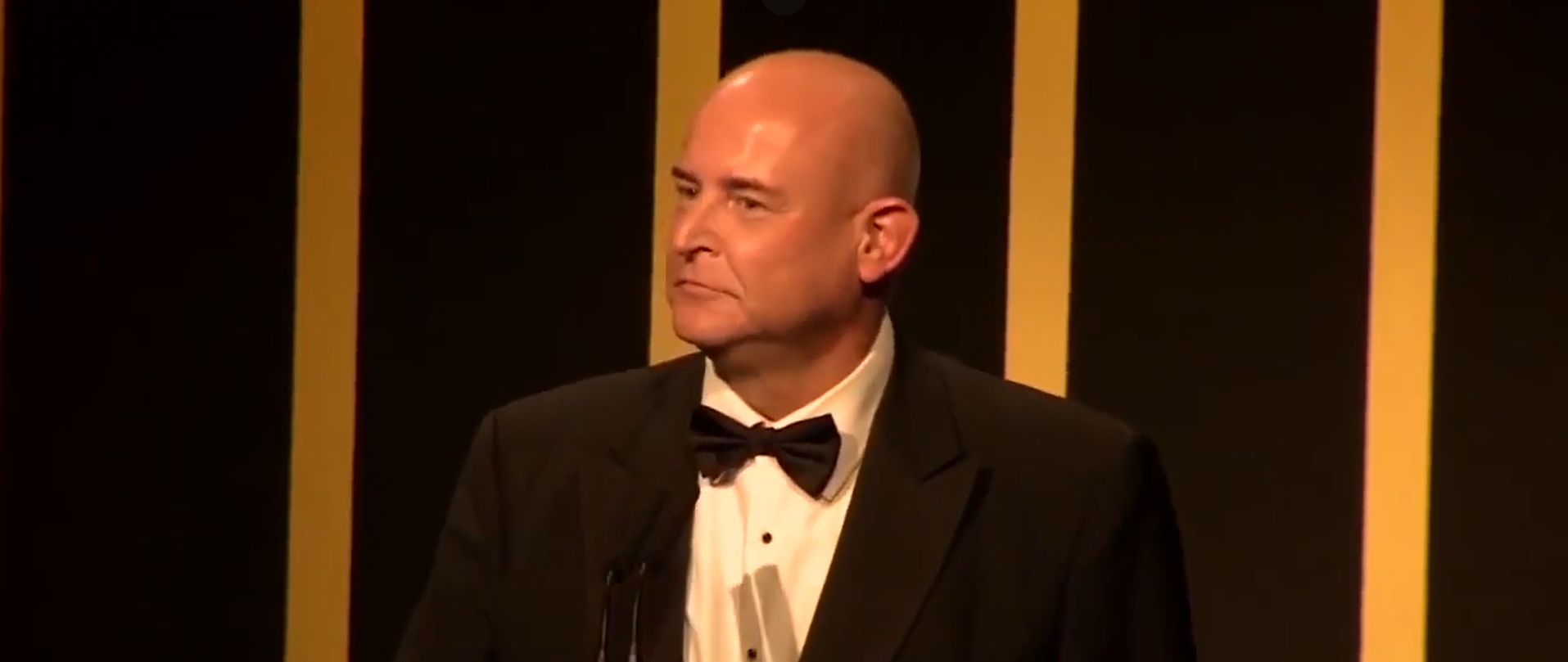
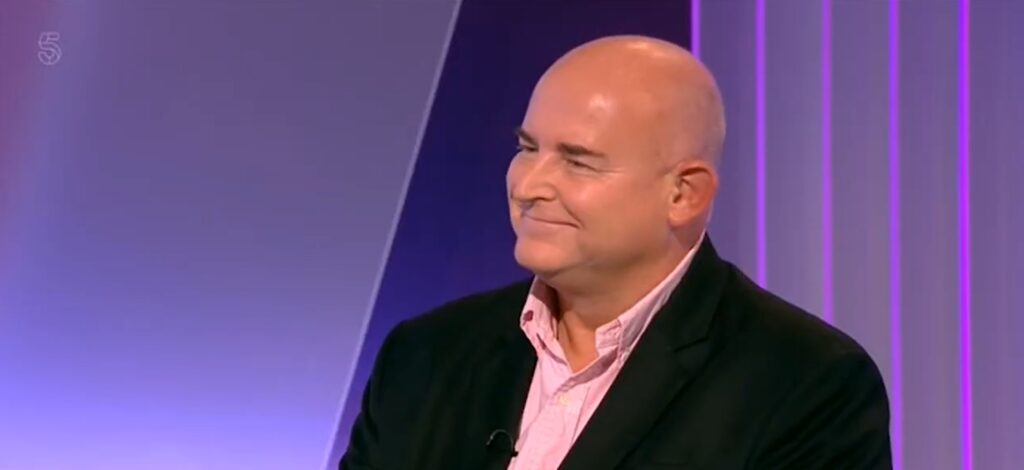
Graham Davies is the UK’s self-proclaimed ‘loudest’ presentation and media mentor. He has coached five out of the last seven Tory Leaders, 28 other Cabinet ministers and many CEOs. Graham is an in-demand professional after dinner speaker as well as a regular political presentation pundit on Sky TV, GB News, Talk TV and the BBC.
I had my first experience of using the spoken word under pressure while still at school, when taking part in poetry, Bible reading and public speaking competitions at the Manx Music Festival. This meant that when I started delivering speeches at the Union Society in Cambridge, I had a bit of a head start.
I auditioned for Footlights twice and failed abysmally both times. The biggest factor that counted against me was a total lack of talent. Of course that was no barrier to success in the Union Society.
I quickly discovered that Union audiences were more interested in laughing than politics. And they were very receptive to crass one-liner gags. And because I was the only Union hack who told jokes, they voted for me in Union elections. My progress to becoming President gave me a huge amount of public speaking experience and started a lifelong love affair with the sound of my own voice.
I read Law at John’s and drifted into being a barrister. I was never going to be a solicitor because I had neither the intellect nor the necessary attention span. Ludicrously, I thought that the Criminal Bar was going to be like another public speaking competition. But for me, every day at Snaresbrook Crown Court was an ordeal. Also, I really wasn’t very good at it. For me, the Bar was always going to be a stepping stone to something else.
In the late 1980s, I discovered that there was such a thing as after dinner speaking in return for a fee. I found a couple of specialist entertainment agencies and I sent a video of me speaking as a guest in a Union debate about three years after I left. Suddenly, I was doing 100 after dinner speeches a year, as well as practising as a barrister. In 1995, I did 120 after dinner speeches, and I was in court 8 days out of 10. It was nearly killing me, so something had to give. And although the Bar was giving me a thin veneer of undeserved respectability, I decided to leave. And so the Supreme Court’s loss became professional speaking’s loss as well. In preparation for after dinner speeches, I find out about the host organisation’s industry, the ins and outs of their company and their products, and most importantly of all, about some of the leading personalities in the audience. I can take a brief and make it feel personalised. There is no richer source of humour than the well-known character quirks of the CEO, the perennially mean FD or the over-the-top sales director who can light up the room simply by walking out of it.
I started to dabble in presentation advice when I would turn up early for a particular event and I would see the standard of speaking that was occurring at the conference before the dinner. Inevitably, there was a sea of slides and a pandemic of ‘Death by Bullet Point’. At the dinner, sometimes the CEO would ask my opinion, and rather than being upset by my bluntness, they would ask me to train their senior team. And that is how I became a corporate presentation coach. This also led me into daytime keynote speaking and compering.
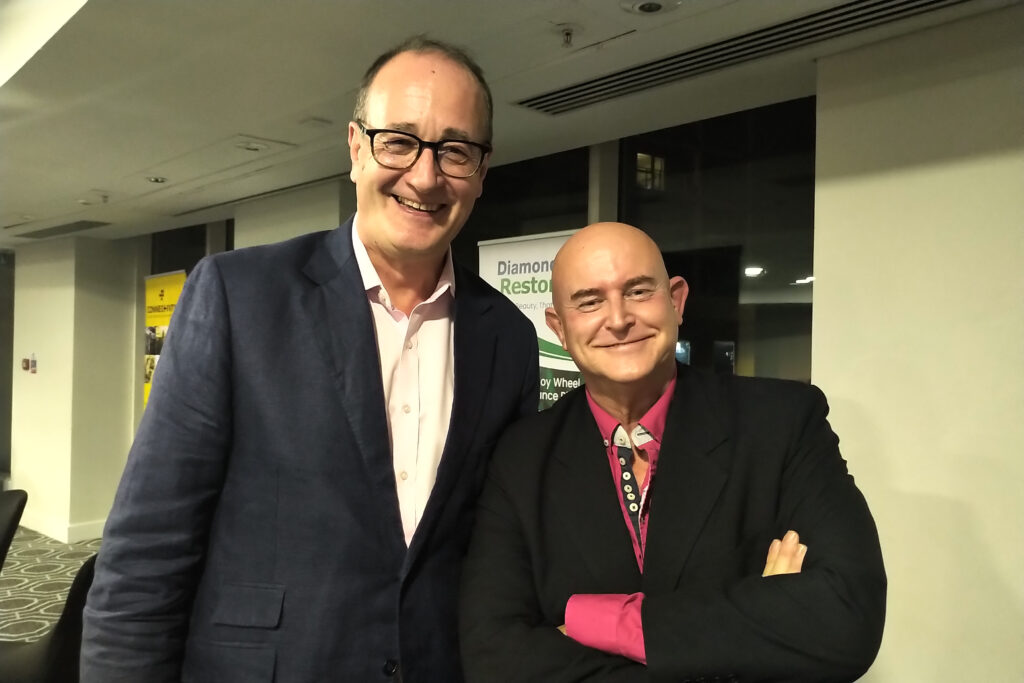
I had also dabbled in politics with the Cambridge University Conservative Association (CUCA), an organisation that has produced many political titans, as well as some less impressive people. CUCA hacks saw the association as the first step on their road to Downing Street. I helped a couple of them with their speeches for the Conservative Party selection process. I also advised them on how to answer questions under pressure about policy, their core beliefs and how they would like to see the country run. I have now coached more than 100 people who went on to become Conservative MPs, for which I one day expect to be prosecuted.
Through various introductions, I started coaching the Conservative Party Leader Iain Duncan Smith. My input was so successful that, within a fortnight, he lost a No Confidence vote and was ousted. Despite that, I have coached five out of the last seven Tory Leaders, as well as 28 other Cabinet ministers. I work not only for politicians in this country, but various individuals in other countries. I can’t tell you their names, as this would lead to me having no clients and possibly no head.
I can watch a politician for a few minutes and immediately see a dozen presentational characteristics that I can sharpen or eliminate. Essentially, public speaking consists of only 2 steps:
Step 1: deciding what to say
Step 2: saying it
Most senior executives and politicians don’t have a system to decide what to say, and they certainly don’t have a process for how to say it. I fill that gap. Coaching also involves identifying what clients are already doing well. After all, if they are the CEO, Prime Minister or President they must have done something right in order to get there. I help them to capture and crystallise what they do brilliantly at the same as exorcising the horrible habits that are holding them back from total world domination.
The most exciting area of my work is preparing high powered individuals for high pressure TV interviews. My TV coaching is based around this core premise: the best time to say a brilliant idea out loud in front of a million people is not two seconds after you have first thought of it. The secret of a great TV interview is to prepare, sharpen, rehearse, edit and absolutely nail down what you’re going to say long before you face the camera. You can’t just rock up to a TV studio and expect to be annoyingly brilliant. Unless you are Michael Gove. With your advisory team, you have to consider what are the potential weak points of your policy or position and workshop the potential hostile questions. Or you could just blag it after a vague chat in the back of your plush ministerial car on the way to the studio, thus guaranteeing some entertaining but career-limiting TV.
My advice is unusual: I advise my clients to actually answer the question head-on in the first two sentences of their reply, irrespective of how painful the truth is. Answer avoidance only leads to an angry audience at home. And in the era of social media, your avoidance is immediately available for everyone to watch on their phone again and again. We are becoming much more presidential in our politics. It all revolves on the personality of the leader. Fortunately for me, the leader will always need somebody like me to coach them. Attention spans are going to get shorter, and so you have to be able to lean into the charisma and presentational performance of your leader, plus a couple of other big players.
My favourite memory of St John’s was arriving on a snowy day in January for my admission interview. I was still in awe of my surroundings when I saw a slightly unkempt graduate student with longish hair struggling with two massive piles of books. He was trying and failing to open a door, so I rushed over and held it open for him. He said, “Oh, thank you. You’re a life saver!”
Later, I went up to the room where I was due to be interviewed. The chap who had been struggling with the books opened the door. He wasn’t a grad student. It turned out to be Malcolm Clarke, the Director of Studies for Law. He said, “I got the books up eventually.”
And I said to him, “If I’d known who you were, I’d have carried up the books for you!”
And he laughed. A lot. As did the chap who was sitting at the desk behind him: Dr Peter Linehan. I knew I was competing against people with better results than me for a place. But at that moment, I knew I was 40-Love up in the first game, against serve. They didn’t ask a single difficult question and we spent most of the next 20 minutes laughing. I knew I was in the right place, at the right time with the right people.
I have always been desperately proud of the College. I have been furiously milking my experience at the Union Society for the last 40 years. And I know I would never have been elected President if it wasn’t for all the people who walked past the First Court Porter’s Lodge and over Bridge Street to vote for me just because I was a Johnian. I still well up just a little bit when I hear one of us say “Once a Johnian, always a Johnian”.