
Johnian magazine issue 54, autumn 2025
Playlist: an opera singer’s tracks
Charles Naylor was a choral scholar at St John’s College, Cambridge, after which he studied at the Royal Academy of Music and sang as a soloist at the Wiener Staatsoper and Glyndebourne before switching to an international business career. He is now Chair of the Rodolfus Choral Foundation, a trustee of the Oxford International Song Festival, the St Albans Cathedral Music Trust and St Albans Chamber Opera. He is also a mentor at IntoUniversity, a freelance singer and a communications consultant.
Music is the thread that has run through Charles Naylor’s life. Singing loudly as a teenager in the congregation in a school church service led to him being spotted by the Director of Music, which set him on track to become a soloist with the Vienna State Opera by the time he was 25.
He could have continued on this path, which saw him perform small roles alongside famous singers such as José Carreras, Renato Bruson and Montserrat Caballé in Vienna and sing at Glyndebourne, but at 30 Charles remembered the advice he was given by a cousin at 17: “If you can ever imagine doing anything else don’t be an artist”. He could, and although he loved music, was curious about what else life had to offer and applied for a job with Shell.
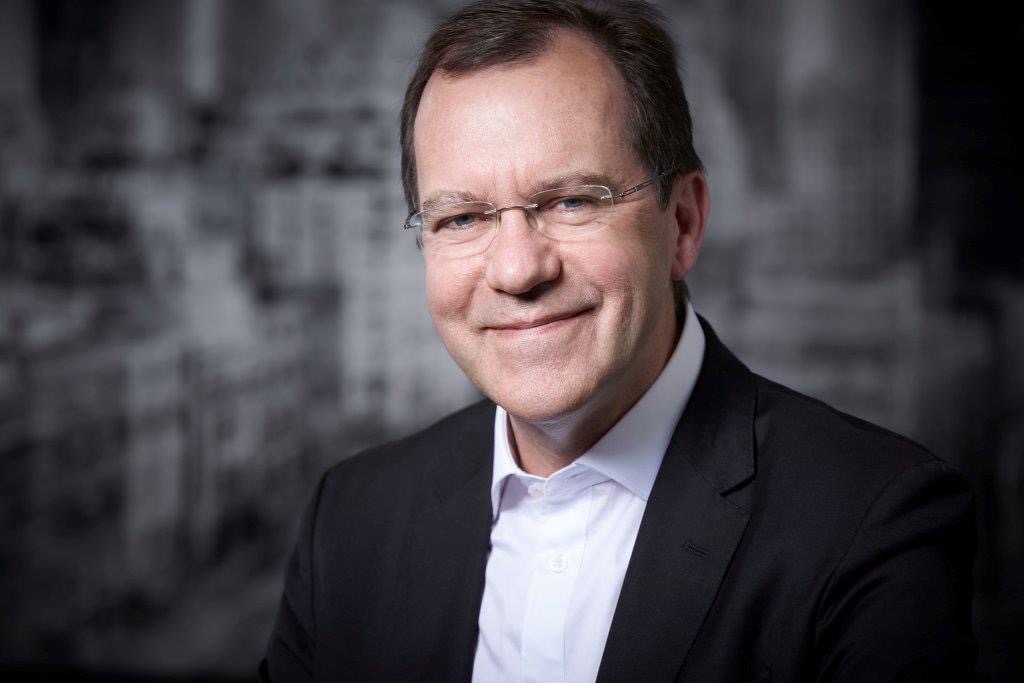
For the next 37 years he worked in the corporate world, securing high profile roles in marketing and communications at HSBC and Credit Suisse, among others. However, he never forgot the role that music had played in giving him the confidence and life skills to enter the corporate world. He now dedicates his time to music charities, including chairing the Rodolfus Choral Foundation which introduces schoolchildren to choral music.
“I was a lazy teenager. Didn’t work very much, quite bright but completely disorganised. Music gave me discipline and organisational skills,” says Charles. Being spotted at school led him to being sent on a cathedral music course and getting a choral scholarship at St John’s. “George Guest, who was the Director of Music at the time, was really fantastic. And we got the most amazing discipline from him. You learned so much about how to collaborate and sing together.”
“I benefited so much from music, but the problem we have in this country is that music has been almost deleted from the curriculum in state schools. Sport has been cut back too. The important skills we learn at school are not just about academics. If you just focus on the academic stuff, people don’t learn how to relate to each other, they don’t learn the social skills, they don’t become confident. So that’s why I’m doing this work to help introduce children and young people to choral music.”
After leaving St John’s at 21 he studied at the Royal Academy of Music. Charles said: “I then won an international singing competition where I was talent spotted by the then director of the Vienna State Opera, Lorin Maazel, and I went at the age of 25 to be a soloist there.”
Charles was a professional singer until he was 30. “I ended up in the most amazing world,” he says, “often, crossing paths with world famous singers and dancers. Back in the 80s, there were still people singing in Vienna who’d been singing there after the war. I used to sing with people who had known Richard Strauss, the composer. Can you imagine? And the first time I ever sang a one-line solo I sang it to Jose Carreras, the tenor.”

Other brushes with stars included a funny moment courtesy of the ballet dancer Rudolph Nureyev. “The dressing room I used at the Vienna State Opera on the ballet nights was used by Nureyev, and in the room, his tights used to be hung up on the wall,” says Charles. “One evening, I was having my makeup done, and a woman rushes in and grabs all the tights and runs off down the corridor being pursued by security guards,” he laughs.
Afterwards he came back to the UK and sang at Glyndebourne until he swapped careers. “People ask me why I gave it up,” says Charles. “I love music, but I didn’t love it to the extent that I could have imagined myself doing it at 50. I also remembered the advice given to me by my cousin at 17.
“I honestly didn’t know what I wanted to do. I was about to go and do a tour of Holland in an opera by Puccini called Manon Lescaut, playing the lead baritone, and I suddenly thought, I’m now 30. If I leave it any longer, I’ll never be able to switch to something else. Why don’t I just give it a go? So I literally answered an advert in the Guardian, and went through two or three interviews and got a job with Shell as a marketing rep. I used to go around all the filling stations making sure the Mars bars were in the right place, and the pumps were clean and I thought, this is real fun.”
Charles went on to discover a talent for communications and marketing that saw him quickly rise through the ranks at Shell to become Advertising Manager. From there he took positions as Head of Corporate Affairs at Hess and Centrica, Chief Communications Officer at Credit Suisse, Head of Global Communications at HSBC, Director of Corporate Communications at CBI, and Global Head of Communications at GAM. But during this time he continued to sing occasionally and kept up his interest in the opera world. So, when he finally retired last year Charles had time to devote to widening schoolchildren’s participation in music.
“The reason I’m working in music again is because I got so much out of it myself and I want that for others. England has this almost unique choral tradition, which you see at St John’s and King’s, and there’s really nowhere else in the world like it. I’d love to give other people the opportunity to experience it, which is what the Rodolfus Choral Foundation does with residential choral courses for children and young people.
“So many people say that they would not be where they are today had it not been for the confidence they gained and the skills they learned by taking part in musical activities. However, with the sad decline of music education in state schools, we need to do all we can to give children and young people this opportunity,” he says.
“We’ve been going for 45 years, and we reach roughly 400 kids a year. There are probably 12,000 people who have been on our courses. And of course, a tiny percentage of them are now professional musicians. Most of them are in every other career you can imagine. If you speak to any of them, they’ll say their experience on our courses gave them friendships. It taught them life skills. It gave them confidence. They learnt how to collaborate. It basically changed their lives. And it sounds a bit over the top, but I can find you plenty of alumni who will say that.”
The choral courses are open to anyone, but the foundation aims to encourage children from backgrounds with no experience of choral singing to come along. “The point is to enable people to sing beautifully, to help the choral tradition,” says Charles.
“And if they do end up singing in choirs, that’s fantastic. A lot of people who love this music tend to become from a particular background, basically middle-class church-going people, but there are so many other people who, when they come across it, absolutely love it. But of course, they never experienced it. So we try to reach out to as broad a swathe of schools as we can, to get kids from every possible background. And then we raise money to fund the kids that can’t afford to pay the fees for a summer residential course.”
As well as being Chair of the Rodolfus Choral Foundation, Charles is a Trustee at Oxford Song, St Albans Cathedral Music Trust and St Albans Chamber Opera. He is also a mentor at IntoUni, and remains a freelance singer and communications consultant.
Charles chooses his tracks
Mussorgsky: Farewell and Death of Boris from Boris Godounov
Sung by Boris Cristoff
At the age of 17 I sang with the school orchestra singing the death scene from Boris Godounov in Russian. That’s my first choice, because as you can imagine, at the age of 17, having to learn an opera aria in Russian, and sing it in front of all the people at the school concert was quite overwhelming. I listened over and over to a recording of Boris Christoff singing this to learn it from his performance in 1963. I tried to sound like him which is a bit silly, as I wasn’t really a bass.
Bach: Cantatas BWV 159, No 4, Aria. Es Ist Vollbracht
Sung by Dietrich Fischer-Dieskau
When I auditioned for the choral scholarship at St John’s, I learned a beautiful aria by Bach and then I used it again when I auditioned for the Royal Academy. It’s just the most extraordinarily beautiful and haunting piece. It is all about Christ on the cross, called ‘It Is Finished’. A particular recording I love is a young German baritone, Ben Appl, who opened the Oxford Song Festival this year.
Herbert Howells: Like as the Hart
Sung by the Choir of St John’s College
When I was in the St John’s Choir from 1975 to 1978, the composer Herbert Howells used to come and hear us sing. And one of the most beautiful pieces of music I know is something he wrote called ‘Like as the Hart’. The fact that Howells used to come and sit and listen to us was amazing. And that’s probably my favourite piece of music by him.
Verdi: Falstaff. “Ehi Taverniere!” – “Mondo Ladro”
Sung by Renato Bruson, Carlo Giulini, with the Los Angeles Philharmonic
When I was a soloist in Vienna, I sang with lots of famous singers, but the one that I really loved was a guy called Renato Bruson and we sang in Rigoletto together. He was Rigoletto and I sang a small part. When I was working in Zurich, I saw him perform Falstaff, by Verdi. When I went to the stage door to see him after the show, he couldn’t remember my name, but remembered what I sang with him in Vienna. So rather than “Hello, Charles”, he said “Hello, Marullo”.
The other connection to this opera is there’s a particular scene from Falstaff where he falls in the Thames in Windsor and goes to the pub in to drown his sorrows, absolutely soaking wet. And that scene is what I sang when I auditioned for the Vienna State opera, when I got the job back in 1982.
Wagner: Wesendonk Lieder: Im Treibhaus
Sung by Christa Ludwig
When I switched my career to business, I lived for eight years in Zurich in a flat overlooking the lake, and on the other side of the lake I could see the beautiful house where Count Wesendonk had lived in the 19th century. Wesendonk used to commission composers to write music. One year he had Richard Wagner to stay, rather unwisely as it turned out, because Wagner had an affair with his wife while writing a song cycle called Wesendonk Lieder. There’s a particular song from it called ‘Im Treibhaus’, which means ‘In the Hothouse’, which is just the most lovely piece of music. This particular recording is sung by Christa Ludwig, who I actually sang with at the Vienna State Opera.
Most of these tracks, or alternative recordings are available on Spotify.
Charles created his original playlist in Apple Music.