Johnian magazine issue 54, autumn 2025
Beaufort Society: Introducing new President Sir Richard Aikens
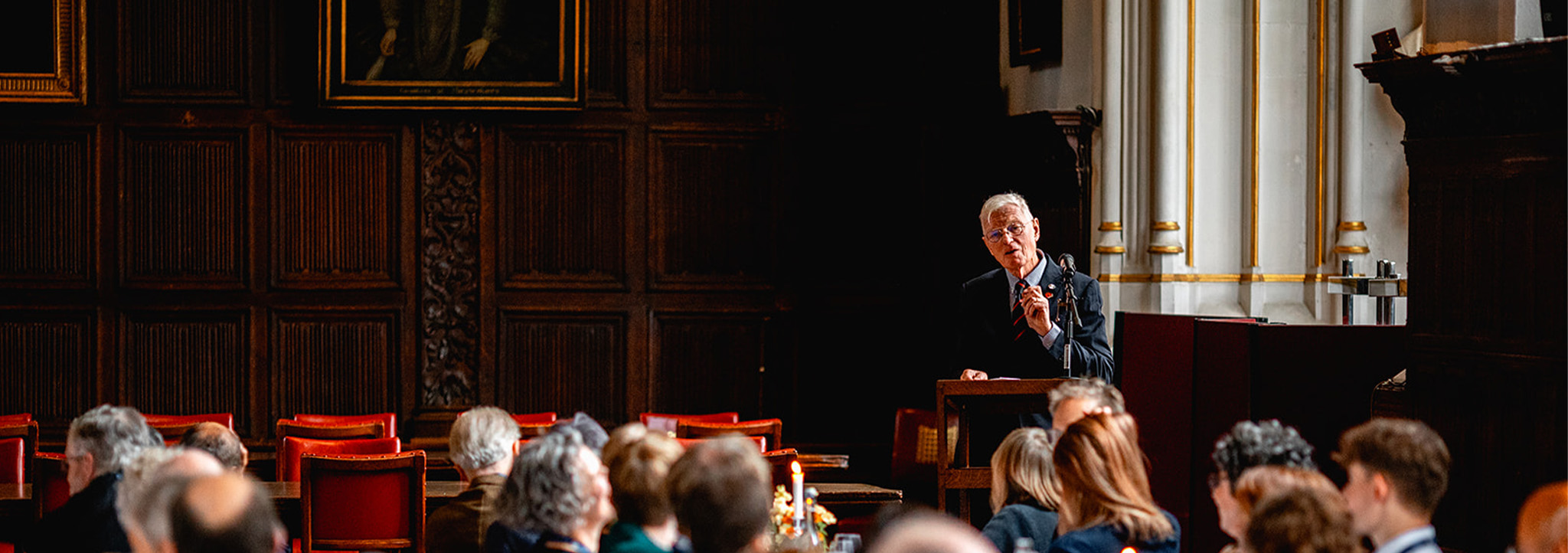
Sir Richard Aikens (1967) read History at St John’s and began a career in the Navy. After a change of heart, he returned to St Johns to read Part 1 of the Law Tripos in order to swap careers and become a barrister. His subsequent career in law saw him become a High Court and Court of Appeal judge. This year he has been appointed President of the College’s Beaufort Society, membership of which is given to all those who remember St John’s in their will.
Sir Richard has spoken of the honour he feels taking over the Presidency of the Beaufort Society and about his hopes for upcoming events.
The former Court of Appeal judge, who is still working as an international arbitrator at Brick Court Chambers, revealed one of the reasons he has taken on the role is because he is convinced of the need to support less well-off students to come to St John’s through the Dobson Free Places scheme.
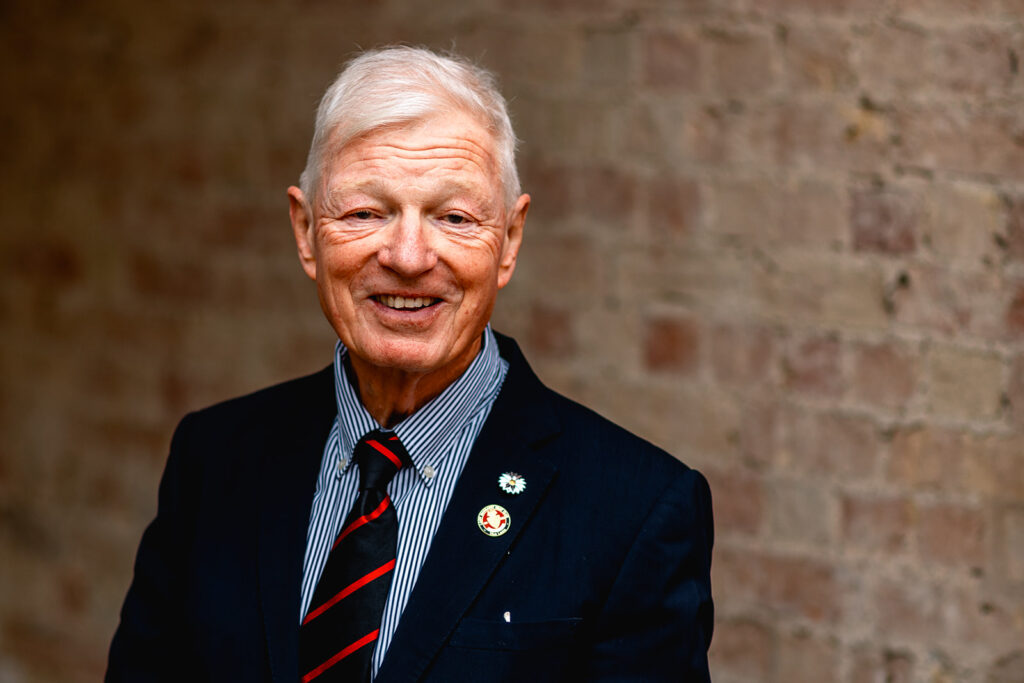
“I was very lucky when I was an undergraduate. All my fees and all my subsistence were paid for by the Navy, so I didn’t have to think about the cost,” says Richard.
“In those far off days, undergraduates’ fees were usually paid for by the local authority. Most people also had maintenance grants for living expenses from local authorities. Those days are all long since gone. And so I want to help ensure that good students are not discouraged by financial worries. I think the Dobson Free Places campaign named for the former Master Sir Chris Dobson is absolutely magnificent. It’s a real leader in Cambridge, if not in the whole of the UK, and so I’m very keen to support that.”
Beaufort Society membership is given to anyone who remembers St John’s in their will, to show the College’s appreciation of the legacy. Given Richard’s long association with the College and the Society, he has personally known the three previous Presidents of the Beaufort Society: Professor Richard Perham (1958), who founded it after serving as Master of the College, Professor The Lord Peter Hennessy (1966) and The Lord John Browne of Madingley (1966). Richard says: “To be president of any institution that’s concerned with the College is, in my view, an honour. The College is doing everything it can to provide a fantastic education to as wide a selection of suitable people as possible. For that, it needs money. In particular, it needs money to help those who don’t come from wealthy backgrounds. Supporting that campaign is very important to me.
“I also have strong connections with the Beaufort Society going back many years as I was a good personal friend of its founder, Richard Perham, whom I had known since I was an undergraduate. We met in my first year when he coached me in one of the LMBC crews, and we quickly became friends and remained friends all his life. I am also friends with my two predecessors, Peter Hennessy, who became President after Richard died, and John Browne. They were both in the year above me at the College. But Peter was a fellow historian. And I got to know John because he was my Cox in the boat I rowed in in my first year that was coached by Richard Perham. I’ve been friends with the pair of them ever since. So, it is an honour to follow them all.”
Richard actually studied at St John’s twice, once reading History and then after a stint in the Navy he returned to read Part 1 of the Law Tripos in order to swap careers and become a barrister.
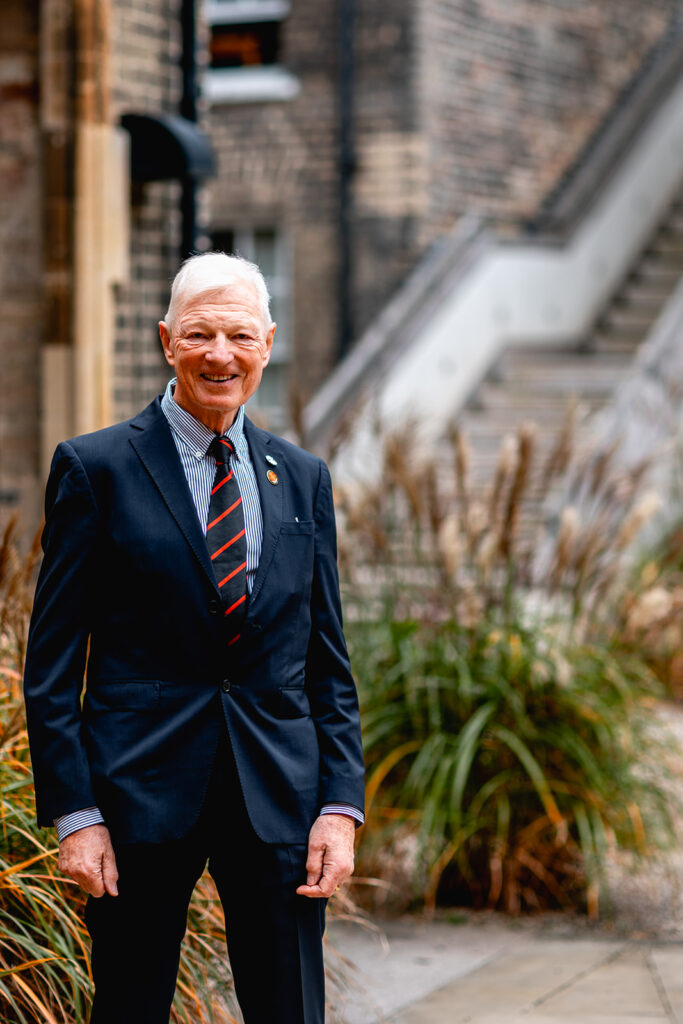
He explains: “I wasn’t going to be a lawyer to start with as I’d decided to join the Navy. They offered a scheme called University Cadetships that I applied for after securing my place at St John’s. So, while I was an undergraduate I was also an ‘acting Midshipman’. I received the princely pay of £496 per annum, which was a lot of money then. During the long vacations, I would go off and do some Naval training, either at Dartmouth or at sea. And when I graduated, I went back to Dartmouth and was pushed through the normal Cadet course of a year in six weeks, then was sent to sea.”
He was sent to Singapore to an Assault ship called Intrepid and stayed there until the following June. But during this time, Richard became less sure about his future in the Navy. “I think this was largely because I was an impatient young man, and it all seemed to be a rather slow process to get all the qualifications and into a responsible job,” he says.
After voicing his concerns, Richard was given a stark choice: leave now or continue in post for another five years. He decided to leave. “My despairing parents said I had to get a profession,” he remembers. “In those days, if you weren’t qualified as a doctor or an engineer, really there were only two to choose from, either the law or accountancy, and I said, ‘I refuse to be an accountant’.”
His father, who had become a solicitor after a career in the Army thought Richard would not enjoy that career. “So that made my choice quite easy,” says Richard. “I had to be a barrister.”
Richard returned to St John’s to ask for help from John Hall, the Director of Studies in Law, who advised him to return and read the first year of the Law Tripos, take the Bar exams and then look for a pupillage. During that year he also became Captain of the boat club. “I was immediately hurled back into College life,” he says.
Not only did St John’s direct the course of his future career, as College contacts at the Bar helped him secure a pupillage, Richard also credits the College with helping him make lifelong friendships. Twelve friends formed a dining club as undergraduates (to eat outside the College) and they have remained friends ever since. They are planning a reunion dinner this term, but this time inside the walls of St John’s.
He now hopes to encourage more people to join the Beaufort Society by “making it as much fun for members as I can”.
Richard explains that the work of the Society is vital for people who leave legacies for the College despite the fact that they will “never see the fruits of their gifts”.
“You are giving something which will live on after you,” he says, “and in that sense, you’re doing something for which you will to be remembered. Legacy giving is undoubtedly different from anything else that you might do, and that’s why the Society is important as a way to thank people ahead of that gift. It is also a means of enabling members to see what the College is doing and so, potentially, how their legacy will be used. I think a large part of the role of the President is to make sure that their legacy is not only recognised but fully appreciated in their lifetime.”