
How I overcame a phobia that almost derailed my student life
Emma Innes (2008) has published a book on how she beat a constant fear of being sick that left her weak and underweight. Here she details how treatment during a gap year brought her back to health and offers a roadmap out of the condition for other sufferers.
“I didn’t think I’d be well enough to take up my place at St John’s. Throughout my teens I’d suffered from emetophobia – the severe and debilitating phobia of vomiting. This little known, but surprisingly common, phobia left me having endless panic attacks, feeling constantly nauseous and with an extremely restricted diet which caused me to be underweight and malnourished.
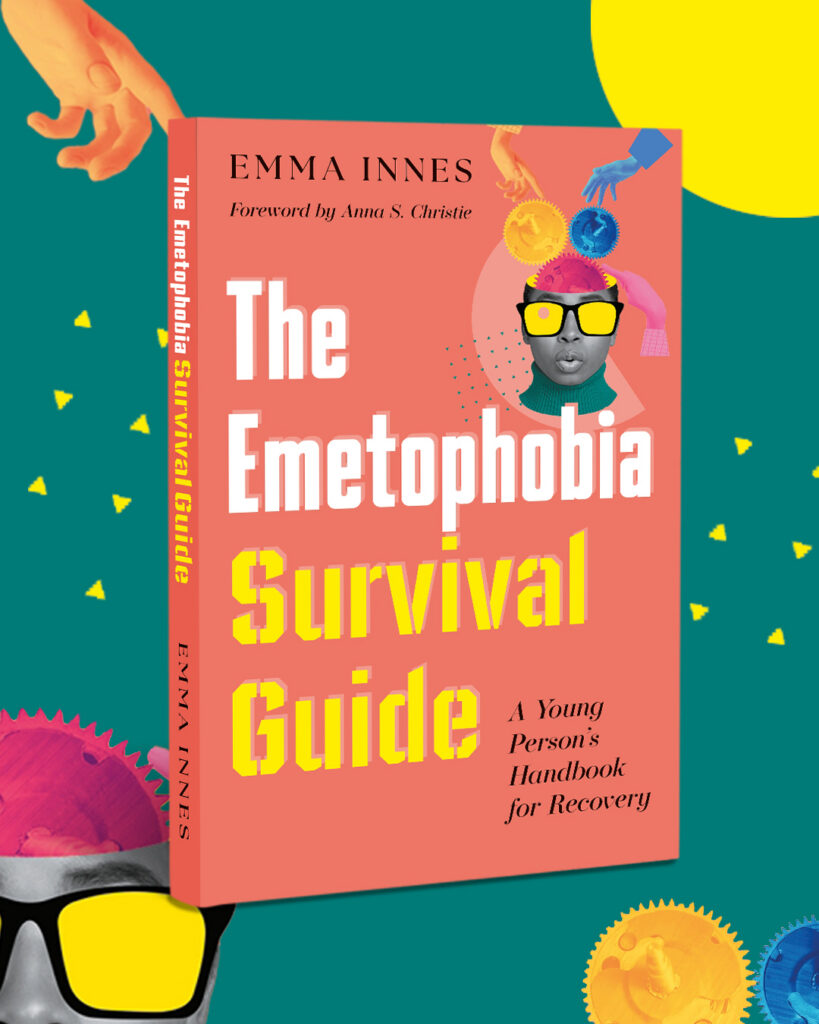
Now, 20 years on, I’ve written a book about my experience of living with emetophobia. The Emetophobia Survival Guide: A Young Person’s Handbook for Recovery is being published by Jessica Kingsley Publishers on September 21, 2026. In the book, which is aimed at teenagers and young people, I share how I went from developing emetophobia as a teenager to recovering and thriving at Cambridge. I also explore what emetophobia is, how it can impact people’s lives and how it’s treated. Covering social life, school, work and social media, I hope my tips and advice will help others with emetophobia to look after themselves and to live their lives to the full while tackling the condition.
Emetophobia is an extreme phobia of vomiting or of seeing other people being sick. The charity EmetAction estimates that it affects about one in every 200 people, and it almost invariably develops in childhood or adolescence. It can impact both men and women, but it is thought that about 90 percent of people with the phobia are female.
Emetophobia typically causes anxiety, panic attacks, disordered eating, avoidance behaviours, nausea (ironically) and constant worry about being sick. It is often mistaken for generalised anxiety disorder (GAD), obsessive compulsive disorder (OCD), or an eating disorder but is a distinct diagnosis with a very clear and specific treatment plan.
I developed emetophobia after an illness while on holiday when I was 14. The condition then got progressively worse throughout the rest of my time at school until it seemed impossible that I would be able to go up to Cambridge, despite the years of hard work I’d put in to secure the place and then, the necessary A Level results. In the book I explain how, in the end, I spent my gap year having therapy, being started on selective serotonin reuptake inhibitor (SSRI) medication and rebuilding my strength and how this combination of treatments enabled me not only to go up to John’s to study Geography, but to thrive there.
Shortly after leaving John’s, I married fellow John’s Geographer James Innes (who was my college father!) and completed my National College of Training Journalists qualifications. My first job was on a series of local papers in North London. Then I moved to MailOnline where I was the health reporter. Since having children I’ve written two books – In Their Hands which is about my daughter’s traumatic birth and subsequent time in neonatal intensive care, and The Emetophobia Survival Guide. All proceeds from the sale of In Their Hands go to the University College London Hospital’s neonatal unit which saved Sophie’s life. I’ve also written freelance articles for papers including the Sunday Mirror, Sunday Express and Sunday People.
I am now dabbling tentatively in the world of dog content creation and am contemplating pitching my poor publisher another book. Watch this space…
I’d love for the book to help raise awareness of this debilitating, but treatable, condition and I’d be delighted if you could share it with anyone you think might benefit or be interested. It’s particularly relevant to people with teenage children or those who are working in education and mental health, after all, the statics suggest that every school and university will have multiple students with emetophobia.”
Buy the Emetophobia Survival Guide from Jessica Kingsley Publishers and get 20% off if you use the code EMETSURVIVAL20 at checkout.
Emma Innes (nee Phippen), St John’s College, Geography 2008-2011.
What to do if you think you, or someone you know, has emetophobia:
- Almost everyone with emetophobia requires formal treatment to recover. The gold standard treatment is cognitive behavioural therapy (CBT) with gradual exposure to things that make you anxious. It is possible to work through this treatment by yourself using a self-help workbook but, ideally, if you can access/afford it, you’d find a therapist who is experienced in treating emetophobia to help you go through the treatment programme. Your NHS GP can advise on what treatment is available on the NHS, or you can find an accredited, private therapist on the website of the British Association for Behavioural and Cognitive Psychotherapies.
- If your anxiety is severe, especially if it is so severe you would struggle to take part in gradual exposure, you can speak to your GP or psychiatrist about the possibility of medication. There are technically no medications licenced for the treatment of emetophobia, but antidepressants and anti-anxiety medications are often used alongside CBT and exposure therapy. The most prescribed medications for emetophobia are selective serotonin reuptake inhibitors (SSRIs), a form of antidepressants which includes citalopram, escitalopram, sertraline and fluoxetine.
Self-care is also very important in ensuring you live with, and recover from, emetophobia as well as possible. Within the bounds of what you can manage, it is helpful to make as much effort as possible to get enough sleep, take regular exercise, eat a balanced, unprocessed diet and to find time to relax and be with friends and family.