
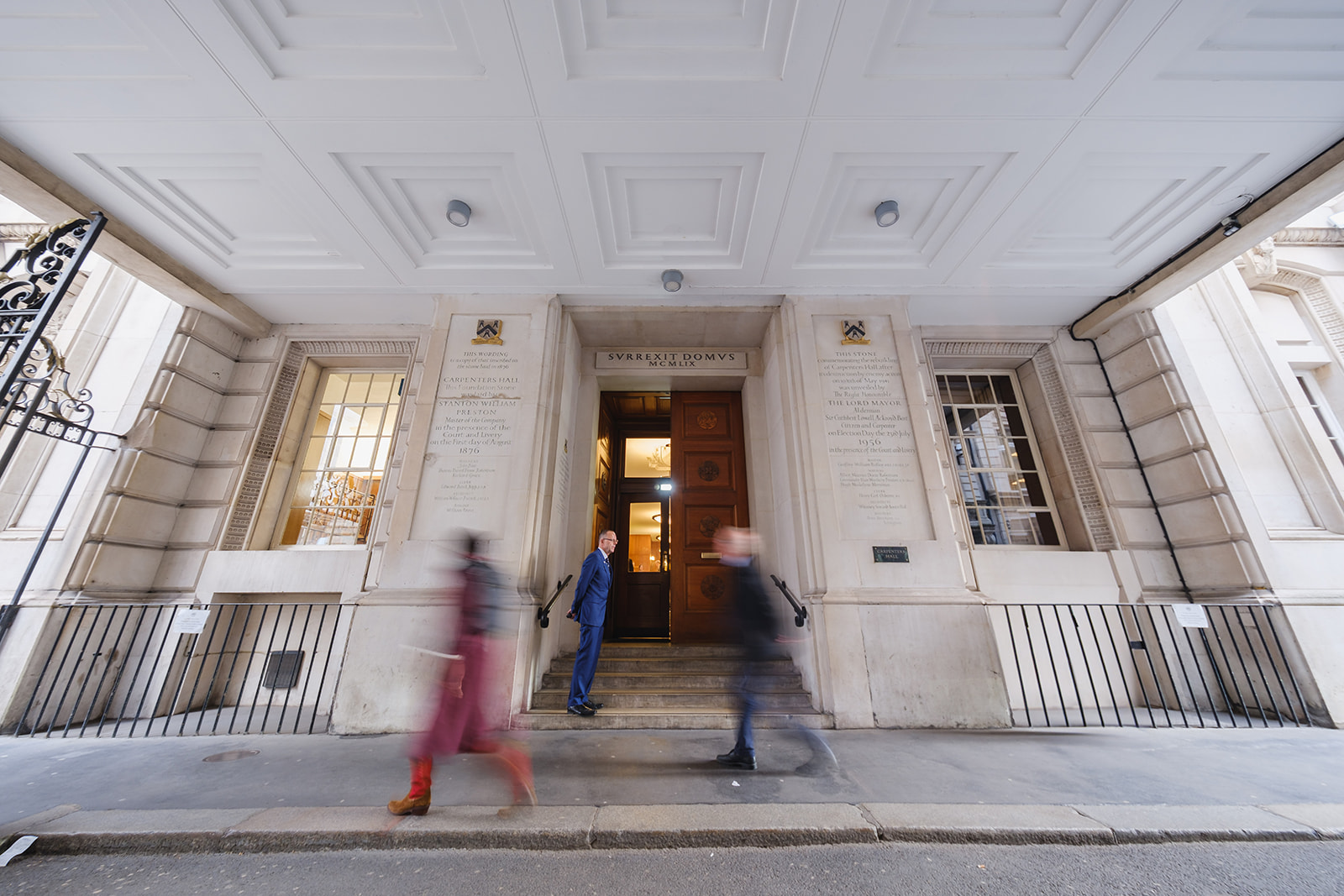
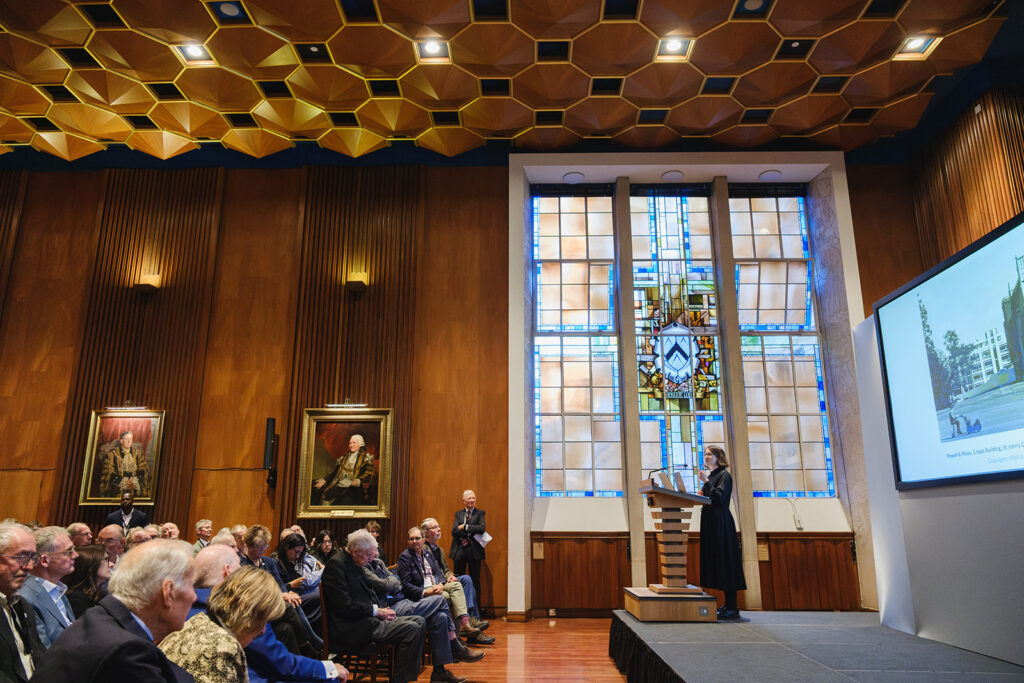
Members of the Beaufort Society gathered in London on Thursday 16 April for their Spring Meeting, held this year at Carpenters’ Hall. The evening was hosted by the Society’s President, The Rt Hon Sir Richard Aikens, who welcomed members, guests, and others interested in learning more about the work of the Beaufort Society.
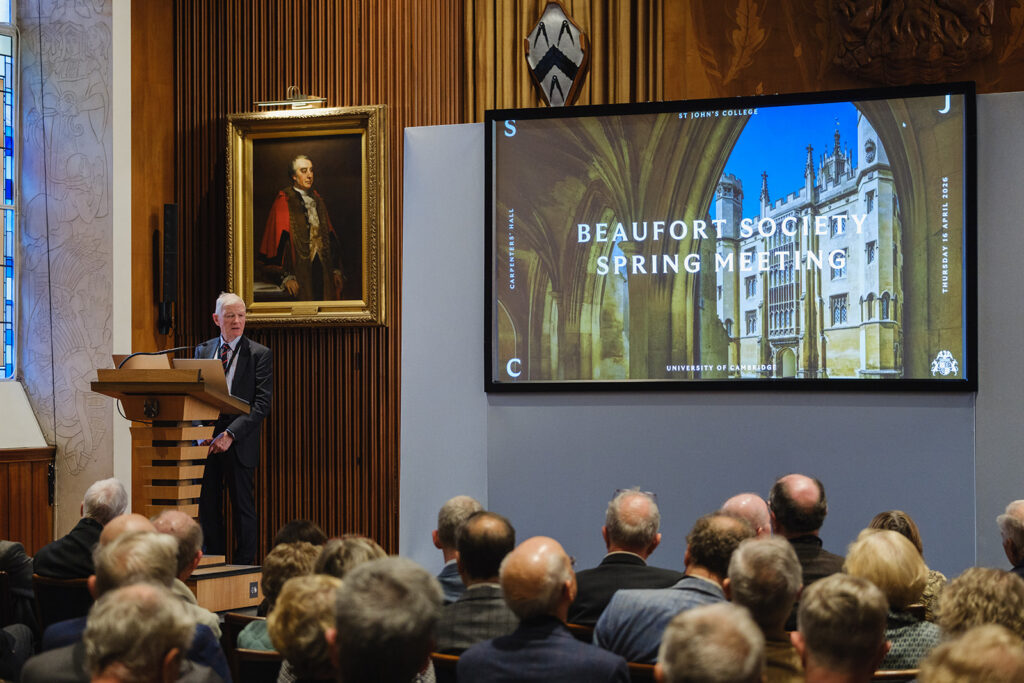
In his opening address, the President reflected on the appropriateness of Carpenters’ Hall as the setting for the Spring Meeting. The Hall provided a fitting backdrop for an evening that brought together past, present and future, themes central to the Beaufort Society and to St John’s. He noted the College’s longstanding connections with the Carpenters’ Company, including Johnians who have served it with distinction, and was pleased to welcome His Honour Peter Birts KC (1964), former Master of the Company and a long‑standing member of the Society.
The President also acknowledged the generosity of the Carpenters’ Company, whose support includes a means-tested bursary for undergraduates reading Architecture at St John’s, an especially apt connection ahead of the evening’s lecture. Members were thanked for their continued friendship and foresight, and for the vital role legacies of all sizes play in sustaining College life. Sir Richard also used the opportunity to share update on the Dobson Free Places scheme, which has reached another important milestone with the penultimate £2 million raised and matched, which is already enabling twelve undergraduates to study at St John’s free from the burden of tuition fees or living costs. With the College in its final year of fundraising for the scheme, he thanked all those whose generosity is helping to ensure that a Johnian education remains open to talent regardless of financial circumstance.
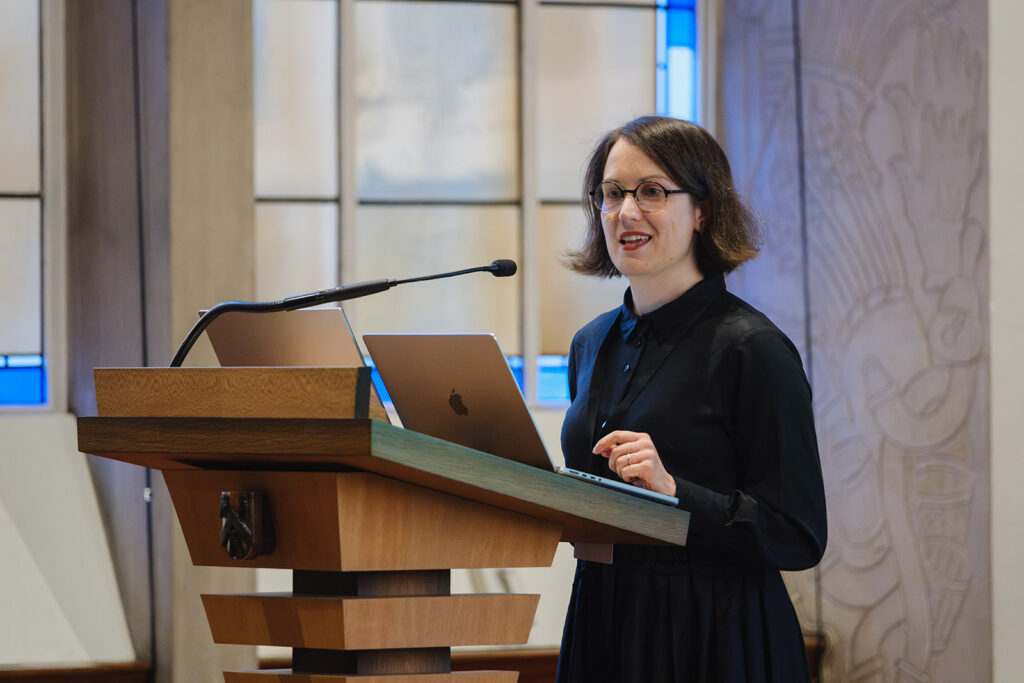
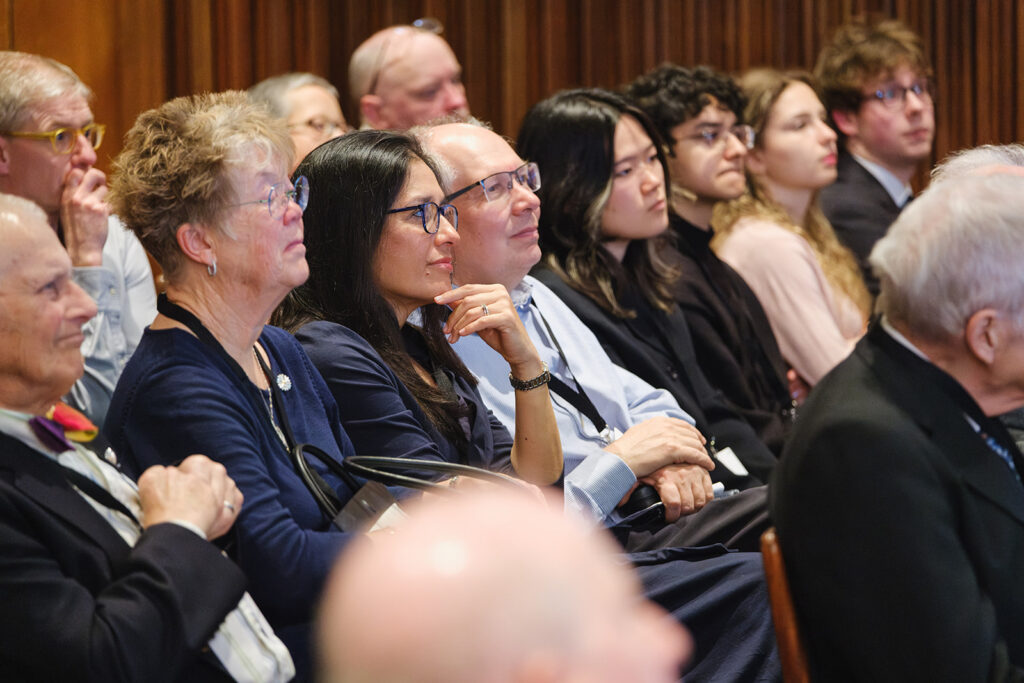
The welcome address was followed by a lecture from Dr Sofia Nivarti, Fellow of St John’s College and Assistant Professor at the Department of Architecture. Entitled When Modernism Grows Old, the talk drew on Dr Nivarti’s research into 20th century architecture and its legacies, exploring how modernist buildings age, adapt, and acquire new meanings over time. Her engaging and thoughtful lecture prompted wide interest and reflection, setting the tone for lively discussion throughout the remainder of the evening.
Addressing the architecture of Finland’s foremost modernists Alvar, Aino and Elissa Aalto, Dr Nivarti considered how the passing of time has both confirmed and challenged dominant interpretations of their oeuvre (their oldest works were completed more than a century ago, and the newest in the 1990s). For example, current-day metrics of sustainability call into question the Aaltos’ reputation for “nature-oriented modernism”; mimetic references to forests and lakes and the use of natural materials alone do not make a building sustainable. Yet the Aaltos’ notion of so-called “forest dreaming”, a term they used to describe man’s primordial yearning for nature in the face of rapid modernisation, is widely hailed as a forerunner to contemporary notions of so-called eco-empathy.
In the second half of her lecture, Dr Nivarti shifted focus to the modern architecture that Johnians know best: Powell & Moya’s Cripps Building (1962–67). The new landscaping scheme, River Court, completed this spring, complements Cripps’s exceptional sensitivity to its riverside context, while offering a subtle yet potent critique of the unflattering biodiversity credentials of traditional Collegiate lawns. The nooks and crannies that animate Cripps’s underbelly may have been dismissed as excess romanticism by some 20th-century critics, but, with the benefit of historic hindsight, now appear delightful examples of a humanistically-oriented modernism which privileges comfort and curiosity above mechanistic efficiency.
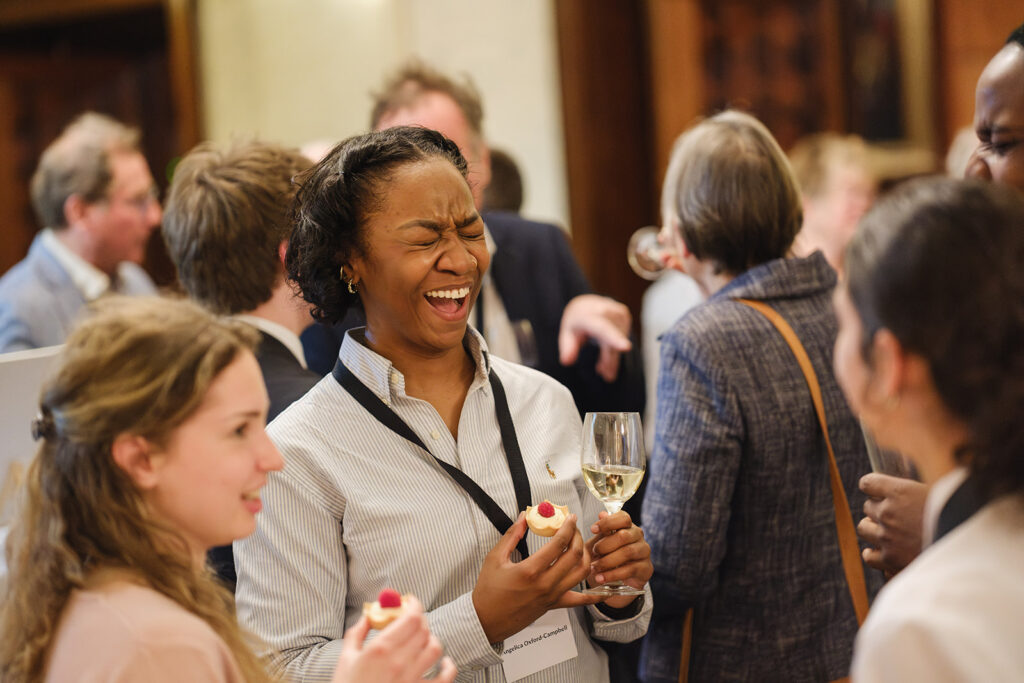
Following the lecture, guests continued conversations over drinks and canapés, with many taking the opportunity to discuss the lecture further with Dr Nivarti, as well as to reconnect with fellow members and guests. As always, the informal exchange of ideas was a highlight, reinforcing the strong sense of community at the heart of the Beaufort Society.
Above all, the Spring Meeting was an opportunity for the College to say thank you for members’ generosity through remembering St John’s through a gift in their will, and belief in the importance of supporting education and scholarship for future generations. We are very grateful to all who joined us and look forward to welcoming members again at the Annual Meeting in College in October.