Johnian magazine issue 54, autumn 2025
Since St John’s: Drug discovery start-up is targeting currently untreatable diseases
Ryan Geiser is a Gates Scholar with a PhD in Biophysical Chemistry from St John’s College, where he trained under the previous Master of the College, Sir Chris Dobson. He spent over a decade studying protein misfolding and advancing drug candidates to treat neurodegenerative diseases like Alzheimer’s. While at Cambridge, he worked with Start Codon to identify early-stage biotech investments. He later joined Lazard, an investment bank, as its first PhD M&A Associate, structuring billion-dollar biopharma transactions. He now leads Axiom Therapeutics, a techbio company developing novel covalent drugs using their computational platform.
A new generation of medicines for diseases once thought untreatable may arrive sooner than expected, thanks to Axiom Therapeutics, a pioneering drug-discovery start-up.
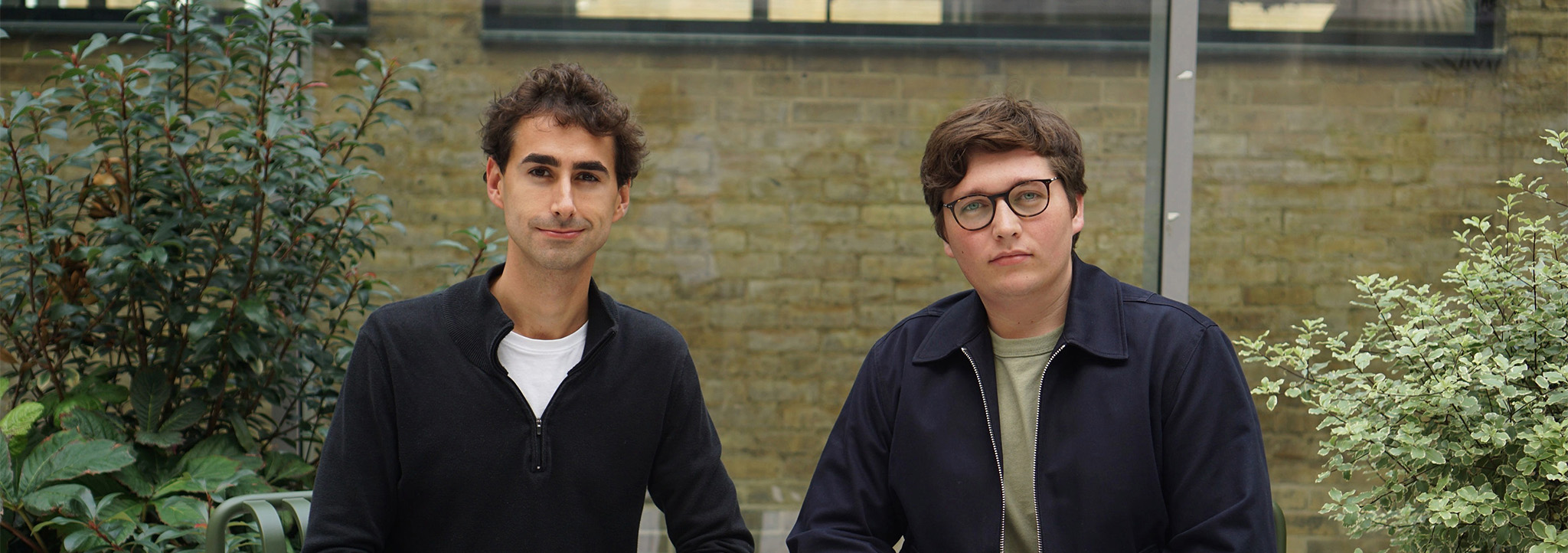
Co-Founder and CEO, Dr Ryan Geiser (2017), is building with fellow Cambridge scientist Dr Chris Haggard to develop novel medicines for a wide range of therapeutic areas and indications, such as pancreatic cancer and neurodegeneration.
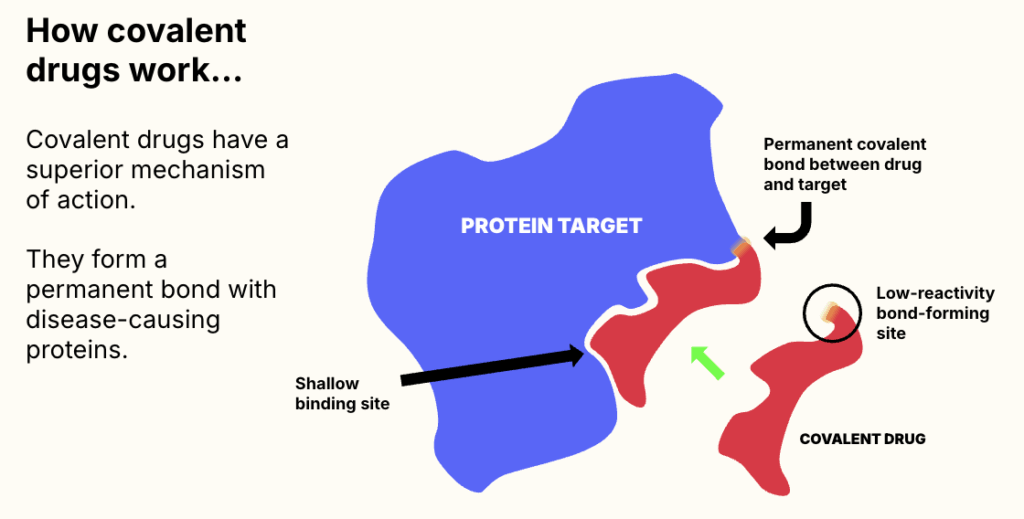
Currently, conditions such as these remain difficult to treat because many of the proteins driving them offer no clear site where a conventional drug can sufficiently attach to shut them off.
“Some disease-causing proteins have clear pockets where a molecule can attach,” Ryan explains. “However, a large number of proteins have a smooth surface, like billiard balls, that lack an obvious binding site, creating challenges that traditional drugs can’t overcome.”
To solve this, Axiom’s hope lies in covalent drugs and TrueBond, their computational platform that models how covalent drugs interact with hard-to-drug, disease-causing proteins. This allows them to design and test novel covalent drugs against these disease-causing proteins.
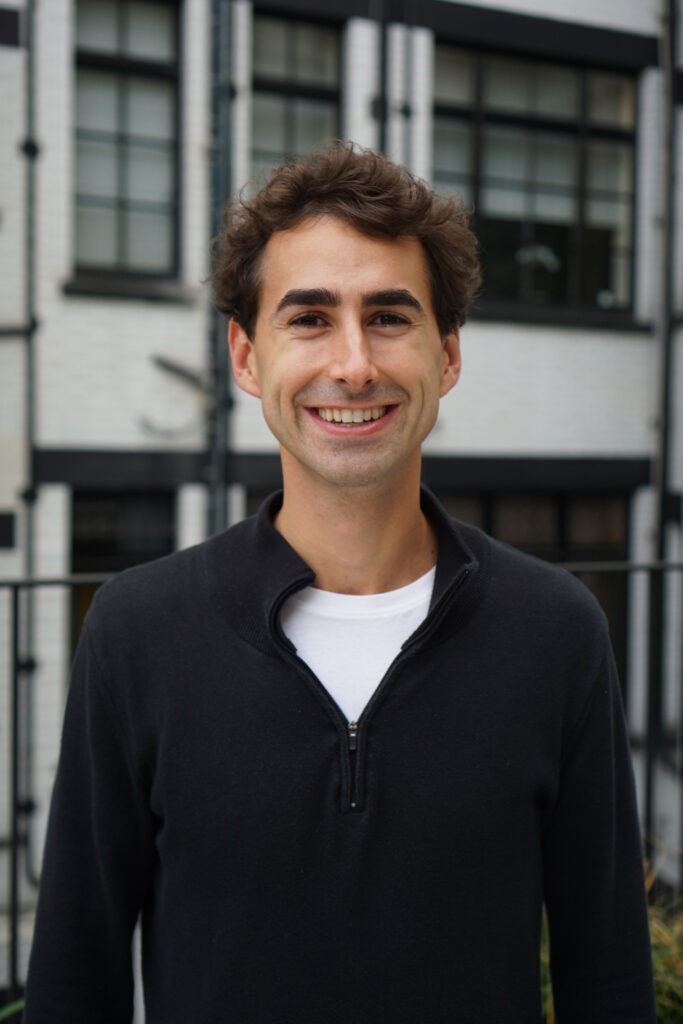
Ryan, a Gates Cambridge Scholar who completed a PhD in Biophysical Chemistry at St John’s under the previous Master, Sir Chris Dobson, says: “Around 85 per cent of disease-causing proteins offer no effective medicines. Therefore, we understand that a specific protein may cause a particular disease, but we cannot target it directly. We’re pursuing these so-called ‘undruggable’ targets, where the modality of covalent drugs holds great promise.”
Covalent drugs form strong, long-lasting chemical bonds with their targets, unlike conventional medicines that bind only temporarily. This durability means that lower doses can achieve an optimal therapeutic effect, and the disease-causing protein is less likely to develop resistance against the drug.
“Chris and I built Axiom to discover new covalent drugs,” he adds. “By combining machine learning with advanced physics, we can tackle hard-to-reach protein targets and rationally design safe, effective covalent therapies targeting cancer, neurodegeneration and immunology.
Many of the approved covalent drugs on the market today, such as penicillin and aspirin, were serendipitously found in long, experimental processes. Now, Axiom Therapeutics is leveraging modern computation to deliberately design this class of medicines and accelerate their path to market.
Axiom maintains a curated virtual library of more than 100 million potential covalent compounds, where data on each candidate and disease-causing proteins informs its TrueBond platform, which uses advanced algorithms to predict the covalent bonds between the most promising matches. “In the lab, you might test tens of thousands of compounds against a protein target of interest. Our platform can explore 100 million in a fraction of the time, enabling us to identify those with the most promising characteristics and advance them further, and faster, than previously possible,” he says.
Another strength of TrueBond is its ability to predict molecules with minimal toxicity. “We can increase how strongly a drug binds to its target while reducing its attraction to off-target proteins (ie proteins that we don’t want the drug to bind to),” Ryan says. “That helps us progress safe, effective candidates and avoid failures in clinical trials.”
Ryan says: “We were founded last year. I met my Co-Founder, Chris Haggard, in Cambridge’s Chemistry Department. He was upstairs coding, and I was downstairs running experiments. In April 2024, we joined Entrepreneurs First and identified that Chris’s work in computational and theoretical chemistry and my small molecule lab experience could be combined to identify and design novel drugs. We’re a rare wet lab meets dry lab duo, uniquely suited to build this company.”
When founding the company, they spoke with hundreds of experts across drug discovery and identified a major bottleneck: the slow, labour-intensive experiments specific to the challenges of covalent drug design and optimisation. Their platform was built to overcome this.
“Covalent drugs don’t reach the market often. Even with recent momentum, only about one or two are approved worldwide each year, far fewer than for other small-molecule medicines,” says Ryan.
Axiom is currently exploring partnerships with major pharmaceutical companies while advancing its own portfolio of covalent therapies. Ryan adds: “We’re poised to turn the promise of covalent drugs into a broad, novel pipeline across many diseases. Our goal is to move several of these into patients within the next few years. It’s a very exciting time.
“We aim not only to speed up drug development, but also to ensure the right candidates reach patients,” he adds. “Doing so could save countless lives. In the next five years, we expect several of our drugs to enter clinical trials.”
Ryan was the last PhD student of the late Sir Chris Dobson, with whom he worked at the Centre for Misfolding Diseases on dementia research. “On a personal note, I hope to tackle pancreatic cancer. It claimed my grandmother’s life and also that of my supervisor and mentor, Chris Dobson,” Ryan says.
“If it weren’t for Chris Dobson and St John’s, Axiom would not exist. The drug-discovery principles I learned during my PhD on hard-to-hit protein targets in Alzheimer’s and Parkinson’s, and Chris’ constant encouragement to see how science could translate into real-world impact, were crucial.”
He also credits the College’s network with supporting his start-up. “St John’s has remarkable business links and wholeheartedly encourages students, including PhDs, to connect with entrepreneurial alumni who’ve built outstanding companies. I’m always eager to continue connecting with current and former Johnians.”